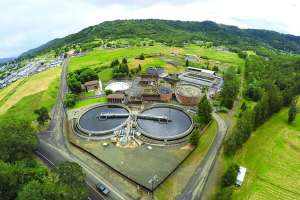
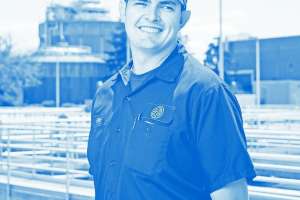
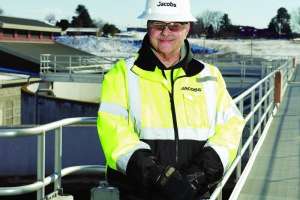
Turkey Creek Wastewater Treatment Plant site superintendent Tim Woodward is as enthusiastic as ever 37 years into the job.
Now as the plant enters its latest phase of expansion, Woodward is pleased to see capacity increase by a much-needed 60% at a cost of just $500,000 — versus what many estimated would require as much as $9 million.
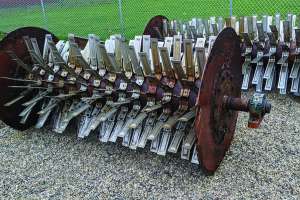
That half-million arrives in the shape of two new 11-foot rotors (Lakeside Equipment Corporation) that will mix and aerate the wastewater. One went online before the Fourth of July, a time when tourists and seasonal residents arriving at Indiana’s largest and most popular lake (Wawasee) push the plant’s flow from its winter low of 300,000 gpd to 1.2 mgd.
The attractive price came about from the decision by Woodward and the volunteer trustees of the Turkey Creek Regional Sewer District to invest in the rotors instead of having a new oxidation ditch installed. They discussed the options with Lakeside, Ken Sobbe at manufacturer representative Faco, Jones & Henry Engineers, the Indiana Department of Environmental Management, and the plant operating staff, Woodward observes.
Protecting the resource
“Many of the Lakeside bearings, gear reducers and electric motors we use are the originals from when the plant was first built in 1989,” Woodward says. “So we have every confidence in their equipment, plus the backup we’ve always received.”
At the Turkey Creek district in Cromwell since day one, Woodward saw the original installation by the HNTB engineering firm of four Lakeside rotors on oxidation ditches, plus two clarifiers. In 2018, Jones & Henry Engineers installed two more clarifiers, but despite some $60 million of capital projects over those 37 years, the plant has been fast approaching its design capacity.
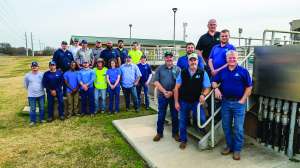
“Our seven operating team members are proud that we haven’t had a permit violation in more than seven years,” notes Woodward. “That’s especially because things have been moving fast and changing, with discharge regulations getting ever tougher.
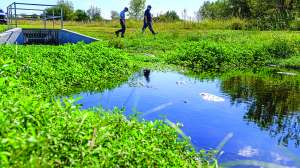
“Lake Wawasee is one of the most popular recreational lakes in the whole of the Midwest, so we’re constantly under pressure to protect it, and rightly so. I’ve always been fascinated about how we can take dirty water, make it clean, and return it safely to the environment.
“We work closely with the Wawasee Area Conservancy Foundation and the local community to keep an eye on everything. Our residents, marinas and sailing clubs and people from Chicago and Indianapolis love sightseeing, swimming and boating here, so we want to keep the water clarity, including surrounding groundwater in our 23,000-acre watershed, at its very best.”
Treating the flow
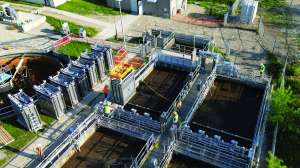
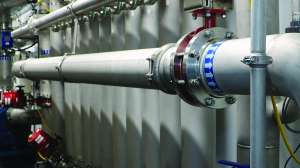
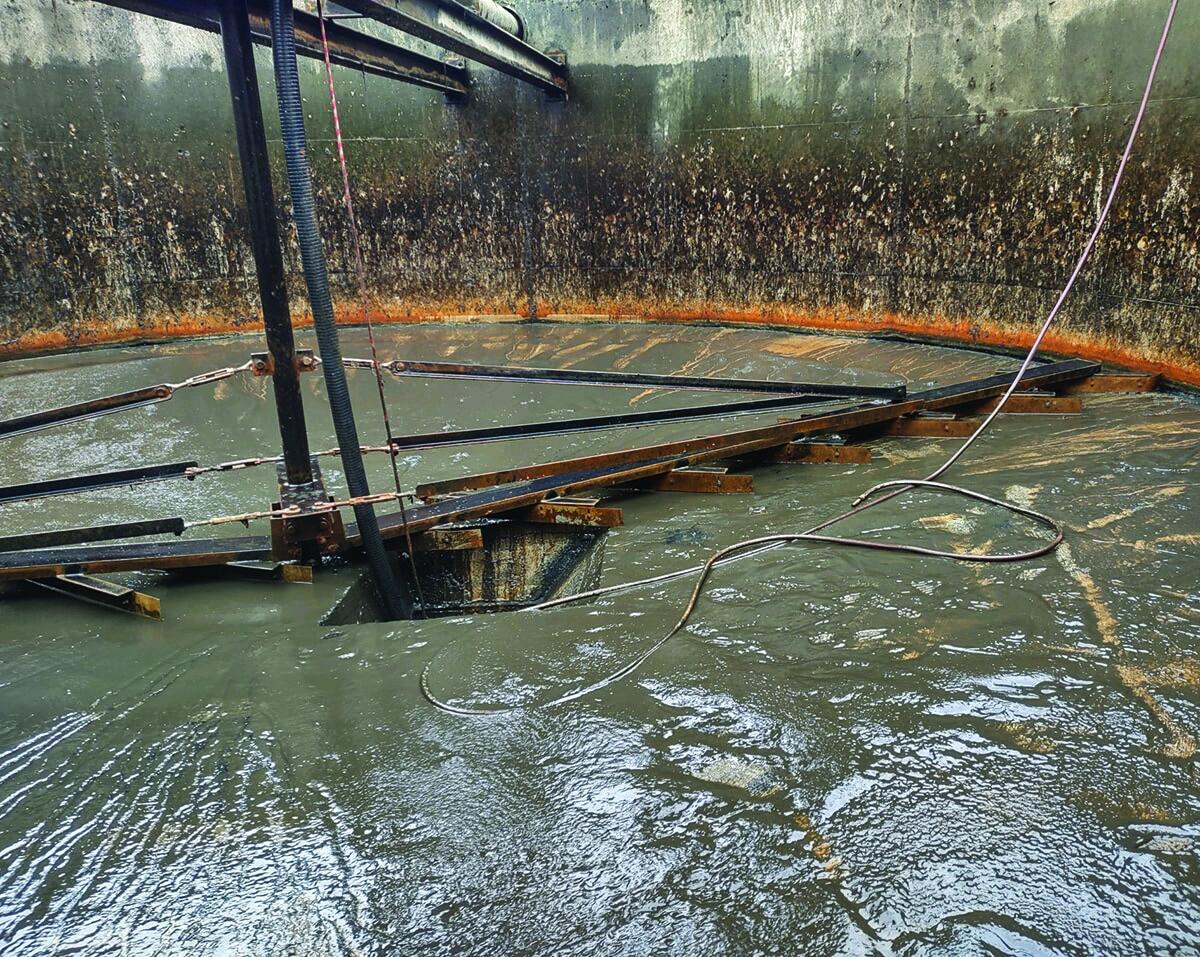
Wastewater flow through the activated sludge plant is screened and then delivered by six submersible pumps into two oxidation ditches (Lakeside) with four (soon to be six) rotor aerators.
The oxidation ditches treat the organic loading and remove ammonia nitrogen. Lakeside’s Magna Rotor aerators provide oxygen to the biomass, mixing uniformly to keep solids from settling. The rotors sustain high concentrations of microorganisms so that the system can easily absorb variations in organic loading and shock loads.
The aerator blades are die-formed of 10-gauge AISI Type 304 stainless steel to optimize rigidity. They can withstand a 250-pound impact load without deformation. Velocity control baffles are mounted downstream of each rotor to prevent excess liquid velocity generated by the rotating blades and to maintain the velocity between 1 and 2 feet per second.
The baffles direct the flow downward into the basin to create a rolling motion. The design allows a single rotor to span channel widths up to 30 feet, saving significant costs by eliminating additional equipment to join multiple rotor assemblies.
The manufacturer says the rotor units provide an oxygen transfer range of 3.25-to-1 at immersion depths from 5 to 15 inches. Variable-frequency drives enable a full speed range from 37 to 72 rpm and increase the oxygen transfer range to 9.7-to-1. This wide range of oxygen transfer gives operators maximum flexibility to deliver oxygen to match system demand.
The overall system design provides adequate aeration and sludge return capacity, enabling the plant to operate a nitrification process that achieves greater than 99% ammonia removal.
After four circular clarifiers equipped with rotating sludge collectors that move the solids to the center of the tank floor, the flow is UV disinfected before post-aeration and discharges to Solomon Creek by way of Cromwell Ditch. Waste activated sludge is pumped to an aerobic digester and then to drying beds. Biosolids cake is spread on farm fields.

Growing population
Rising populations affects every wastewater treatment plant, but at Turkey Creek with 2,600 customers and 230 potable water users in the Enchanted Hills area, the knock-on effects from COVID have led many previous seasonal residents to move full-time to Lake Wawasee. The plant also added 190 customers by serving a portion of Syracuse Lake.
Over the years, 2,600 old septic systems have been removed, highlighting Woodward’s proactive approach. “From day one, I’ve found the Lakeside equipment extremely tough and, because of the way it is designed, very easy to maintain. We’re always on top of maintenance, but the greasing and oil changes are a complete piece of cake.
“Lakeside is also a very good company to work with, especially with technical support. You get answers and spare parts easily and quickly. They also have an excellent local representative in Faco, where Ken Sobbe has a wealth of knowledge in helping keep plants in great shape.”
Woodward and Sobbe could possibly have a face-off for a Most Experience in the Business Award. Sobbe is a veteran, for example of 50 WEFTEC conferences, while Woodward started mowing grass at a local utility company on a federal grant program when he was 14.
He later became a full-time team member at the Roann (Indiana) Wastewater Treatment Plant before joining Turkey Creek in 1989. He became superintendent in 2007. In 37 years, he has had only 10 days off from being unwell. He has even written his own Sludge-to-Waste software program for the plant.
Sound investment
His long-term view is embodied in the choice of rotor aerators, which he says provided “the best possible bang for our buck” in expanding plant capacity. “I’ve always had the support of our board of trustees,” he adds. “Take Bob Dunford. For over 30 years, he has been helping us be successful and win many state awards, including Lakeside’s 2024 Plant of the Year award.”
Lakeside Vice President Dan Widdel comments, and his team are such a credit to our industry. They’re hard-working and very conscientious. Turkey Creek set a great example of how to carefully and enthusiastically maintain equipment and how to care for the local water environment.”