One Water is more than just a concept in the Texas city of Cleburne.
It’s a real working system now that the city’s expanded and improved wastewater treatment plant is in operation. The revamped facility produces high-quality effluent that is returned to Lake Pat Cleburne, a 1,558-acre reservoir owned by the city and its primary drinking water source.
Through its indirect reuse project, the city was named Project of the Year by the Texas Chapter of the American Public Works Association, as well as a Best Environmental/Water Project Award for Texas and Louisiana from Engineering News-Record.
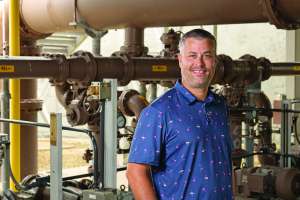
Located in the Fort Worth metro area, Cleburne expects a population increase of up to 25% over the next decade. Jeremy Hutt, director of public works, says the expanded plant meets future wastewater treatment needs while supporting a reliable long-term water supply.
“We’re solving two problems at once,” he says. “The upgraded plant provides the capacity we need for continued growth while the reuse process allows us to recover valuable water resources instead of losing them downstream.”
History of service
Cleburne’s wastewater collection and treatment system serves the entire city, which covers about 36 square miles. The utility supports 13,000 accounts in a population of 36,000. The original wastewater treatment facility dates back more than 100 years.
First constructed in 1916, the plant used aeration basins, clarifiers and chlorine gas disinfection before releasing effluent to Buffalo Creek, a tributary of the Brazos River. Biosolids were dewatered and land-applied on farms.
Over the decades, the facility saw several significant upgrades. The latest upgrade, completed in 2024, marks a major step forward. State regulations require treatment plants to begin expanding once flows exceed 75% of capacity. That prompted Cleburne’s latest expansion, which started in July 2021.
It was funded with $42 million from the Texas State Revolving Loan Fund and $5.45 million from the Water Infrastructure Fund. The Freese and Nichols engineering firm designed the project, and Archer Western was the general contractor. “We were lucky to get the project bid before the COVID pandemic hit because our costs would have been much higher,” Hutt says.

Complete makeover
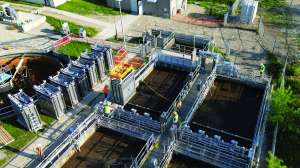
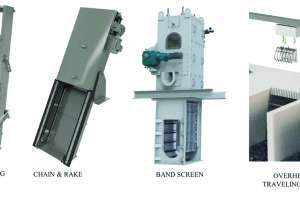
The expansion introduced major upgrades across the entire treatment process beginning with a new influent pump station to improve flow handling. A new headworks building features fine-screen equipment (Vulcan) and a grit removal system (Smith & Loveless).
Biological treatment capacity was effectively doubled with the addition of two aeration basins equipped with Sanitaire aerators (a Xylem brand) and AERZEN blowers. The basins are designed to achieve nitrification and biological phosphorus removal supported by new waste activated sludge and return activated sludge pumping systems.
Downstream of the basins, two circular secondary clarifiers were added to increase settling capacity. Tertiary treatment was modernized with Hydrotech disc filters (Veolia). Two units provide a combined 34 mgd filtration capacity.
The filters are followed by a UV disinfection system (Trojan Technologies) consisting of a single channel with five banks of 12 lamps each. Alum can be applied as needed for supplemental phosphorus removal when biological performance falls outside target parameters.
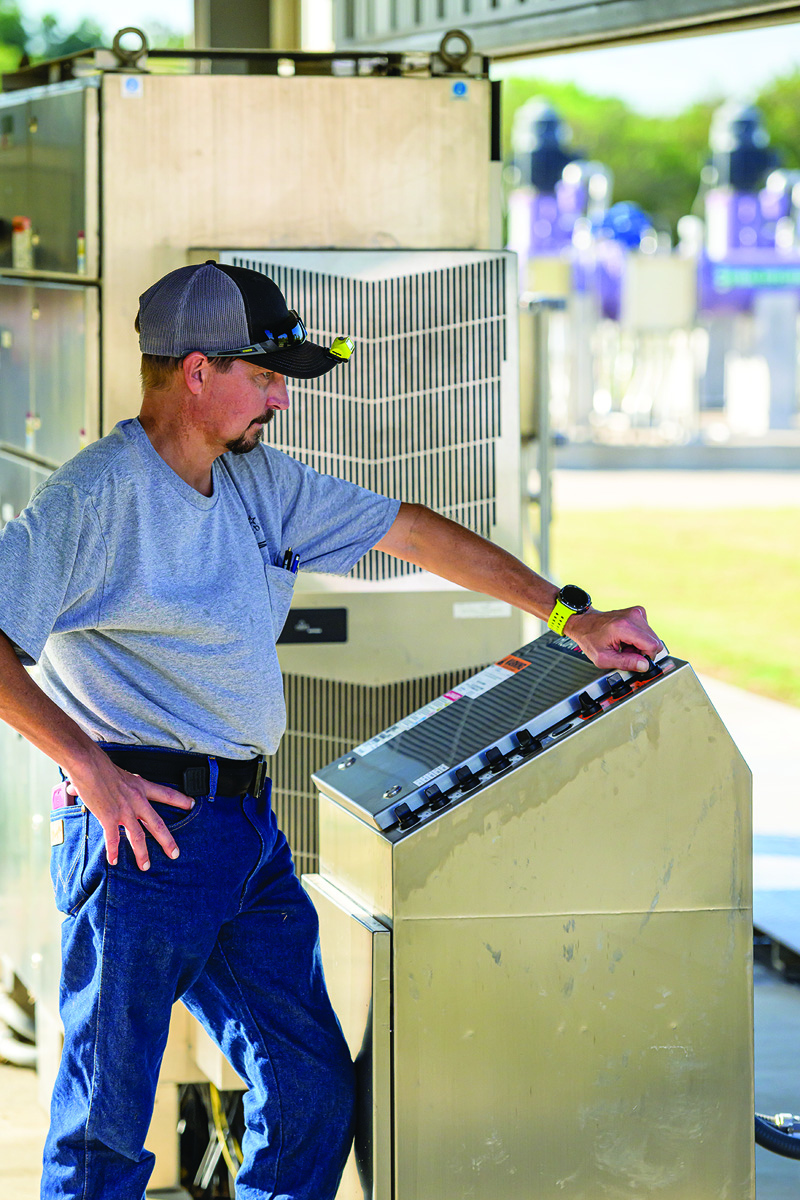
Biosolids pumped from the sludge holding tank are mixed with a polymer before delivery to belt presses (BDP Industries and Alfa Laval Ashbrook Simon-Hartley). Dewatered cake at 18% solids is beneficially used as landfill cover. An upgraded SCADA system (Wallace Electric) controls and monitors plant operations. The plant electrical grid was also upgraded.
Focus on reuse
The facility treats an average of 4-5 mgd, of which 2 mgd is sent to Lake Pat Cleburne through a 4-mile pipeline. The original plant was designed to handle 7.5 mgd with a two-hour peak flow of 17 mgd. The new plant expands design capacity to 10.5 mgd with a two-hour peak of 34 mgd.
Along with increased capacity, the city built the plant to produce higher-quality water for reuse and so support increasing demand for water. Reuse water can also be sent to a local electric power plant for cooling, an arrangement that dates back to the late 1990s. The plant is still permitted to discharge to Buffalo Creek if needed.
Lake Pat Cleburne, created in 1964 by damming the Nolan River, holds about 26,000 acre-feet, and Cleburne maintains rights to 5.14 mgd for municipal water supply. The city also has access to supplemental surface water from Aquilla Lake, about 40 miles away, and can draw from several groundwater wells for emergency use. Cleburne holds water rights to Lake Whitney, nearly 30 miles away.
Continuous operation
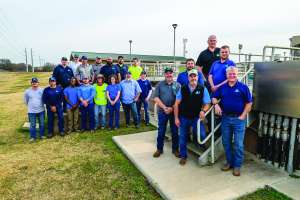
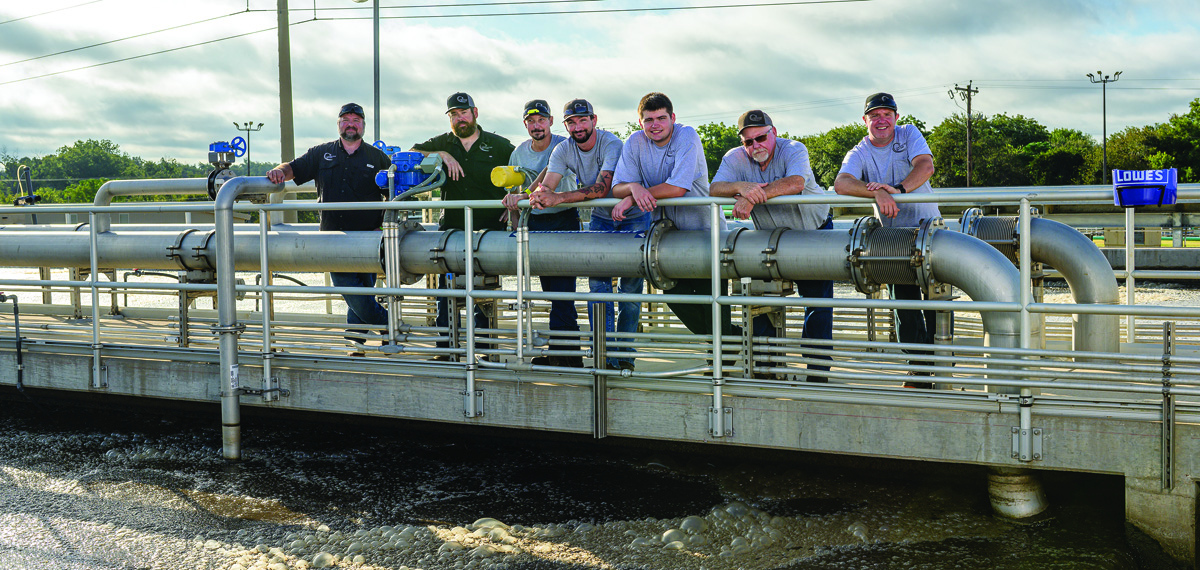
The treatment plant operates 24 hours per day all year with four operators per shift. The leadership team includes James Randell, superintendent; Matthew Davis, plant supervisor; and Justin Ward, assistant plant supervisor.

The operators are Seth Bell, Phillip Parker, John Hewston, James Taylor, James Fisher, Charles Cram III, Vincent Talley, Maxwell Smith, Matthew Lowe, Bryce Brown, Nolan Tatum and James Wright. The staff was intimately involved in the design of the treatment works, and their suggestions have made a difference in operations.
“Engineers can design a plant, but they don’t operate a plant,” says Davis. “We sought lots of input from our operators when working with the design team.” It has paid off. For example, Davis notes that early design plans lacked adequate space around the belt press for maintenance. Operators identified the issue before construction, leading to a design change.
Operators also recommended replacing planned steel grating over the UV and filtration areas with solid panels to prevent algae buildup. The panels were changed in the design phase, and the algae problem has been avoided.
Involvement like that has given operators a sense of ownership in the forward-looking approach the city has taken toward water management. The awards recognized the staff’s commitment to innovation and improvement, Hutt believes.
“We’re treating wastewater to a high level, returning it to the lake and then reusing it for drinking water in our community,” he says. “We’re closing the loop on water reuse.”