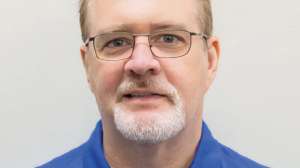
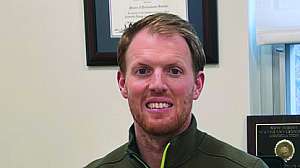
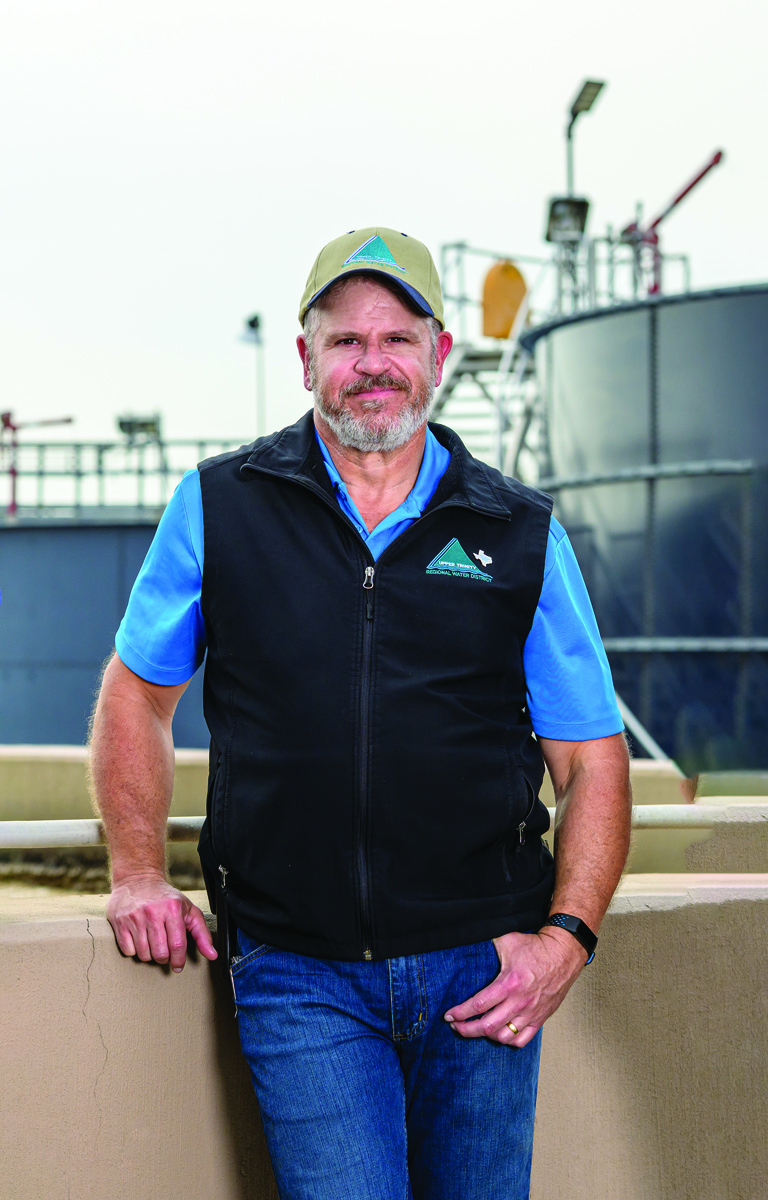
Joe Thompson doesn’t just operate clean-water plants. He helps build them. And teaches new team members how to run them.
Thompson is operations supervisor with the Upper Trinity Regional Water District, in a fast-growing area northeast of Dallas. Among varied duties, he oversees the Riverbend Water Reclamation Facility. A fifth-generation Texan, he takes pride in helping protect the state’s water resources.
“I have a lot of passion for this industry,” he says. “Water being life, that’s something I feel is an obligation to bring forth. I hope I’m able to transmit that passion to others.”
Jeff Mlak, operations manager, observes, “Joe’s leadership and hands-on experience have had a lasting impact on our operational success. He has been instrumental in building and sustaining a culture rooted in excellence, continuous growth and integrity.”
Expansive territory
The Upper Trinity district provides water, wastewater, solid waste and stormwater services covering all of Denton County and parts of Collin and Dallas counties. It operates two drinking water treatment plants and four water reclamation facilities in a service area that includes all or parts of 29 cities, towns and utilities.
Thompson was born in Garland and grew up on Lake Texoma on the Oklahoma border. After high school, he served three years in the U.S. Navy, mostly as an operations specialist on a guided missile destroyer.
Leaving the service in 1996, he joined the city of Dallas as a water and wastewater operator apprentice. His work schedule of 12-hour days and regular three- to four-day periods off gave him time to work in water treatment for the city of Pottsboro and then at Lake Texoma State Park, thereby completing dual water/wastewater operator certification.
“I was completely amazed with the wastewater treatment process, going from raw sewage to pure effluent,” he recalls.
He joined the Upper Trinity district in 2002 and split time between the drinking water and wastewater sides until, after the COVID pandemic, the district separated the two functions. Since then, wastewater has been his focus.
Many hats
Besides leading the Riverbend plant operations team, Thompson is involved in construction and planning for an expansion of the Doe Branch WRF and advises the staff at the Tom Harpool Water Treatment Facility. He also contributes to planning and budgeting as well as conducts staff performance reviews.
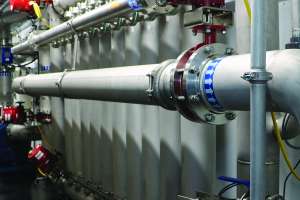
The Riverbend plant has a 4 mgd design capacity and an average flow of about 3 mgd; it also periodically takes about 1 mgd from the nearby Doe Branch WRF, which is undergoing a major expansion. The plant’s activated sludge process can be augmented when necessary, with the capacity-boosting BioMag (Xylem) enhancing settling technology using magnetite ballast.
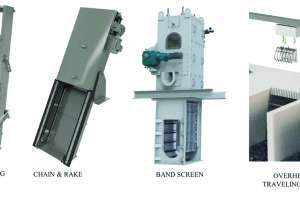
Influent passes through two RakeMax bar screens (HUBER Technology) followed by a screening conveyor (JDV Equipment) and washer/compactor (HUBER), a Jeta Grit Trap system (Ovivo USA) and a WEMCO Hydrogritter cyclone separator and classifier (Trillium Flow Technologies).
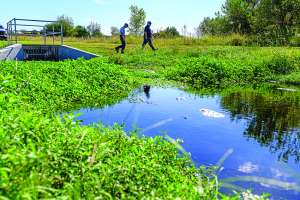
The flow then proceeds to the aeration basins with anoxic and anaerobic zones for biological phosphorus removal. After secondary clarifiers and UV disinfection (Trojan Technologies), effluent is discharged to Lake Lewisville. Biosolids are dewatered to 20% solids on a centrifuge (Andritz Separation) and sent to landfill.
Beyond operations
While proud of Riverbend’s performance, Thompson draws even more satisfaction from his work on facility construction and upgrades in the district’s northeast sector. He has been active from groundbreaking through commissioning of the Harpool RWTF (20 mgd design), the Doe Branch WRF (4 mgd), the Riverbend WRF phases 1 and 2, and the Peninsula WRF (0.94 mgd) phases 1 and 2.

“I’m proud to have been a part of putting all the infrastructure in place for those plants,” he says. “I was involved in all the value engineering, providing input and expertise. Then I served as an inspector, reviewing submittals and making sure the specs were followed on installation.”
He helped in guiding equipment choices with an eye toward operator convenience and efficiency: “A lot of those choices end up coming back to cost, but Upper Trinity is really good about having the operations team involved from the beginning. Where we have to make cost-based decisions, we have input on the best way to go about that, so we end up with the best facility possible.”
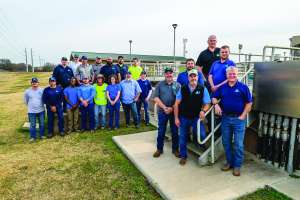
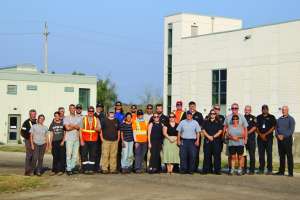
In the end, facilities excel with teamwork, Thompson observes. The operations team at Riverbend includes Mark Wootton, senior operator; Scott O’Bryant and Mitchell McCoy, lead operators; and Aron Hernandez, Jaden Gann, Dalton Lorton, Zachary Delatte and Brandon Brown, operators.
“We have some excellent team members,” Thompson says. “We’re very particular who we hire. We have conscientious operators who are passionate in the field, who understand that this profession is about public health and is to be taken with the utmost seriousness and pride.
“We have a maintenance crew that is shared among all the facilities in the northeast sector. They are very knowledgeable in water and wastewater, and most are licensed operators as well. They are able to think on their feet and come up with innovative ideas to get things in service faster.”
Maintenance staff members are Austin Chance, supervisor; Michael Whatley, preventive maintenance coordinator; Manuel Medina and Frank Madrigal, senior mechanics; and Marc Leos, Heath Dollar, Marco Arguello and Marlon Shaw, maintenance workers. Electrical, instrumentation and controls team members are Chuck Burns, Jake Henk, Robert Follenfant, Michael Harris, David McMillin and Drew Bridges.

Hands-off leadership
In guiding his team, Thompson observes, “I lead through example. Once I have trust in people, I let them build their own way of doing things. That way they feel confident in themselves and what they’re doing. I encourage them to think and act for themselves based on sound judgment and their training. I’m pretty well hands-off, but I let everyone know that I’m always available.”
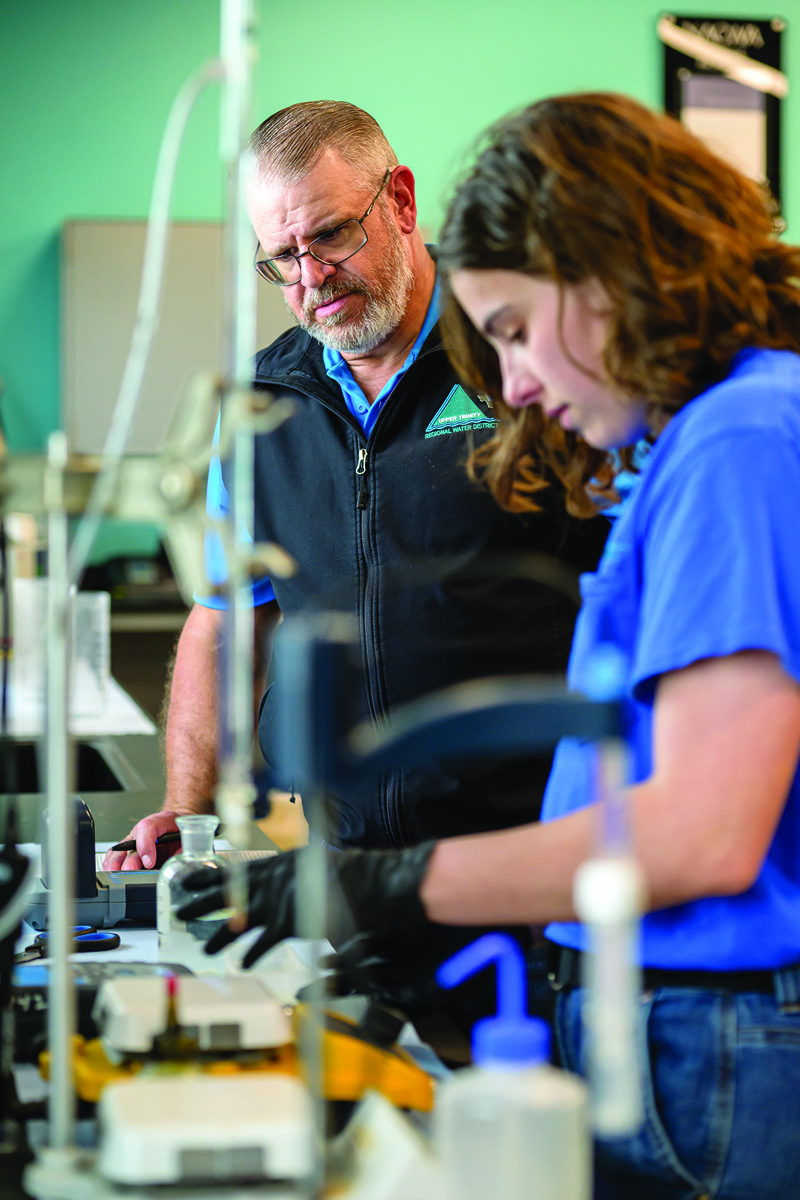
At present, he’s helping to implement an internship program with the Denton Independent School District: “We were able to get it approved as a part of their program for students who don’t plan to attend college.”
High school juniors and seniors work at district facilities for six months to a year, mostly after school under licensed operators’ supervision. The goal is to prepare them to take the exam for their entry-level Class D Wastewater Treatment Plant Operator license. In the program’s first two years, there have been seven apprentices.
“A lot of the students may not end up choosing this field,” Thompson says. “They may either decide to go to college or join the military. But we make an impression on them so that in the future, this might be something they choose.”
Thompson also helps advance the profession by teaching Texas Commission on Environmental Quality continuing education courses including basic wastewater treatment, basic waterworks and water utilities safety. “I have a lot of knowledge and experience,” he says. “It’s my responsibility to share that knowledge for the benefit of future operators.”

Looking ahead
Meanwhile, Thompson is preparing for plant expansions and other projects driven by population growth. Engineering will begin soon for expansion of the Riverbend WRF. A lift station to feed that plant is under construction. The Doe Branch expansion will continue for at least two years.
“Facility growth and operator training will be my focus for the near future,” Thompson says. “We need to recruit more and better operators to properly manage these facilities. Due to growth, we have to make these facilities work at or over design capacity for extended periods.”
At the same time, “The importance of reclaiming water and finding new water sources has come to the forefront in Texas.” He sees irrigation with reclaimed water, and potable reuse of wastewater, on the horizon for the Upper Trinity district: “It’s just a matter of when.”