The days between March 28 and April 9 are a time the Ontario city of Orillia staff would rather forget.
In that short span during 2025, the Orillia Wastewater Treatment Centre endured heavy downpours, flash floods, an ice storm and a methane fire caused by a lightning strike.
Despite all these mishaps, Orillia, 148 kilometers (91 miles) north of Toronto, managed to keep its wastewater treatment system operating and its drinking water safe.
Series of events
The term “perfect storm” definitely applies to what Orillia experienced. “Our wastewater facility is a conventional activated sludge treatment plant,” says Fern Fournier, manager of wastewater and pumping stations. “We have a primary and a secondary digester for solids management. Our nine operators work on wastewater and for the drinking water plant.
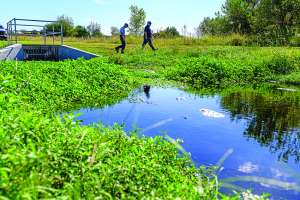
“Beginning on March 28, we got about 14.5 centimeters (5.7 inches) of rain in two waves. Since there was snow on the ground, the rain melted it, adding to the runoff. At the same time, the ground was still frozen, so there was no way for the water to be absorbed.”
Next, the temperature dropped and an ice storm March 29 and 30 caused tree branches to fall and power lines to break, triggering outages that affected the pumping stations and the treatment centre.
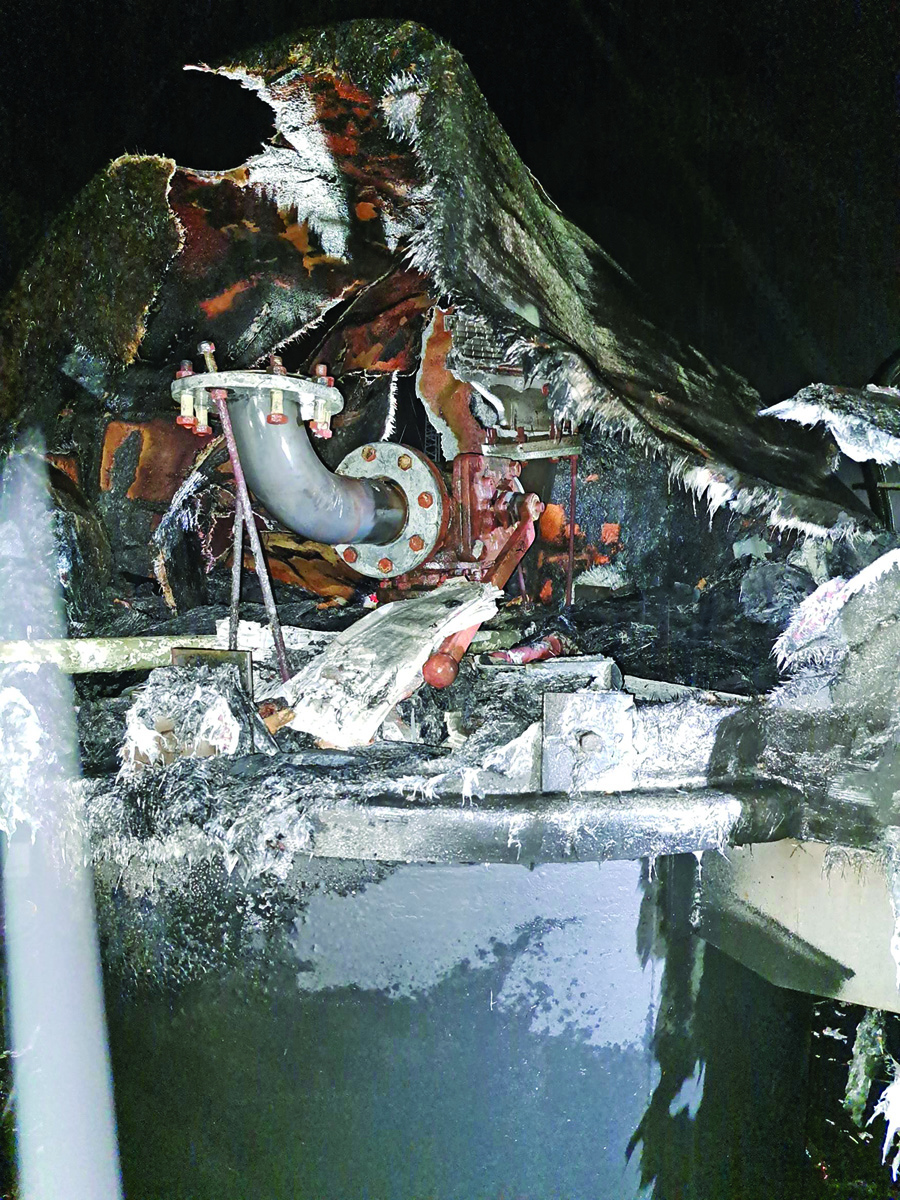
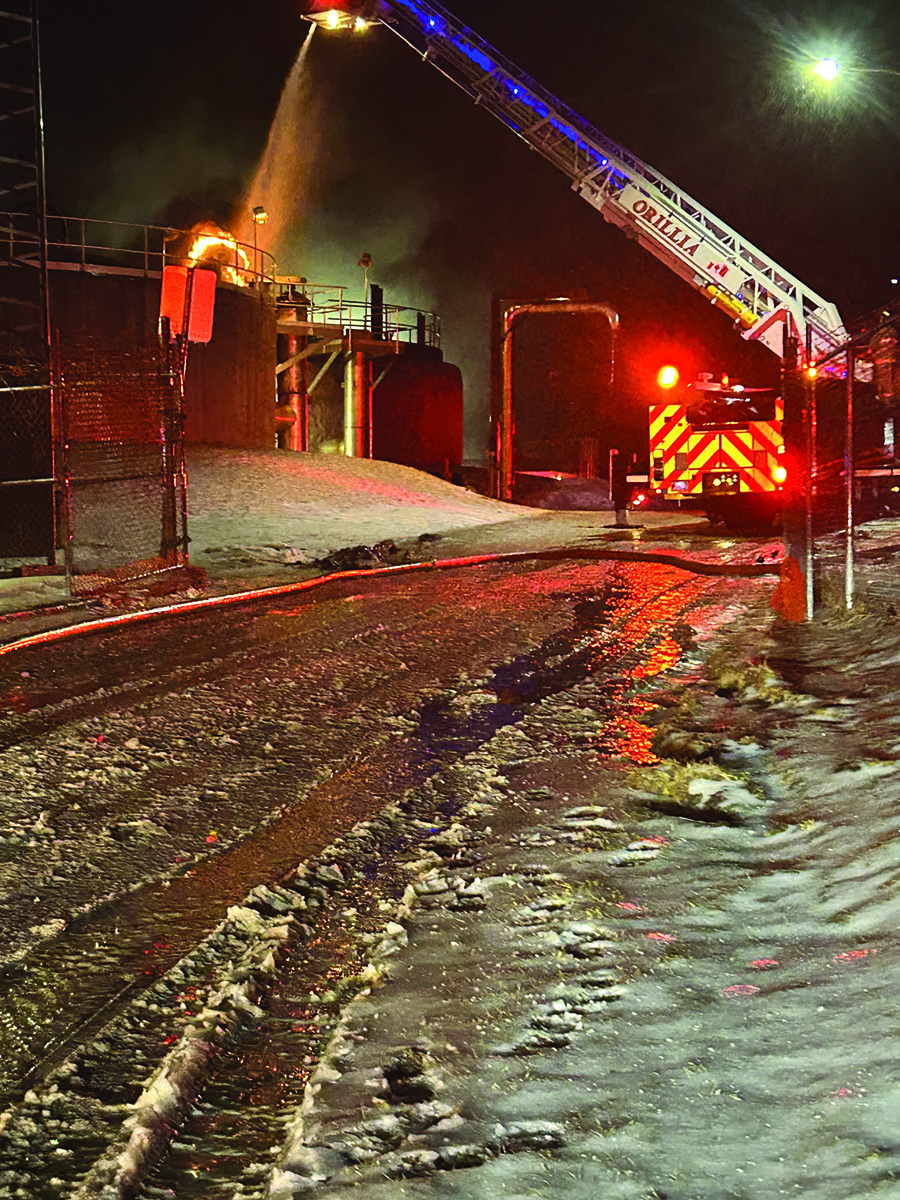
Then the temperature went up again, an intense thunderstorm on April 2 and 3 brought 6 centimeters (2.6 inches) of rain within four hours, and lightning struck the treatment centre’s secondary digester, igniting methane gas.
“Luckily, we had three staff members on site when this happened because the flames were very high,” Fournier recalls. “They immediately called 911. Two of them are volunteer firefighters, so they stayed calm and knew exactly what information the city’s firefighters needed to help them address the issue.” The third staff member helped check for contractors and close the road to the centre, keeping everyone safe.
While the fire was being doused, Orillia experienced yet another downpour, notes Roger Young, general manager of environment and infrastructure services. That brought 5 to 6 centimeters (about 2 inches) during the three hours.
Mounting pressures
All of this confronted the Orillia water and wastewater team with multiple challenges. The treatment centre, a tertiary facility that normally handles about 15,000 cubic meters per day (4 mgd), saw up to 110,000 cubic meters per day (29 mgd) during the peak of the storm. This overwhelmed the system, causing several critical failures.
“We consulted with the Ontario Ministry of the Environment, Conservation and Parks because our flow had exceeded our capabilities,” says Fournier. “For instance, we tried to bypass our aeration gate to handle the extra flow, but that tactic failed.
“Then, thanks to hydraulic pressure, one of our concrete lids that capped the effluent pipe from our tertiary building moved, so we had to build a berm. That required our waste diversion site [landfill] staff and other city engineers to come in and help. Then we tried to bypass our UV gate, and that system failed as well. So we got some chains out, attached them to the gate and made it work.”
Precious power
Those bypasses were sustained for 24 hours, at which point the flow dropped and normal operations resumed. Going from a bypass into a spill scenario was a concern for the operators, Young observes.
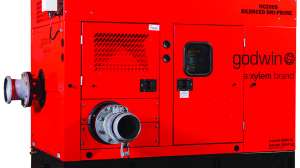
Then there was the problem of power. Only the treatment centre and five of 21 pumping stations had on-site brick-and-mortar generator facilities. This meant staff had to locate and rent portable generators from whatever sources they could find, including from Toronto.
Meanwhile, the lightning strike and fire put the secondary digester out of action for months. It could have been worse: Within seven minutes of being called, firefighters were on site extinguishing the flames. Still, the damage was severe:
“There’s quite a wait period to get new parts and get it back in service,” Young says. “We also had to do some major engineering to get it emptied so that we could get it up and operational as soon as possible.”
Vigorous response
Faced with this escalating situation, the city activated its Emergency Operations Centre on the morning of March 30 and declared a state of emergency soon after. “We had a group of about 20 folks at the EOC that morning who were 100% focused on wastewater,” says Young. “That was our No. 1 goal.
“The major service disruption was the wastewater pumping stations. Our people did their very best in lining up generators and electricians to help us restore service as soon as possible. We got a lot of help from other local governments.”
The water staff took a similar all-hands-on-deck approach. “We had staff working 20-hour shifts,” Fournier says. “Everyone did everything they could to bring the situation under control. Frankly, our operators are absolutely fantastic. They’re an all-in team, and they made us all proud in how they responded.”
Through teamwork, the city managed to keep its water and wastewater systems operating during the weather calamities. It helped that the treatment centre’s diesel fuel tanks had been topped off before the storm so that the emergency generators could keep running throughout.
“We had also done all our checks and made sure that our stations were operating properly beforehand,” says Fournier. “Then, when trouble hit, everyone who could help was on site helping, getting soaking wet building the berm or working on the bypasses. That’s what kept us in business.”