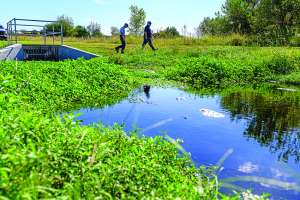
Water defines Cape Coral. This coastal Florida town has 400 miles of freshwater canals that invite comparisons to Venice in Italy.
Manatees navigate the canals and the nearby Caloosahatchee River among the mangrove trees that line the coast. Water and aquatic life foster a culture of environmentalism that may explain why the city’s water reclamation plants are leaders in water reuse, process automation and pollutant removal, earning national recognition along the way.
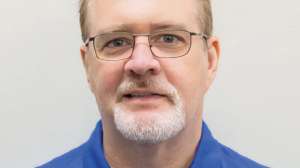
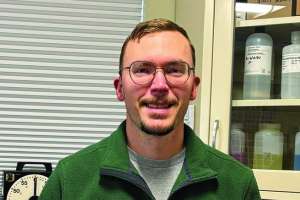
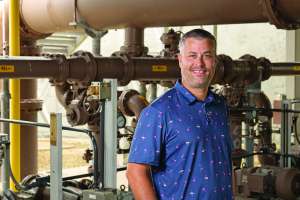
Matthew Astorino has worked at Cape Coral for his entire 18-year career, starting as a laborer fresh out of high school and working up to chief operator at the Southwest Water Reclamation Facility in 2018.
Soon after taking on the role, he spent hours reviewing the facility’s operational data and aeration strategies. He found that the plant was discharging nitrogen levels as high as 15 mg/L, potentially harmful to coral reefs, rivers and manatees.
A custom process
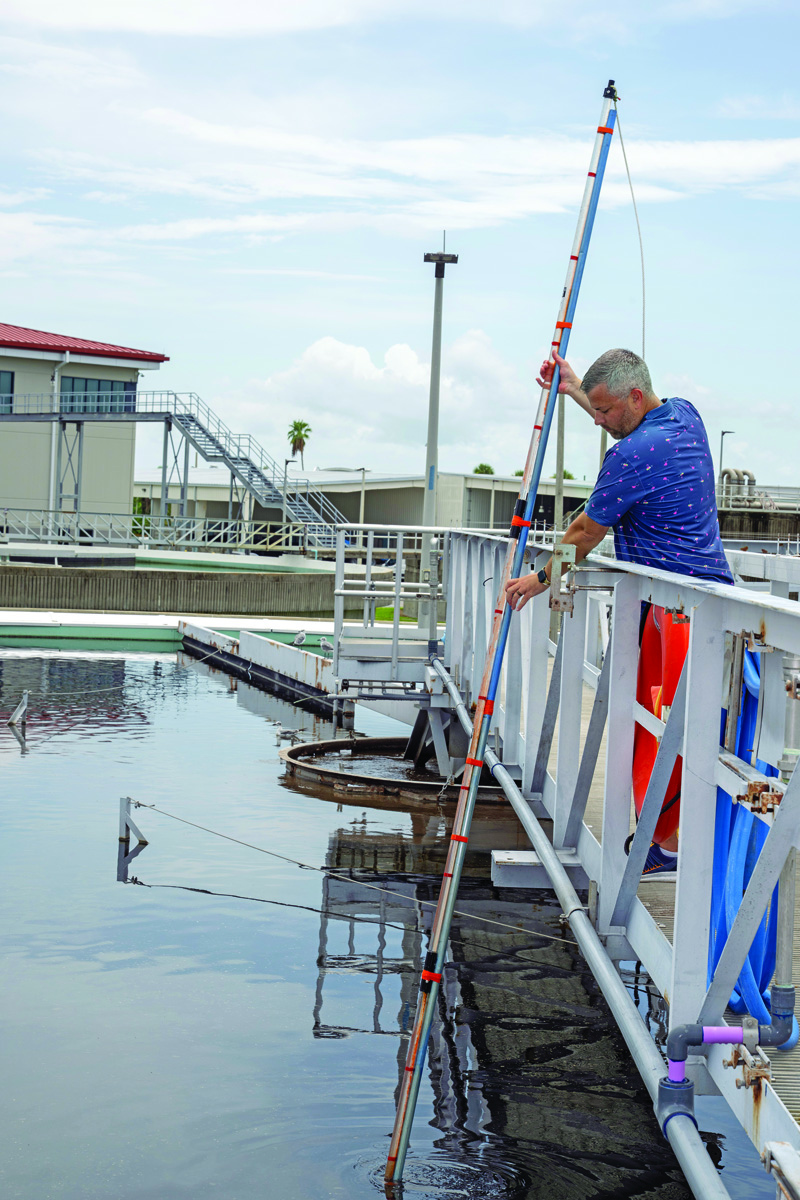
So, he and his team began three years of experiments that led them to convert their standard anaerobic-anoxic-aerobic process to a customized Bardenpho. “Some changes were minor, like relocating dissolved oxygen sensors in the aeration basins,” says Astorino. “Then there were more aggressive strategies. We drastically reduced our nitrogen numbers from 15 mg/L to 5 mg/L, and we’ve maintained it.”
This overhaul required a number of changes and it nearly killed the plant’s biome a few times. For example, Astorino and his nine operators found that the plant was running its return activated sludge at 300%, hydraulically overloading the aeration basins. They lowered the recycling rate to 150% to slow the flow.
Once the process conversion was optimized, plant performance notably improved. “Our denitrification is thriving, which helps us a lot because we get high incoming ammonia,” says Astorino. “Sometimes we denitrify too well, and we end up with a boost in pH and everything that comes with it.”
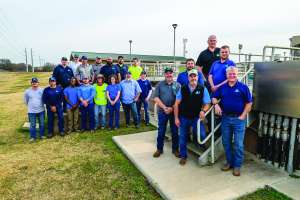
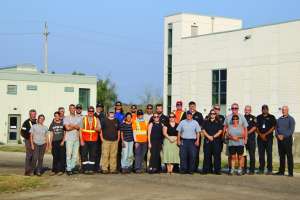
In addition to the operations team, Southwest WRF relies on internal programmer Carlos Rodriguez and instrumentation technician Veronica Ramos. The team also includes Marcus Papp, maintenance supervisor; plant mechanics Chris Severa, Jonah Nunez; electrical specialist Mark Blevins; and an administrative team of Laura Lee and Janice Fusco.

The operations staff includes John Pitzer, Scott Welsh, Dave Meikle, Joel Schierman, Giovanna Claiborne, Griffin Gassner, Kyle Sweeney, Brian McCann and Brian Beasley.
Treating the flow
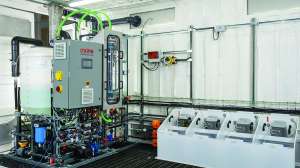
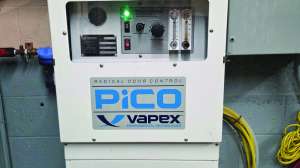
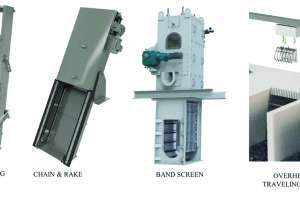
The 15 mgd (design) Southwest plant has two influent channels with 6 mm step screens (WesTech Engineering). Influent then flows through a HeadCell grit system (Oldcastle Infrastructure. Two biological odor reduction towers (BIOREM Technologies) treat the headworks air.
The flow then enters the aeration basins, churned by 7.5 hp floating mixers (Aqua-Aerobic Systems). “I’ve been tinkering for about as long as I’ve been here,” says Astorino. “I like to run six to eight days solids retention time, and that worked well at our Everest facility, but this facility didn’t like it.”
The basins have fine-bubble diffusers (SSI Aeration) fed by three Turblex 450 hp single-stage centrifugal blowers (Howden, A Chart Industries Company). Inline DO, TSS, ammonia and nitrate sensors (Hach) are placed throughout the basins, along with a thermal mass flowmeter (Fluid Components International, a DwyerOmega brand) for airflow measurement.
“We have a target of roughly 12 days for SRT,” says Astorino.” We use axial-flow pumps (Vaughan Company) for internal recycling. We like the Vaughan design because the motor is above the water, and the impeller is at the bottom. It prevents water intrusion on the cabling.”

After aeration, the flow is directed to three 120-foot diameter clarifiers (Ovivo), each with a dedicated Hayward Gordon return activated sludge pump (EBARA HG) and waste pumps (Boerger) including some redundancy. The clarified water then flows to one of four traveling bridge filters (Aqua-Aerobic Systems).
“We have all four typically online,” Astorino observes. “We’ll be retrofitting two of them to the Aqua-Aerobic Diamond system, which can handle about three times more throughput.” Four chlorine contact chambers disinfect the effluent. Biosolids are dewatered on three centrifuges (Andritz Separation); the resulting cake is sent to landfill or pelletized for fertilizer.
Purple pipe
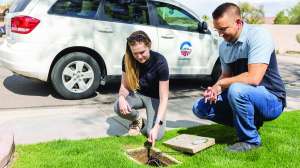
Typically, all effluent is reused to irrigate city landscaping and residential lawns, except that effluent that doesn’t meet reuse standards can be deep-well injected. Says Astorino, “We have just over 100,000 customers, and we’ve had nights as high as 50 million gallons in demand.”
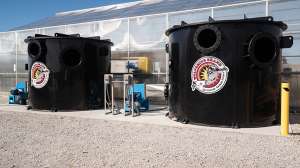
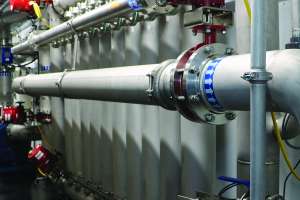
While reuse protects waterways and preserves freshwater resources, managing the system demand can be tricky. The facility operates three 5 million-gallon finished-water tanks for distribution, and a pair of 5 million-gallon tanks at a pump station.
“It’s fairly wet here in the summer, so sometimes we have more reuse water than we need,” says Astorino. “In winter it gets drier, and demand shoots up.” Six pumping stations deliver water from canals to keep up. The water is in such high demand that the city built a cross-river pipeline that brings in effluent from neighboring Fort Myers.

DIY automation
With a programmer on staff and a culture of innovation, the Southwest plant team has taken automation to heart. After adjusting operations around the plant, the next question is almost always: How do we automate this?
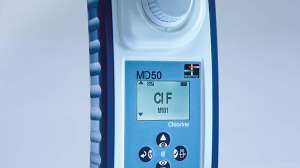
“Before, the plant was only monitoring total chlorine after the weir, which made dosing volatile and reactive,” Astorino notes. “If there was a problem, it was too late to fix it. So, we added sample pumps in the chlorine contact channels to read free chlorine measurements in real time to tell us what was happening minute to minute. We then programmed a cascade loop based on the free chlorine levels to determine the dosing.”
The combination of data and automation reduced chlorine usage and optimized chlorine levels in the reuse system without pulling staff from other tasks. The same mentality applies to the RAS lines and SRT calculations, placing solids insights into the SCADA system.
Team members take pride in doing as much as possible in-house: “When you can pull your guys together and come up with solutions, it really goes a long way.” This can-do attitude led the team to build its own BioWin treatment process simulator as a digital twin for the plant. They use it to test new operations ideas before piloting them; the findings have made their way to industry seminars and presentations across the country.
Bright future
Their efforts to go above and beyond permit limits were recognized last year when the plant received the 2025 Earle B. Phelps Award for treatment excellence from the Florida Water Environment Association for the fourth time in a decade.
“That award has been pretty special to us,” says Astorino. “The judging is really stringent, with a plant inspection and effluent data review. We took that award three years in a row before Hurricane Ian hit us. Winning in 2025 felt like a sign of recovery.” Meanwhile, at Southwest, Astorino and crew are tackling a long list of small and large upgrades.
In addition, the city is designing its third water reclamation facility with a membrane bioreactor. In other words, Cape Coral’s leadership in clean water will likely continue.