Many plant operators at industrial facilities with PFAS in their wastewater are actively designing or rethinking their remediation approaches.
Facilities historically have relied on capture-and-disposal methods, such as granular or powdered activated carbon, or on paying surcharges and fines tied to PFAS concentrations discharged to municipal wastewater treatment plants.
Those strategies are now colliding with the reality that disposal costs for PFAS-laden media continue to rise, and that landfills and treatment plants increasingly refuse to accept PFAS-contaminated waste. As a result, what was once a manageable expense is becoming a logistical and financial liability.
Meanwhile, regulatory exposure is holding steady. The U.S. EPA has announced it will retain and defend the Biden-era rule designating PFOA and PFOS as hazardous substances under the Comprehensive Environmental Response, Compensation, and Liability Act.
This signals that the federal government intends to uphold a “polluter pays” policy despite ongoing legal challenges. This designation dramatically increases downstream liability for PFAS handling, transport and disposal.
In addition, many state and local wastewater authorities have PFAS regulations for industrial wastewater that are stricter than federal requirements, leaving industrial operators subject to a patchwork of regulations that can shift faster than capital planning cycles.
This means industrial PFAS strategy must evolve from short-term compliance to long-term risk abatement, and destruction is the most direct approach to reducing regulatory, disposal and liability exposure. Advances in electrochemical oxidation have fundamentally changed the economics of destruction, making onsite PFAS elimination highly effective and often less expensive than programs built on media replacement, offsite disposal or treatment surcharges.
For forward-looking operators, PFAS destruction is fast becoming the most cost-effective and reliable path forward for the long term.
Cost-effective technology
Electrochemical oxidation uses electricity to break the persistent carbon-fluorine bonds that define PFAS. In an electrochemical reactor, contaminated water passes between specialized electrodes where controlled electrical currents generate highly reactive conditions that mineralize PFAS compounds into benign end products.
Unlike technologies that transfer PFAS from water to another medium, EOx destroys the molecules, eliminating the need for downstream management. Until recently, EOx was largely viewed as a promising but impractical solution for full-scale industrial PFAS treatment.
Early systems were largely confined to research or pilot-scale applications and carried a reputation for high energy consumption, limited throughput and sensitivity to background water chemistry. Treating large volumes of dilute wastewater, especially those rich in salts, organics or competing contaminants, required substantial electrical input, making the costs unaffordable.
What has changed is not the underlying chemistry, but how EOx is deployed within an integrated treatment train. Modern systems are no longer designed to destroy PFAS directly in high-volume, low-concentration wastewater streams.
Instead, they are paired with pretreatment steps that sharply reduce the volume of water treated while increasing the PFAS concentration relative to other constituents. By isolating PFAS into a smaller, more controlled stream, EOx operates under conditions that optimize energy efficiency, reaction kinetics and electrode performance.
This shift has transformed EOx into an economically viable technology. Today’s systems reliably destroy PFAS at a fraction of the historic cost of the technology. Industrial operators can now achieve more than 99.99% PFAS destruction in concentrated sidestreams without the excessive energy usage used to make the technology impractical.
Making it work
The key to making PFAS destruction both technically and economically viable is to limit what enters the process. Industrial wastewaters are typically high-volume and chemically complex; PFAS are often present in traces alongside hardness, salts, organic matter and other competing constituents. Effective PFAS treatment therefore begins upstream with strategies to reduce total volume and concentrate PFAS into a sidestream.
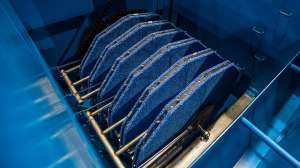
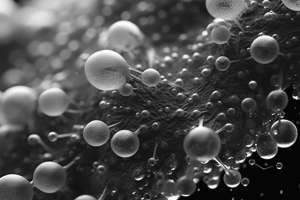
Among the most-used concentration methods is foam fractionation. Many PFAS molecules have a hydrophobic fluorinated tail that preferentially associates with air rather than water. During foam fractionation, PFAS attach to rising air bubbles and are separated from bulk water into a stable foam. This significantly reduces volume while increasing PFAS concentration.
Reverse osmosis is another powerful volume reduction mechanism, especially where high-level PFAS removal is required before discharge or reuse. RO membranes reject PFAS along with dissolved salts and other contaminants, producing clean permeate and a concentrated reject.
While RO does not destroy PFAS, it can reduce waste volumes dramatically. When paired with EOx, RO shifts from being a disposal-driven technology to a strong partner in PFAS destruction.
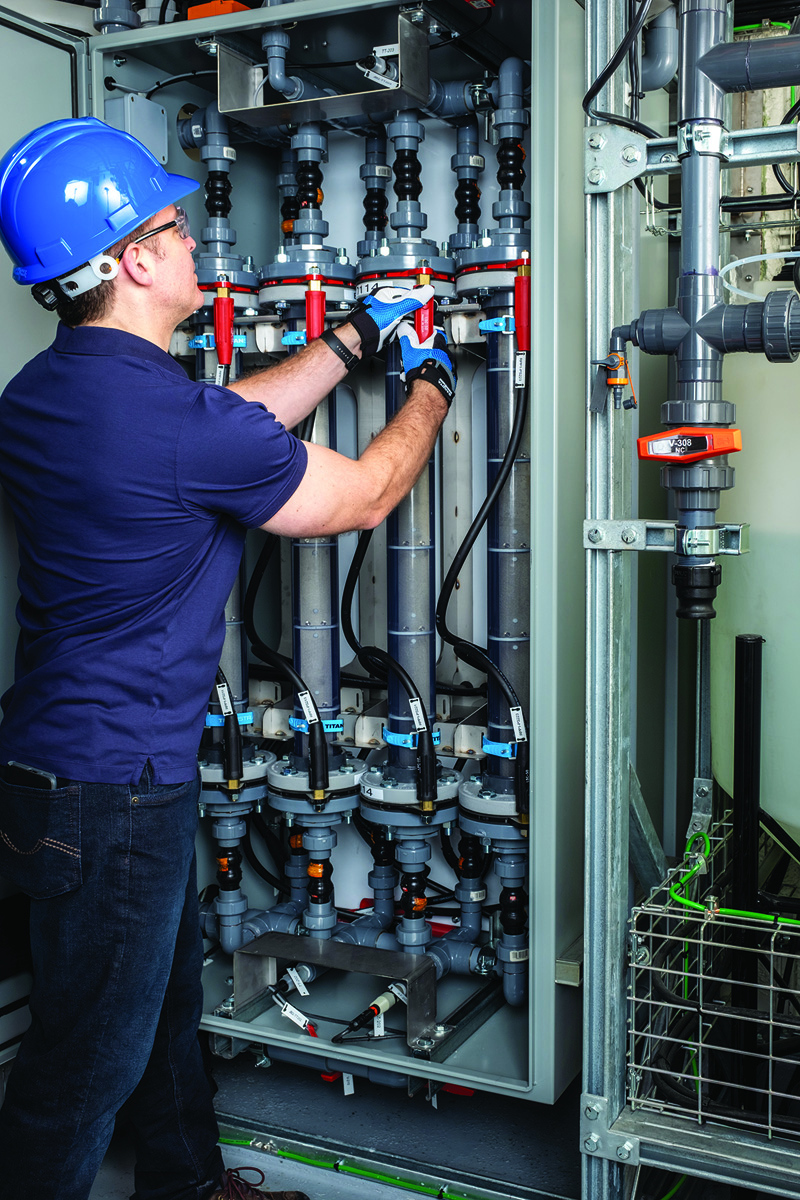
Supporting these concentration processes are other pretreatment steps implemented as needed, such as hardness removal and scaling control. Removing calcium, magnesium, iron and other minerals protects downstream membranes and electrochemical reactors, improves operational stability and reduces maintenance demands.
In many industrial settings, these steps are essential to ensuring consistent performance and predictable life cycle costs. The best practice is often to deploy a combination of approaches based on a plant’s specific water matrix, discharge requirements and operational objectives.
Optimum efficiency
EOx performs best when asked to do exactly what it was designed for: destroy PFAS molecules without expending energy treating needlessly large water volumes or competing contaminants. By reducing flow and increasing PFAS concentration, pretreatment fundamentally changes the economics of destruction.
Electrical energy is applied to a smaller, more targeted stream, improving reaction kinetics and significantly lowering energy consumption per unit of PFAS destroyed. The result is a more stable electrochemical operating environment where destruction rates are higher and system performance is more predictable and easier to control.
Rather than scaling up systems to handle large, diluted flows, facilities can right-size EOx systems for focused, high-impact treatment. This approach also allows electrode materials to be selected based on wastewater strength and composition, helping avoid overdesign while maintaining reliable performance under site-specific operating conditions. Here are two examples of successful PFAS destruction.
Case study: Automotive supplier
Building on its existing on-site foam fractionation system, an automotive supplier specializing in advanced finishing piloted EOx technology to destroy legacy PFAS in the resulting concentrated wastewater. Initial lab tests on samples with about 70,000 parts per billion PFAS showed greater than 99.99% elimination of detectable compounds.
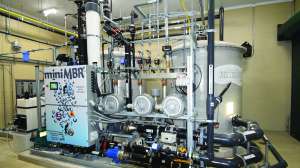
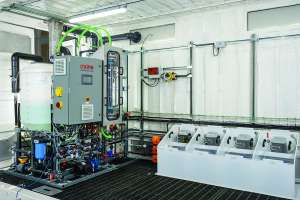
Pilot trials of a fully containerized treatment unit confirmed up to 99.999% destruction of long- and short-chain PFAS and precursors while total organic precursor analysis showed no significant residuals. Encouraged by the results, the facility proceeded with full-scale systems to eliminate PFAS and minimize disposal liability. The first full-scale system, with foam fractionation, was commissioned in April 2025.
Case Study: Pharmaceuticals
A large pharmaceutical manufacturing facility in Puerto Rico deployed EOx to treat clean-in-place rinse water high in antiparasitic active pharmaceutical ingredients. Annual volumes of 1.25 million gallons contained API concentrations near 4,000 µg/L that required reduction to below 300 µg/L for safe discharge and to meet internal treatment goals.
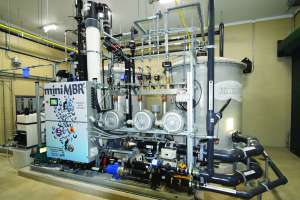
After pilot testing, a full-scale containerized system integrating ultrafiltration, RO and EOx was commissioned on site. The system consistently achieved greater than 99.9% destruction of APIs and COD, enabling the facility to meet discharge limits. The project demonstrates that EOx is effective not only for PFAS but for a broad class of persistent, high-risk organic contaminants.
Beyond management
When pretreatment and EOx are engineered as a system, PFAS destruction shifts from an energy-intensive, financially questionable undertaking to a streamlined, economically viable solution. Volume reduction and concentration ensure that EOx is applied directly on PFAS destruction rather than wasted on diluted flows and competing contaminants.
The results are lower capital and operating costs, extended electrode life, improved operational reliability, elimination of disposal risks and reduction of liability. As regulatory pressure increases and disposal pathways narrow, integrated PFAS destruction offers a durable strategy for long-term compliance and operational resilience.
About the authors
Andrew Mrasek (amrasek@axinewater.com) is chief revenue officer and Simba Washaya, P.E., (swashaya@axinewater.com) is an application engineer with Axine Water Technologies.