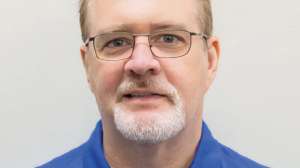
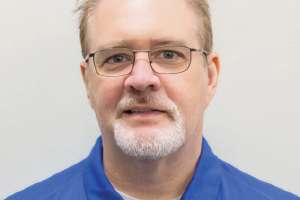
In his early professional career Joe Ciccotelli was somewhat of a rudderless boat.
His first jobs were at research and development companies, splitting time between the lab and the road, testing and installing chemical processing equipment.
He then worked corporate jobs but disliked being subject to layoffs. In 1985, his father pointed out a job ad: an entry-level position with the water treatment plant in Peabody, Massachusetts.
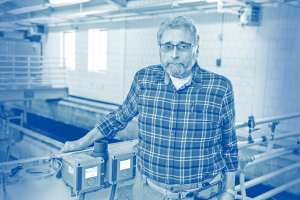
And so began a career that led to his current role as water treatment superintendent in Ipswich in the same state. He was promoted to that position in July 2008 and took his increased duties in stride. “I became the primary operator responsible for all aspects of MassDEP and U.S. EPA regulatory compliance,” he says. “The buck stops with me.”
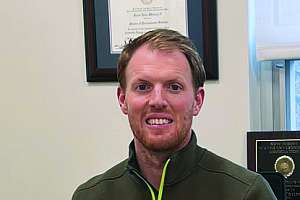
For 2024, he was named the Distinguished Operator of the Year by the DEP’s Northeast Regional Office.
Humble beginning
The position in Peabody immediately appealed. “The salary was poor, but the benefits were good, and I was familiar with lab work,” Ciccotelli recalls. “There was a catch-22: I needed a water operator license to get the job, but I needed a job to get the license. I thought I was out of luck.”

Despite the lack of a license, he landed an interview. Liking his work ethic, the superintendent hired him, provided he would earn his license while working nights, weekends and holidays in an entry-level position. He took on the challenge.
In 1995, he made the move to the Ipswich Water Department. “We had a young family, and this job was a Monday-Friday day shift with rotating weekend and holiday overtime coverage,” he says. “It was nice to have most weekends off to spend time with my family. We already lived in Ipswich, so there was no commute. I believe it’s important to live in the community you serve because you’re making decisions for your neighbors and families.”
Ciccotelli’s wife, Margot, is from Ipswich, a scenic town on the north shore of Massachusetts, known for its seafood and touted as “the birthplace of American Independence.”
System evolution
The town’s original water system was limited to the downtown, mainly for fire protection. Today the department has treatment and distribution divisions, providing water to about 98% of 13,900 residents. Under Ciccotelli’s tenure, the population has grown steadily. Water use averages 1 mgd; summer demand surges to 1.2 mgd, and winter demand is 0.8 mgd.
The system is complicated, relying on one surface water source and five wells in the Parker River and Ipswich River watersheds. Traditionally, only surface water received full treatment and filtration. The five wells pumped directly into the system with minimal treatment.
Issues with PFAS and manganese contamination in 2022 now require the water from one well to be fully treated. All six sources must be individually monitored and tested to ensure state and federal regulatory compliance, a never-ending, labor-intensive process.
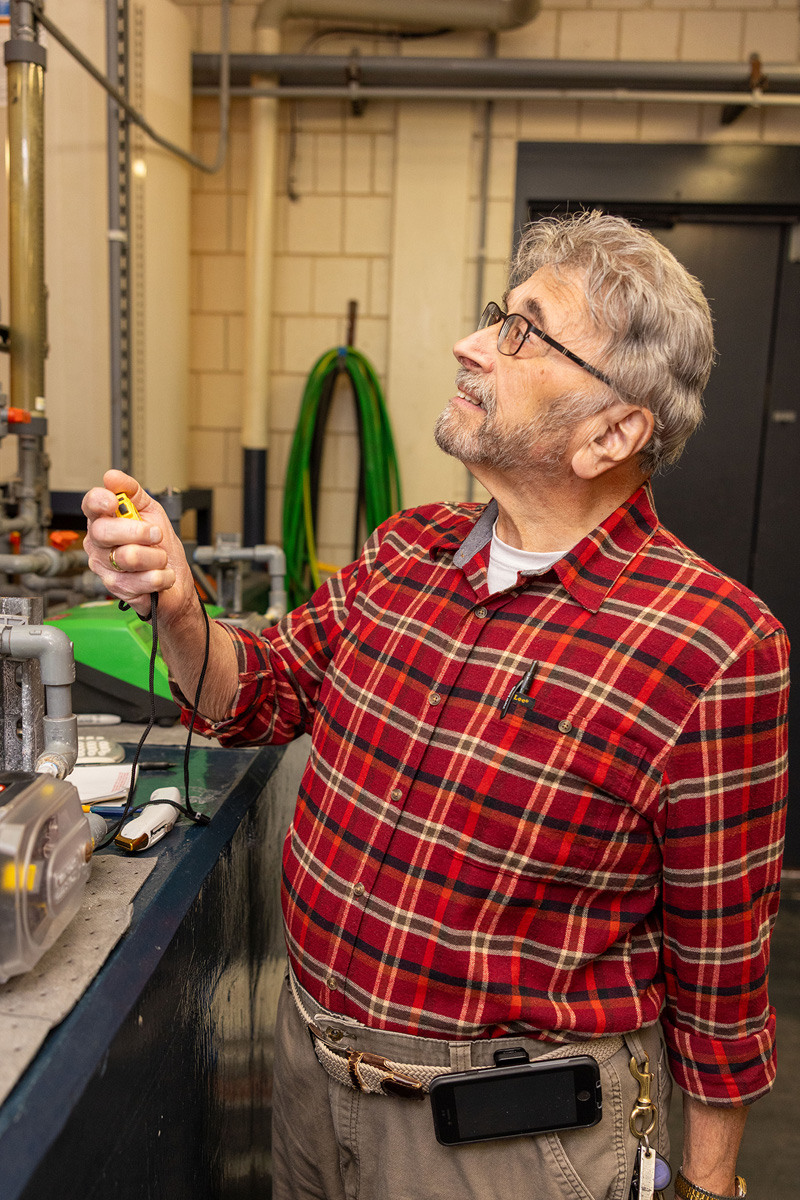
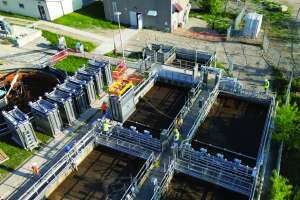
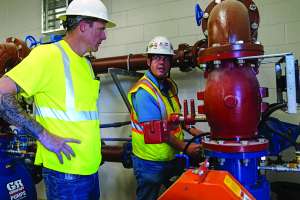
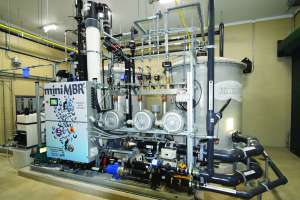
The conventional water plant is manually operated. The surface water process consists of coagulation, flocculation, sedimentation and filtration, plus the addition of fluoride, pH adjustment for corrosion control, and disinfection. Groundwater receives the addition of fluoride, corrosion control and disinfection, but no filtration.
Challenging times
Ciccotelli’s department is dealing with a number of issues, which he tackles with his team members: Phil McCarthy, chief operator; Andy Vickery, assistant chief operator; Sean Greaney, well operator; Matt Elledge and Josh Terenzoni, WTP operators; Victoria Halmen, water and wastewater director; Emily Sadoway, wastewater and water operations manager; Ted Gilford, water distribution foreman; and Rachael Belisle-Toler, water resources manager.
Among the nagging concerns are lack of capacity due to the population growth, droughts that occur every three to five years, and equipment failures.
“We don’t have the infrastructure to support increased demand,” Ciccotelli says. “Our total capacity is 2.5 mgd, reflecting redundancy, with a firm capacity of 1.25 mgd. We have little room for higher demand.” Complicating that is the facility’s age: “Our plant is almost 40 years old, and our equipment is failing.” The largest challenge is the growing complexity and volume of state and federal regulations.
“During the five years I was with Peabody, we could count our compliance issues on one hand,” Ciccotelli says. “Things are very different now. As testing technology has gotten better, regulatory requirements have become stricter.

“That’s a good thing for water quality and public health, but compliance is generally unfunded. We have five entry points to the distribution system, which means five times the sampling and analysis. That puts a burden on the department and on our community.”
PFAS added more complexity and cost. Screening was mandated in 2021. At one time, Ipswich tested for PFAS in parts per million; now testing in parts per trillion is required. The department employs granular activated carbon filtration (Calgon Carbon Corporation) at its water treatment plant to remove PFAS and other contaminants.
“Ideally, we want to see zero PFAS contamination,” Ciccotelli says. “But is that attainable? And at what cost? Right now we don’t have the technology to take care of it at all of our water sources. As technology evolves, we can revisit the regulations.”
Renewal in progress
In 2020, the town retained the AECOM consulting firm to assess the water plant’s condition. It had never been upgraded, and much of the equipment had reached end of life. Meanwhile, production in the aging wells had declined, forcing the town to investigate new water sources and evaluate how to use current sources more efficiently.
In the end, a new water plant was deemed the best path forward. In 2021, the town authorized $1.5 million to design a new plant to support a projected demand for 2.86 mgd by 2030. Among the upgrades will be an onsite emergency power generator.
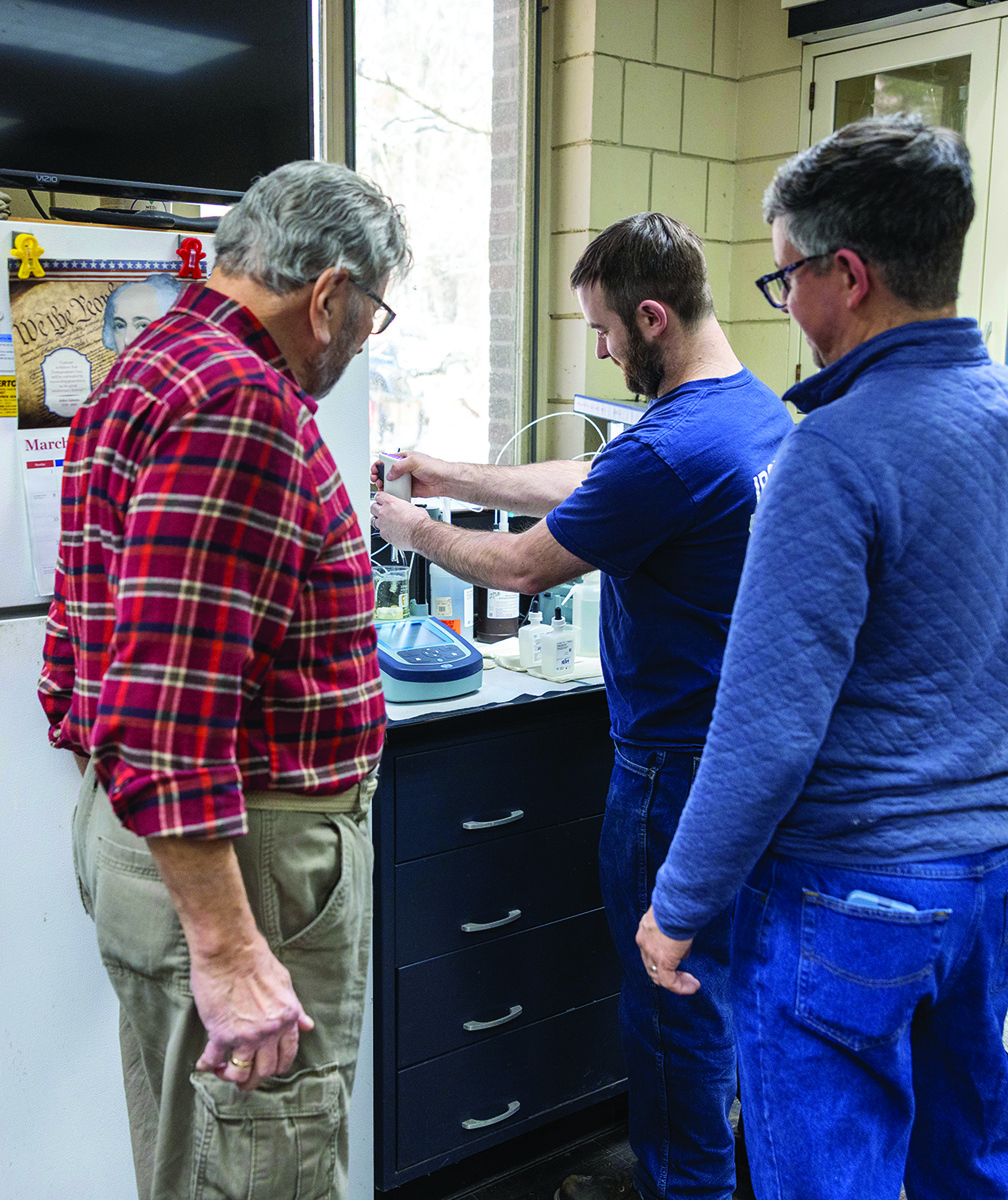
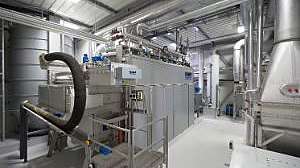
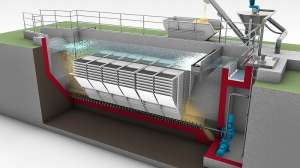
Ciccotelli contributes to the planning for the new plant and the search for new water sources. One challenge will be moving from traditional treatment to dissolved air floatation. The new plant will achieve the same water quality in a smaller footprint. It will also reduce the volume of residuals.
Counting costs
Town leaders, the water commissioners and the water department hope to bring the new plant online by 2029 at a projected cost of $50 million. The project follows a series of critical infrastructure upgrades, including the rebuild of a 135-year-old dam, replacement miles of water main and construction of a new 3 million-gallon standpipe.
The impact on water rates is a critical concern. As of May 2025, the town was refining and finalizing project components with an eye to holding the line on costs. Thanks to extensive public outreach by the water department staff, Ipswich residents overwhelmingly approved the appropriation at the annual town meeting.
“In everything we do, we strive to be transparent,” Ciccotelli says. “This is a critical project that can solve a lot of problems, but we have to be aware of the financial impact on our community.”
The passion lives
Although at retirement age, Ciccotelli shows no sign of slowing down. He likes the work and the close connections with community members: “I enjoy talking to people about our water system, which usually happens when I’m out walking my golden retriever, Tessa.”
It was after one of those walks, with Margot, on a regular Monday, that Ciccotelli learned he was to receive the Distinguished Operator award. At first, he thought there might be an ulterior motive. “I’ve been around for so long, maybe they thought if they gave me something I’d run away,” he jokes.
In his view, the award is for his staff: “You can’t recognize one person. Our success is a team effort.”