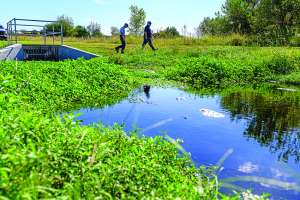
For my first project in the clean-water field, I worked in the 1980s on a public participation program involving land application of biosolids.
I was with a public relations agency hired for the project by a utility district. It started, ironically enough, with a heaping helping of bad publicity. The local newspaper editors thought the project was nothing but an exercise in image polishing: Why would the district spend $200,000 just to make itself look good?
The editorial cartoon showed a taxpayer half submerged in black goo and getting more of it dumped on his head from the end of a pipe. The caption read: The Sweet Smell of Boondoggle. The assumption was that the district was spending tax money to hoodwink people into thinking that something awful was really great for them.
In reality, the aim was to enable the public to critique the land application program and suggest ways to make it better. The one-year initiative led to significant improvements and greater public acceptance, and it won a national award.
A sticky stigma
I recalled that experience while writing a story about a Wisconsin city’s lead service line replacement project. (See the March edition of TPO). One issue the city ran into was that the state Department of Natural Resources set strict limits on funding to support the project’s community relations component.
Apparently, four decades after my land application project, suspicion remains about the value — and appropriateness — of spending money on outreach to citizens and ratepayers. The concept seems to get caught up in a belief that anything resembling “public relations” must include an element, or at least an undertone, of deception.
And yet community relations stands front and center in enabling essential programs and innovations, like lead service line replacement, direct potable reuse of wastewater and infrastructure investments generally.
I’ve seen agencies taking on everything from water projects to school building referendums warned to present “just the facts,” as if work they consider necessary must be described in language as neutral as possible. It’s no wonder, then, that public sector officials, including those in the water sector, are inclined to keep their heads down.
Winning coverts
Many residents’ first reflex is to oppose anything that increases taxes or fees. And that is what makes communication so important. I would argue that, boiled down to its essence, good public outreach on projects encourages people to see both sides of the ledger: The cost, yes, but also the benefits. Because, in the end, people buy benefits.
So my advice for anyone faced with promoting a major project or innovation in water infrastructure comes down, simply, to not being shy. If it’s necessary, and if you believe in it wholeheartedly, talk it up. Tell why it’s necessary, why it’s good for the community, why residents and property owners will be better off for it.
Don’t hide unpleasant facts. Lay out, for example, the costs involved and inconvenience people may experience along the way (street closings, temporary water shutoffs). But don’t hold back. Whether in printed or online materials or in public meetings, let your enthusiasm show. You have a great story to tell. So, tell it with gusto.