South Jordan has a good reason to investigate direct potable reuse of wastewater: It doesn’t have a drinking water source of its own.
The city, in south-central Utah, has no rights to surface water, and the aquifer below is contaminated from a history of mining. So South Jordan imports its entire supply from the Jordan Valley Water Conservancy District.
About 10 years ago, city officials began seeking other sources. “During those discussions and committee meetings, water reuse came up and we started to really look into it,” says Raymond Garrison, public works director. “We found facilities in California, Arizona and Texas, but a lot of them are based on reverse osmosis, which just won’t work for us. We don’t have any place to put the brine,”
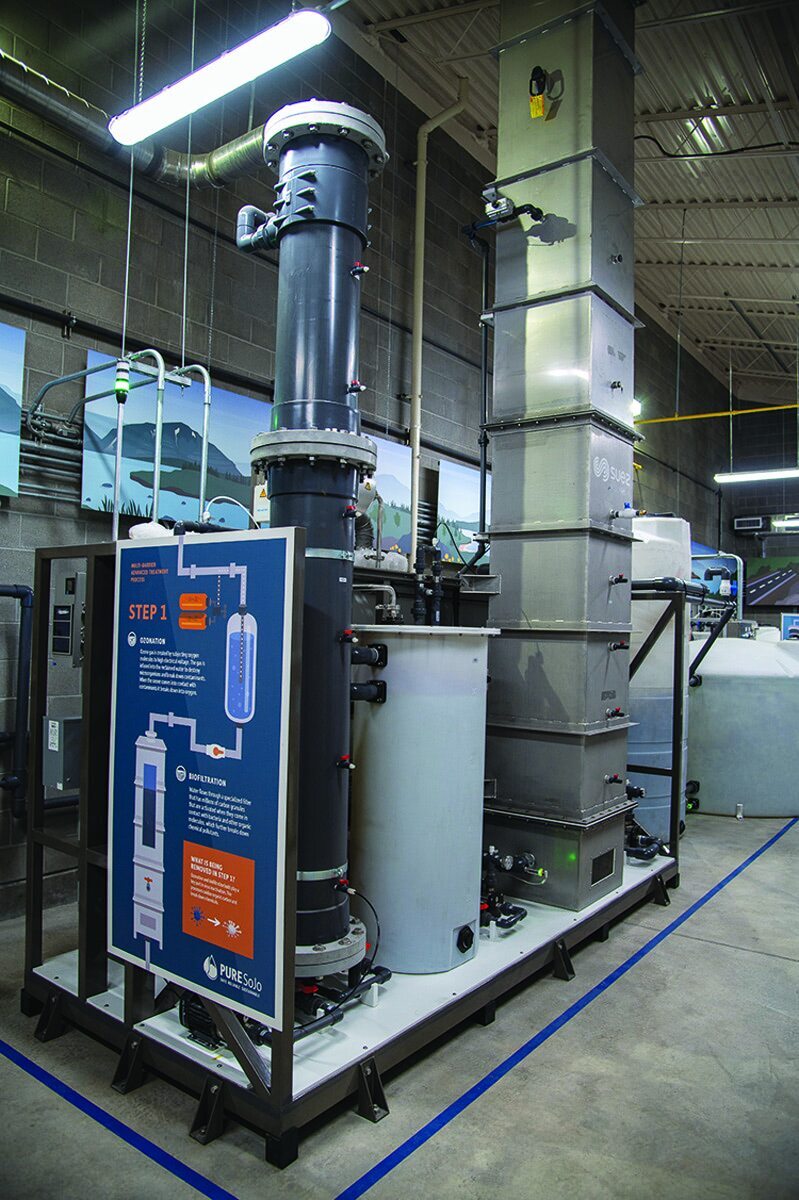
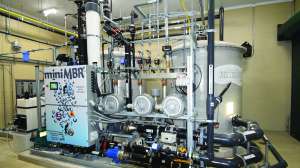
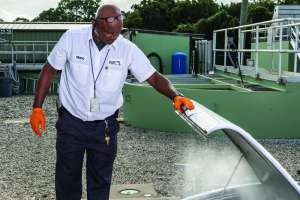
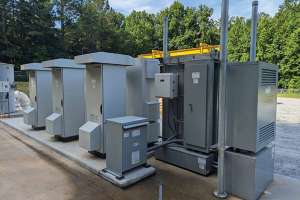
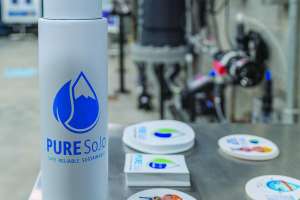
The city partnered with Carollo Engineering on a demonstration project to produce drinking water at the South Valley Reclamation Plant. The project, named Pure SoJo, uses a multistep carbon-based advanced treatment system.
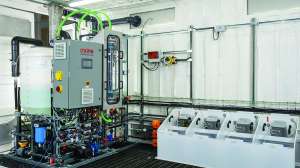
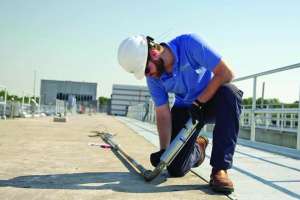
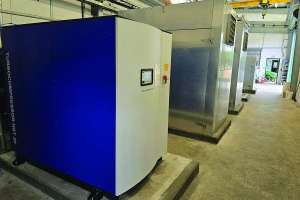
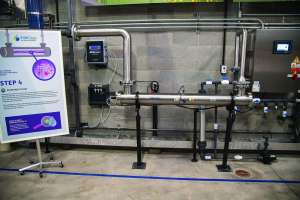
The process consists of putting wastewater effluent through ozonation and biofiltration (Veolia), microfiltration (WesTech Engineering), granular activated carbon (Continental Carbon) and UV disinfection (Evoqua Water Technologies). The demonstration project produces 10 gpm, 24 hours a day.
Since the demonstration project was the first of its kind in the state, numerous regulatory hurdles had to be cleared. “When we started this plant, we worked closely with the Division of Drinking Water,” says Garrison.
“In the first year, there weren’t a lot of public tours because they wanted us to actually operate the plant and gather data. After the first year, we received an operating permit from the state, and we could start serving the water to the public.”
Once the demonstration was open to tours, the city began marketing it, and water industry people from around the state, the nation and even Australia came to see the process at work.
“People were looking at this technology to see if it might be right for their communities,” Garrison says.
Now that the demonstration is in its fifth and final year, the city is considering scaling it up while examining some of the effects that might have. They include the impact on the Jordan River, which now receives the treatment plant effluent: The river flows into Great Salt Lake, which has been shrinking.
“The return flow to the Great Salt Lake is a hurdle for us,” Garrison says. “We don’t want to affect the lake in a negative way, and so we’re working through how any impacts could be mitigated. There are a bunch of things we’re working on as we operate this plant.”
Another potential complication to scaling up would be the distribution of the reuse water. South Jordan is not the only community contributing wastewater to the South Valley Reclamation Plant, so reuse water would probably have to be shared proportionately with the other communities.
“We feel like water reuse is something that should be in the state’s water portfolio, and it has potential benefits for South Jordan as we experience drought or population growth,” notes Garrison. “Wastewater is a source that’s right here. It’s a treatable source, and the pilot plant is trying to accomplish that. But it’s not only about demonstrating that the technology works. We have to work through water issues.
“Public perception is a real thing. Our job is to educate people and show them that this works. That has been kind of tough. People are hesitant, and you can’t blame them.”
Many people have visited the pilot project and have sampled the final product. “At first, maybe there’s some hesitation,” says Garrison. “But by the end of the tours, I would say people are very supportive. They try a sample and say, ‘It’s great tasting water.’”
While the public warms to the concept, the project has earned industry recognition. It received the 2025 Water Reuse Association Excellence in Action award and had previously received the American Council of Engineering Companies Engineering Excellence National Honor Award, as well as the Grand Award from the SACEC Utah chapter. It also won the Public Relations Society of America’s Silver Anvil Award for Climate Action and Sustainability.
For the time being, almost none of the water produced in the demonstration project is actually reused. Except for the small amounts sampled by visitors, the purified water goes back to the front of the treatment plant.
“It’s for just a couple purposes,” Garrison says. “It’s a small plant, only 10 gpm. The plant is designed to educate the public and gather data to help develop state regulations. Our main focus is really with the public, educating them on water use and getting them engaged in it.”
The city is undertaking a feasibility study for scaling up the advanced treatment process to 3 mgd, but Garrison sees numerous complications.
“We would love to do it sooner than later,” he says. “We would love to do it at the end of the pilot, but so many factors come into play. Public acceptance is crucial, and so are Great Salt Lake concerns and water rights. And then funding a plant like that at full scale has a price tag. So it’s a work in progress.”