The Chehalis Regional Water Reclamation Facility faced a crisis when one of its original 200 hp positive displacement blowers failed.
The event, in mid-2023, jeopardized the plant’s ability to meet process air demands for biological treatment. With the Pacific Northwest’s autumn rainy season and its high flows just a few months away, the plant team needed a replacement quickly.
Justin Phelps, wastewater superintendent, learned that a plug-and-play replacement would trigger a requirement for competitive bidding, which would lengthen the lead time for a solution. Therefore, he decided to explore an upgrade.
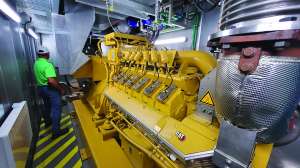
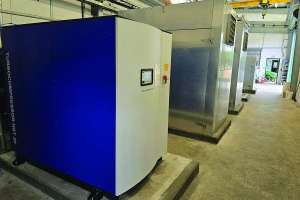
Phelps contacted Ryan Brusca, director of business development at Reiner Pump Systems, a Sulzer distributor, to investigate options that would meet the facility’s design and performance requirements. That led to replacement of the failed blower with Sulzer HST turbocompressor that enhanced efficiency and treatment performance.
Serendipity
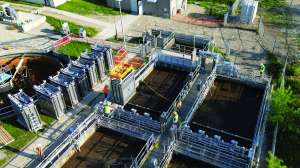
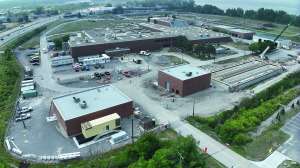
The Chehalis plant (3.5 mgd design, 1.3 mgd average) processes wastewater for the Washington cities of Chehalis and Napavine and the Lewis County Sewer District #4. Built in 2007, it serves a population of roughly 12,000.
In his search for solutions, Phelps quickly came upon the Sulzer HST. With its reputation for reliability and energy-efficiency, it matched the facility’s specifications. Better still, an unused 150 hp unit was sitting on a shelf in a city just 250 miles away.
That city had purchased the blower a few years previously, but its treatment facility had increased its capacity before installation, which meant the blower was undersized. The system had been placed in storage, giving the Chehalis team a perfect opportunity to quickly and cost-effectively acquire a highly efficient blower.
The Chehalis team coordinated with the municipality selling the blower and received it in just eight weeks. Once it arrived on site, the operations staff worked with Reiner Pump Systems and Sulzer’s startup and implementation team to install and commission the unit.

Close coordination
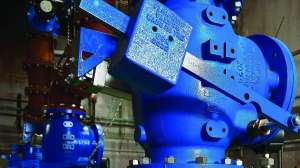
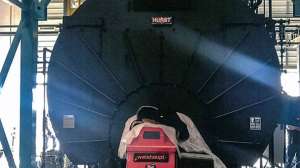
The Chehalis plant has one blower for each of three sequencing batch reactor basins. The original blower’s failure meant that one tank was inoperable. While only two basins are in operation during summer, all three need to be online for the autumn and winter wet-weather season.
Waiting for an in-kind blower replacement would have meant operating without one reactor zone, a costly, stressful and labor-intensive effort that could lead to treatment issues. Fortunately, the Chehalis facility never had to operate in that crisis mode.
Acquiring the HST cut lead time by 73%, and the coordinated effort among the facility team, Reiner Pump and Sulzer put the new blower into operation in October 2023, the critical deadline for restoring full blower functionality.
Greater efficiency
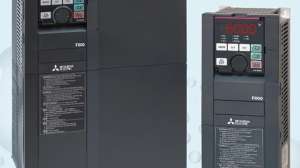
The HST turbocompressor was designed for efficiency. Its magnetic bearing technology enables reliable, efficient and quiet operation; a built-in variable-frequency drive provides the control Chehalis team members need to optimize performance.
“Instead of ramping the blower up and drawing it down, it can operate at a set percentage for a specific time interval,” says Phelps. “This consistent, reliable airflow creates a stable environment for the microorganisms. It’s the best way to treat the wastewater and deliver an effluent product that’s good for the river and reclamation.”
More efficient operation has led to significant energy savings. After the HST was commissioned, Phelps compared power consumption to the facility’s 2022 energy audit results. He estimated that the new setup saved 132,000 kWh per year, worth $6,000.
The efficiency gains also enabled Chehalis to qualify for an energy rebate from the Lewis County Public Utility District that covered more than 40% of the project’s total costs. Facility operators appreciate the unit for enabling a more consistent process and reducing maintenance. Except for filter replacements, it operates nearly maintenance-free. “Less preventive maintenance and fewer work orders make it easier for operators to do their job,” says Phelps.
Success
The return on investment in the HST led to a plan to upgrade all the plant’s blowers, promising even greater efficiency and energy saving. The team intends to replace a second original blower with an HST and to repipe the blowers to work with any tank.
This will create redundancy and enable the blowers to fulfill all of the plant’s needs for aeration. Once the new piping is in place, Phelps estimates that yearly energy costs will be reduced by more than $14,500. The upgrades are to go online in 2026.
“This project stands as a model of adaptive planning, interagency cooperation and responsive vendor support,” Phelps says. “Sulzer’s customer service has been great. They ensured that the HST not only fit our needs, but worked the way we wanted it to work.
“The confidence we built has had ripple effects within the plant and with our city council. Everyone sees that we’re making changes that enable us to be preventive rather than reactive. We’re looking at the future and making changes that will deliver energy savings and support the city as it grows.”
About the author
Raj Naicker (raj.naicker@sulzer.com) leads sales across the western United States for Sulzer, a company focused on critical applications for core infrastructure and processes for large essential industries.