Tightening regulations on effluent nitrogen and phosphorus are pushing clean-water operations toward biological nutrient removal.
Converting ammonia to nitrogen gas by nitrification-denitrification is effective, but it often requires a supplemental carbon source in the denitrification stage. One such source is MicroC 2000, a glycerin-based product from Environmental Operating Solutions.
Efficient denitrification depends on dosing carbon at the appropriate rate. To that end, EOSi offers the Nitrack program, a fully automated method for optimizing MicroC usage while consistently achieving effluent nutrient targets. The technology monitors process parameters in real time and doses only the amount of carbon source needed.
The service can include remote monitoring of chemical usage, continuous process optimization, and assistance to operators in responding to alarms or process upsets. Ryan Coleman, vice president of Engineering at EOSi, an Axius Water company, talked about the technology in an interview with Treatment Plant Operator.
TPO: What is the reason for dosing MicroC in biological nutrient removal?
Coleman: MicroC 2000 is a carbon source used mainly for denitrification. Plant influent contains plenty of COD, but there isn’t always enough COD in the right place at the right time. It’s needed in the anoxic zone for denitrification. Plants with very low effluent nitrogen limits especially need supplemental carbon to drive denitrification low enough to meet their permits.
TPO: What was the motivation for bringing the Nitrack offering to market?
Coleman: The intent is to help utilities meet their denitrification and treatment goals as cost-effectively as possible. We often observe plants meeting their goals but dosing far more carbon sources than they need, or struggling to meet their permits. Nitrack addresses both issues by automating carbon dosing. Operators input an effluent nitrate setpoint, and the system does the rest. It’s a 24-hour-a-day watchdog, making sure they stay in compliance without overdosing.
TPO: Can this technology be used to dose carbon sources other than MicroC?
Coleman: Theoretically it could, but we don’t sell the equipment as a widget for plants to use with other carbon sources. We typically offer it bundled with MicroC 2000. There is no risk for customers. They don’t have to sign a long-term commitment. They can try Nitrack as a way to save money and make their lives easier.
TPO: What does the Nitrack offering include?
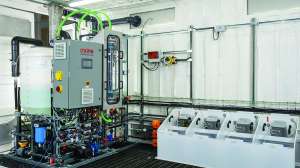
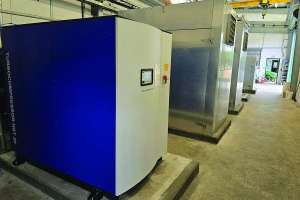
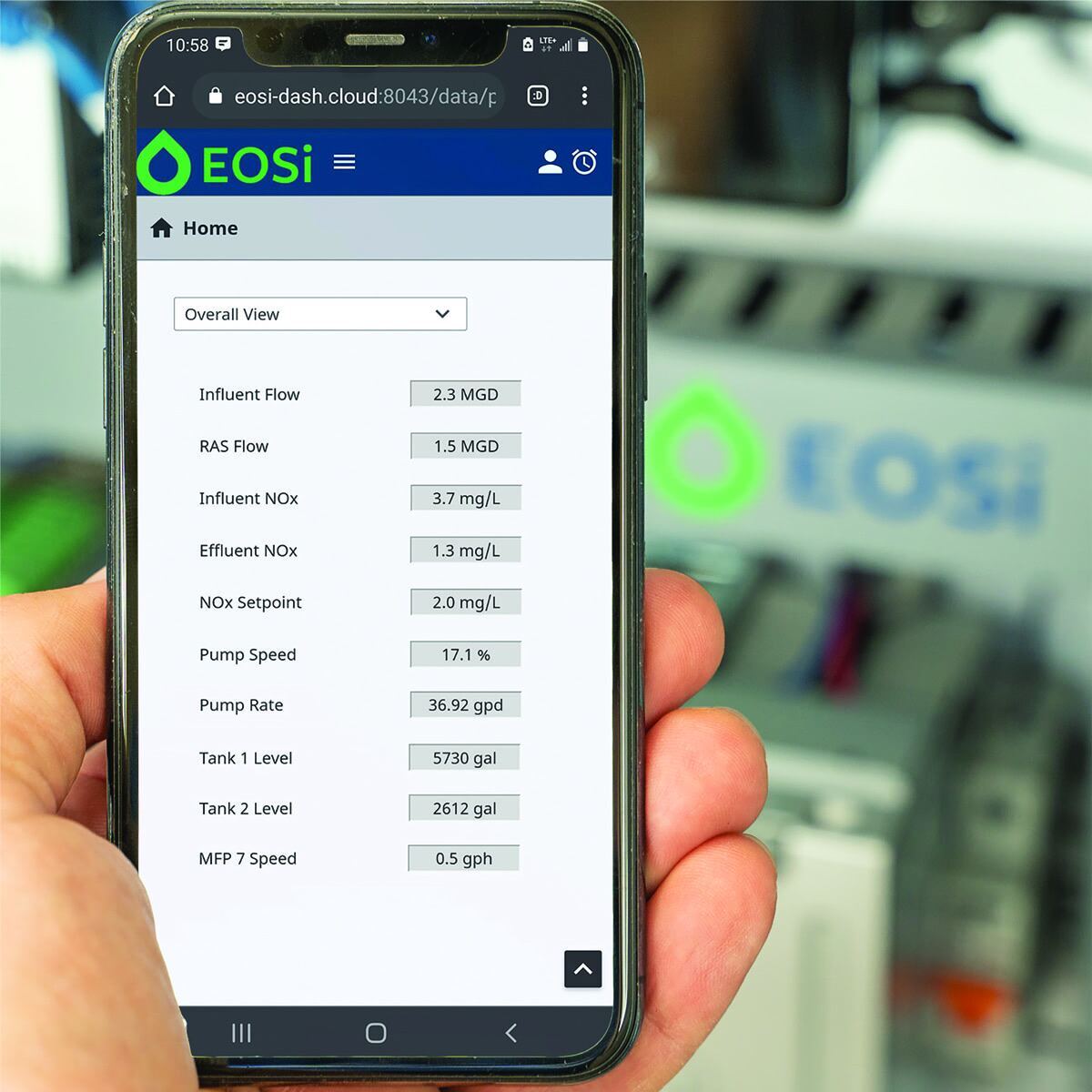
Coleman: It includes sophisticated algorithms, nitrate/nitrite probes, automation hardware and potentially a chemical feed skid. Generally, we retain ownership of all that, and it becomes a denitrification service. Our application engineers manage the Nitrack systems. For plants that are open to it, they monitor the process remotely. If they see an issue developing, they can call the plant team to troubleshoot and discuss remedies.
TPO: Without a technology like Nitrack, how would plants control carbon source dosing?
Coleman: Often, it’s a manual process. They set a dose and that’s where it runs. The problem with that is most plants have big diurnal swings. The loading spikes at certain times, and then in the middle of the night it’s almost nothing. But if they’re dosing manually, they have to set it for the worst case if they want to stay in compliance 24 hours a day. That is pretty inefficient. Another method is flow pacing, which accounts for changes in influent volume, but not for changes in the actual nitrates.
TPO: How does your technology regulate dosing?
Coleman: It looks at flow, the nitrate level, the dissolved oxygen and the amount of COD that’s already present in the wastewater. So one way or another, it accounts for all the relevant parameters and uses those to dial in the carbon dose very accurately.
TPO: In basic terms, how does the process work?
Coleman: It measures the flow at any point in time, and it analyzes how much nitrate is going into the anoxic zone and how much is coming out, as compared to a setpoint determined by the operators. It then calculates how much MicroC is needed to achieve that setpoint. In essence, it performs a continuous mass balance of nitrate across the anoxic zone. There’s a need to remove X pounds of nitrogen, and that requires X pounds of MicroC; the system then determines the feed pump speed necessary to meet that requirement. It also continuously runs a feedback loop to correct for any observed variance from the setpoint.
TPO: Can the technology drive any manufacturer’s chemical feed pump?
Coleman: For the most part, yes, as long as the pump can receive a signal from the plant SCADA system or our hardware. That includes the vast majority of pumps on the market today.
TPO: In what kinds of processes is Nitrack deployed?
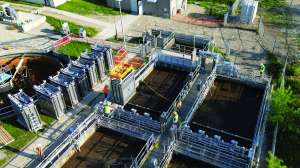
Coleman: It is applicable to any process with an anoxic zone: four-stage and five-stage systems, sequencing batch reactors, the modified Ludzack-Ettinger process. It’s always deployed in the anoxic zone and occasionally in the anaerobic zone for phosphorus removal.
TPO: How easy is this technology for plant personnel to learn and operate?
Coleman: We work with the plant’s SCADA team to set everything up and establish how communication will occur. We stay very involved at the beginning to establish all the tuning parameters, because every plant is a little bit different. Once things are set up, for the most part all they need to do is put the setpoint in: what do they want the nitrate and nitrite to be in the effluent? They can change that setpoint as their needs change.
TPO: What maintenance does the system require?
Coleman: There’s a little bit of planned maintenance involved with the feed pumps, which they would need in any case. The probes that gather the nitrate data from the process need cleaning about once a month and calibration once or twice a year.
TPO: What level of savings on carbon source can facilities expect with this technology?
Coleman: Plants that use flow pacing or very basic nitrate/nitrite-based PID loop control commonly see carbon savings of 20% or more. At plants that have been dosing manually, we see savings as high as 50%.
TPO: Is there a size range of plants for which this technology is best suited?
Coleman: It makes the most sense for plants using at least 50 gpd of MicroC, which usually means a flow of a couple hundred thousand gallons per day and up. Below that, 20% savings may not be significant.