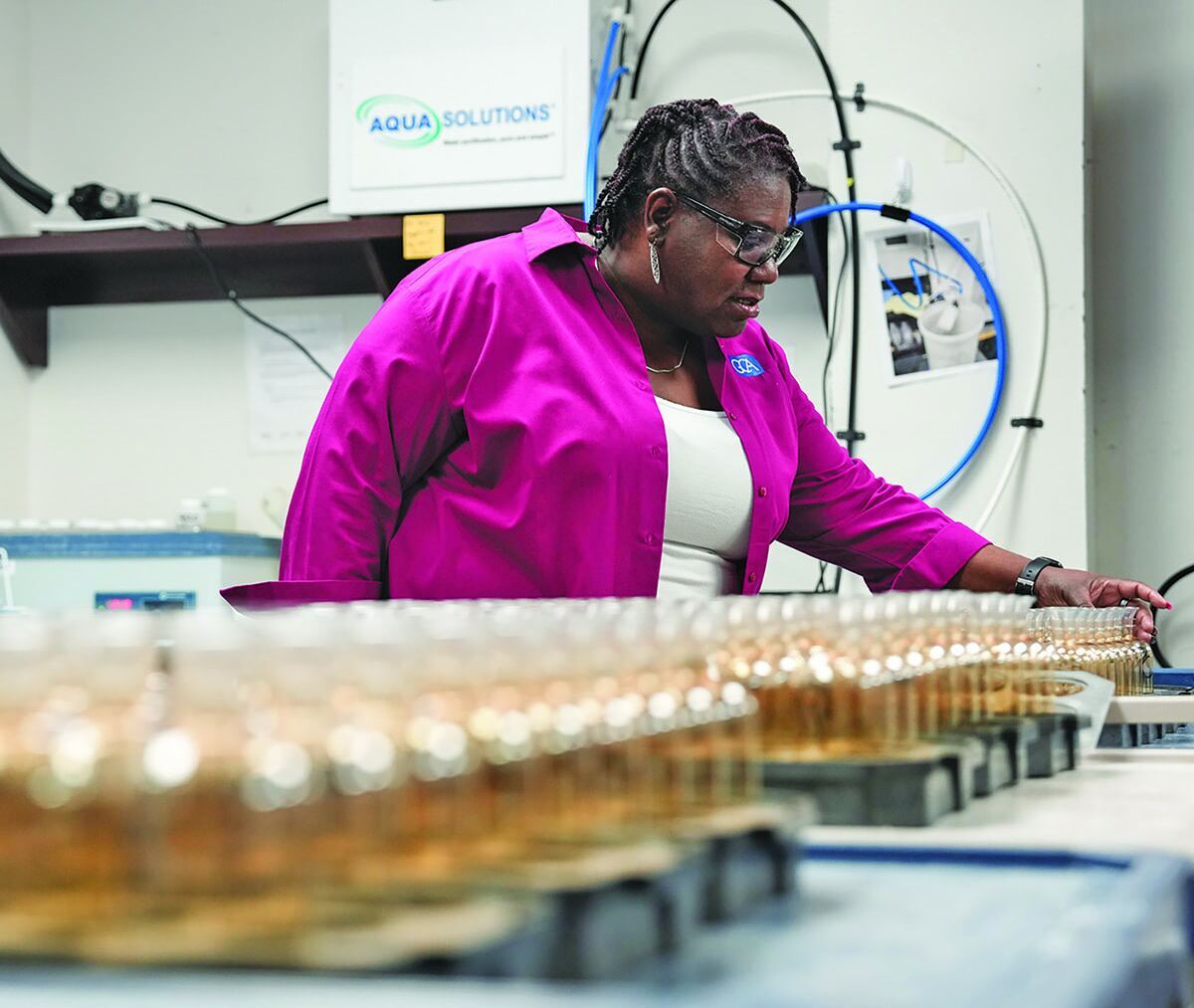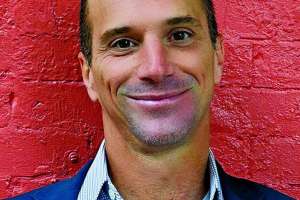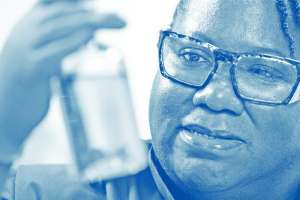
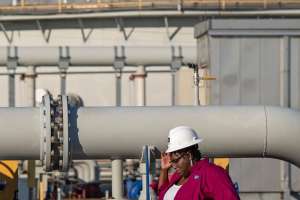
Jevonne Bass has to deal with lots of numbers — and pay attention to those that could indicate problems.
“We produce so much data, so many numbers,” she says. “We do management by exception. When something is out of trend, we have tools that are built to bring it to the attention of the lab technicians. Then people go upstream from there to make sure that it gets retested so that if it is a problem, we can let the facilities know.”
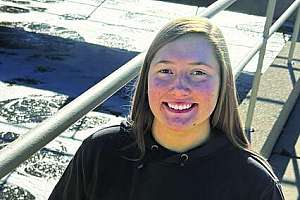
Bass is quality assurance manager at the 38-person Central Laboratory of Gulf Coast Authority, which is based in Houston and operates five wastewater treatment facilities in Texas. She started working at the lab right out of college and has been there for 22 years. She received a Water Environment Federation Laboratory Analyst Excellence Award for 2025.
One of her contributions to lab processes was digitizing as much as possible and making it easy to flag samples that represent potential problems. She also initiated a system of bar coding, using Microsoft Access and Excel, that helps keep track of standards, reagents, lab equipment and documents.
That system has been invaluable for investigating problems: “The tracking system enables us to drill down into the investigation side of things so that we can resolve problems quicker.”

Bass didn’t plan on a career in water treatment. Growing up in Tyler, Texas, she dreamed of being a doctor, lawyer and astronaut, all at the same time. In college, she majored in biology but also had minors in criminal justice and forensic science.
She anticipated working in a laboratory for a law enforcement agency, but her job at Gulf Coast opened her mind to a different career. “They recruited me straight from school,” she says. “I needed laboratory experience before anybody would consider me in any forensics field, and GCA had an opportunity for a chemist. Within six months of being here, I knew I would stay.”
She had a good background for a job protecting the environment because while growing up she spent a lot of time outdoors with her family fishing at Lake Tyler and Lake Palestine. She also did environmental cleanup projects with the Girl Scouts.
“A career in water made sense once I started working at GCA,” she says. “When I understood the mission and my part in it, I realized this is what I was built for. It felt like home.”
After a few years as a chemist, she moved into data validation, gaining insights to the kinds of data generated in the labs and its value. From there she moved into quality assurance, working with treatment plant operators as well as lab technicians.
“I was able to be a liaison between them,” Bass says. “I understood what the operators needed from us, and I could communicate to them what the lab needed.”
While working up to quality assurance manager, Bass always pushed to bring in new technology and to adapt it to her lab’s unique demands. “When we first got our quality management system, they told us it wouldn’t do this and it wouldn’t do that,” she says, “But we looked at what our needs were and figured out how to make it actually work for us.”
When the lab needed new procedures so technicians could do pH sampling that had been done by operators, Bass incorporated technology such as Bluetooth probes with results recorded on tablets. The results were reported faster and with less chance of error.
“I designed a plan that I thought would work, and we were able to tweak it a little bit,” she recalls. “We got it off the ground, and they were out there sampling the spigots and getting the results as fast as they could. We got accredited for it, and the accreditor congratulated me because the audit had absolutely no negative findings.”
People upstream and downstream of the lab rely on the data Bass and her team report, and it’s important that they have confidence in the numbers: “Our purpose is to deliver results to the facilities as soon as possible. We want to make sure they’re accurate, consistent and reliable, so that once they make decisions on treating the water, they know they’ve made the right ones.”
She encourages others to embrace quality, and she does it by emphasizing the overall mission: “I look at quality as putting the responsibility on people to want to do their best and deliver the best numbers, because they understand how many people and stakeholders are at risk if we don’t provide good quality.”
One of her concerns is the generation gap among the workers at the lab. Several team members are in their 50s and older, and several are in their 20s, but not many are in between. Sometimes the older and younger workers have difficulty communicating because they have vastly different experiences with technology.
One of her techniques for bridging the gap is to assign each worker a buddy. The older ones can share their experience, and the younger ones can share technological savvy: “Both parties have to be open-minded and willing to learn from each other. That’s the key. As long as everybody’s open-minded, you can make that bridge work.”
In her water treatment career, Bass has seen many changes in laboratory methods, but the end result — clean effluent — is still the same: “The water quality has always been really high here. The difference I see quality-wise is how operations are run within the lab and how we have adapted to changes in the field.”
Getting numbers to the right people at the right time is the rule now. She is never asked why some crucial information wasn’t communicated sooner. “When I was a young labbie, we’d hear that from time to time, but things have changed, and I hope I’ve helped foster that change.
“The labbies can tell operations what they need, and operators can tell the lab what it needs. We’re all working for the same cause. That’s what has evolved over the years. Everybody understands that we’re not silos. We’re working together.”