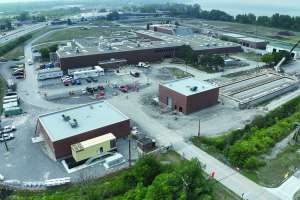
The Southtowns Advanced Wastewater Treatment Facility has been saving money on power for years with small changes that didn’t require new equipment.
In 2018 the plant, largest of six treatment plants operated by Erie County, New York, took part in a Strategic Energy Management Program sponsored by the New York State Energy Research and Development Authority. The program was designed to target low-cost energy-saving steps. It found lots of them, and the plant has reaped the rewards ever since.
An exploration
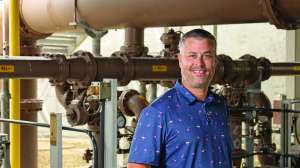
“Often when people speak of energy savings, they think about items such as premium efficiency motors and VFDs,” says Joe Fiegl, deputy commissioner for the Erie County Division of Sewerage Management. “Those are all good to do, but this program focuses on no-cost and low-cost things — tweaking your operations and making small investments.”
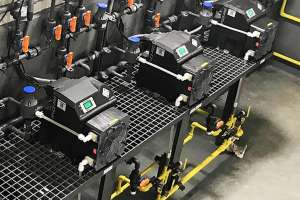
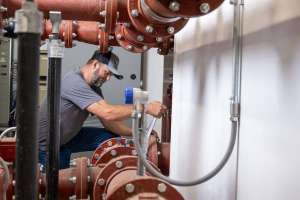
After some preparation on what to look for, staff members and others explored the Southtowns plant (16 mgd design) for targets. Some were obvious, like rooms where an activity sensor could control the lights, and light bulbs easily replaced with LEDs. They also found less obvious but still significant items.
“You walk by the setpoint on the plant water system and wonder if it needs to be at that pressure,” says Fiegl. “Or you pass clarifier and see that someone has a hose on constantly, maybe just to break up a scum layer.
“People think plant water is free, but of course it has a pump, and when you calculate the cost of a pump of that horsepower running continuously, even a 5% or 10% change in the pressure or the flow rate can save a couple thousand dollars a year.”
Generating oxygen
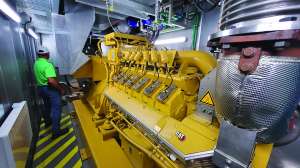
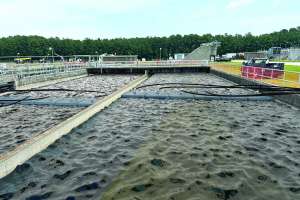
The Southtowns plant uses pure oxygen for aeration. Because its average flow is near design capacity, it is undergoing a two-phase expansion to more than double its permitted capacity. “A big thing we came out with was how we operated the equipment that generates oxygen,” Fiegl says.
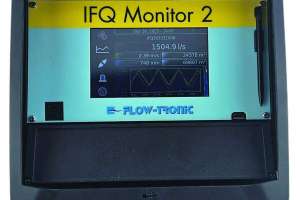
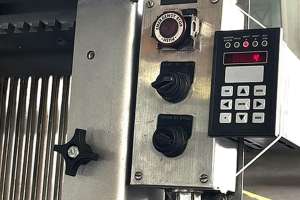
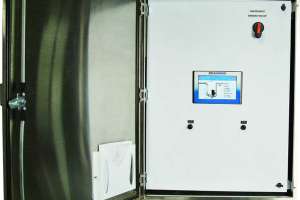
“It’s called a vacuum pressure swing adsorption system, and pressures can be adjusted to allow the VPSA to run unloaded. Improved monitoring and control on that equipment saved us $10,000 a year, just by making sure it operated within certain tolerances. It was being tweaked manually, but we were able to automate that process.”
The program exceeded management’s savings expectations. “We were hoping to see 5% savings, and we identified those savings pretty quickly,” Fiegl says. “That amounts to more than $50,000 a year.”

Adjusting pumps
Looking for high-horsepower loads that could be adjusted had an impact outside the plant as well.
“Pumping of sewage is a huge energy cost, and sometimes the wet well levels are held artificially low.”
“If you raise the wet well levels, that reduces the horsepower necessary to convey the wastewater, because you decrease the static head and decrease the energy load associated with the pumping,” Fiegl says. “Just changing a setpoint in a well can impact your energy loads,”
The wet well level adjustments didn’t lead to flooding issues, but Fiegl says that has to be considered when making changes. On the other hand, pump levels were often set conservatively at installation and were not necessarily the most efficient.
“You can’t make these changes without looking at other potential impacts, but often those levels were set artificially low,” says Fiegl. Conservative choices can increase energy costs, and sometimes levels can be adjusted without affecting the level of service.
No disappointments
None of the tweaks to plant operations brought disappointing savings because essentially they didn’t cost anything. Fiegl observes, “Truth be told, we went into this thinking 5% energy savings would be hard to get because we thought we were doing a pretty good job.
“But as soon as we got into this, we realized there were things we were not even looking into. The changes were pretty easily implemented. We didn’t have to bring all sorts of contractors or consultants. We did almost all of it without much in the way of outside resources.”
It wasn’t hard to get the staff to adapt to the changes once they saw the results. “Our operators and our maintenance folks are very busy, so it was important to show them why the changes were needed,” Fiegl says.
“Once we had a couple of early wins and documented savings of a couple thousand dollars a year, a sense of pride went along with that. Most of the ideas for improvements came directly from our operators and maintenance staff.”
One thing is certain: Since adopting the program, Fiegl will never ignore the costs of pumping effluent around the plant: “It’s wonderful using that over using potable water, but that doesn’t mean that you should just waste it. Because it’s not free.”