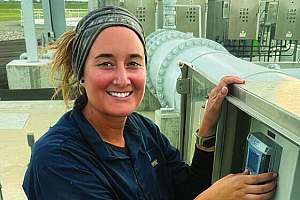
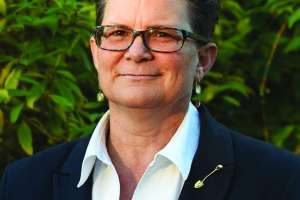
Valerie Jenkinson owns World Water and Wastewater Solutions, at one time among Canada’s largest water-sector training firms with more than 70 accredited courses and certification preparation options nationwide.
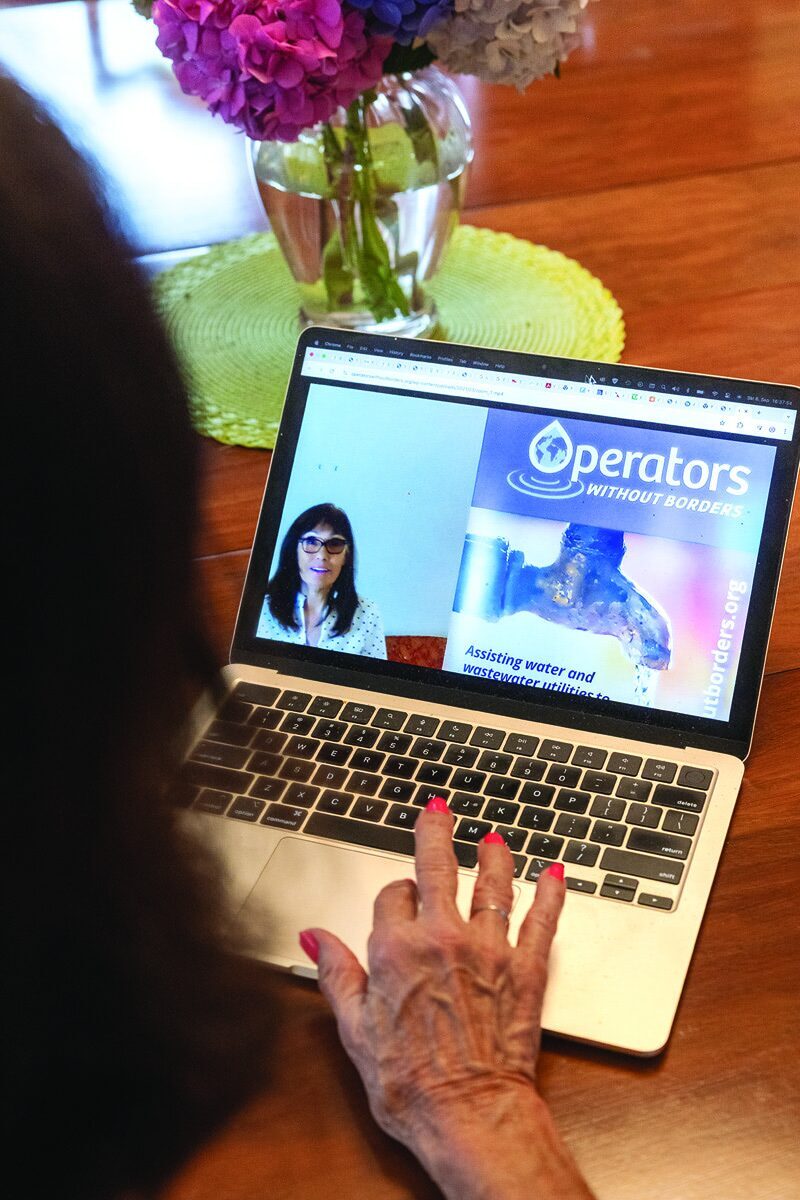
But Jenkinson is best known for founding Operators Without Borders, a nonprofit similar to Doctors Without Borders but for water and wastewater operators. OWB sends its professional members to disaster-stricken areas to help restore water and wastewater systems.
Since it was founded in 2017, its more than 160 volunteer operators have provided nearly $2 million worth of relief deployments and training globally, supporting water service recovery in communities struck by hurricanes, earthquakes and other disasters.
Its first mission was after Hurricane Maria in 2017, sending Canadian operators to Dominica to help restore drinking water and repair the main wastewater treatment plant. Jenkinson is the winner of the 2025 Water Canada Career Champion Award.
“It’s a great honor,” says Jenkinson, who chairs OWB. “There’s a couple of other very good nominees, like Robert Haller, executive director of the Canadian Water and Wastewater Association, who stepped up when our group sought help for the Dominica mission.”

Unlikely career
Jenkinson didn’t set out to work in the water industry, let alone live in Canada. “I lived in England, where I trained to be a physical education teacher specializing in modern educational dance,” she says. “And then I abruptly left England with my husband.
“I’d just got married, and he and his friend decided they wanted to come to North America. I was part of the package that came rather reluctantly. I have to say I was very happy to be a teacher in England and, of course, wasn’t qualified to do anything here.”
Jenkinson’s journey took her to the skiing town of Whistler, British Columbia. “We lived in a tent for a while,” she recalls. “I don’t know if we were exactly legal immigrants, but things were very different in those days. You could apply for immigration from within the country, and that’s what we did.”
She worked odd jobs in Whistler, waitressing during the ski season and planting trees in summer, moved to Vancouver, and had a couple of jobs that eventually led to being hired as a sales representative by Standard Brands (now Kraft Heinz).
“It was one of the largest food companies in the world, and I was the first woman they ever hired in the sales department in the food industry,” says Jenkinson. “So then I went back to school again and studied business, and I became the first woman sales manager in the industry.”
A twisting path
In 1978, Jenkinson started her own food brokerage company: “I was 27 and knew it all. I had been the top producer in the top division in the country, and I was a bit cocky. Then the recession hit in 1982. I quickly lost a lot of money and then had to fight my way back to keep the food brokerage alive, which I did for many years.”
She later started a customer retention auditing business that grew into a stakeholder-focused research company, Nova Quality Research, which became a fairly major player in the BC market. She sold that business in 2002.
From 1978, Jenkinson taught part time at the British Columbia Institute of Technology and other institutions. During the time she owned her research company she taught customer service and conflict resolution to staff at the city of Kelowna. “The wastewater manager was in three courses that I taught there,” she says.
“Afterward, he told me, ‘I’m the vice president of the BC Water & Waste Association. We want to do a survey. Could you help us?’ That led to other work that eventually included operator certification training. They gave me the content. I wrote the courses.”
Business and charity
After her work with the BCWWA, Jenkinson founded World Water and Wastewater Solutions, providing operators training and an Effective Utility Management Certificate Program.
OWB was created somewhat by accident. “Back in 2017, I had been working in the Caribbean for about a decade,” Jenkinson says. “That was when hurricanes Irma and Maria caused so much damage.
“I attended the Caribbean Water and Wastewater Conference, and one of the keynote speakers was Bernard Ettinoffe, general manager of the Dominica Water and Sewerage Company. He did a presentation about the impact of the hurricanes on Dominica’s water utility and the country as a whole.
“Afterwards I asked him, ‘What do you need?’ And he said, ‘We need everything. Our stores have been looted, and we have nothing left, but honestly, I could use some people to come and help us rebuild.’”

Boots on the ground
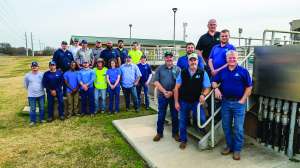
Jenkinson got permission from the CWWA’s Haller to speak at that organization’s conference and ask for volunteers. “We raised enough money to send three volunteers,” she says. “Within two weeks on site working with local crews, our people managed to divert a river using a commandeered backhoe, repair some damaged pipes, get the wastewater treatment plant running and its operators better trained, and restore water to three villages.”
That success motivated Jenkinson, Haller (now an OWB board member) and others to found the charity: “We thought: If we can do that in two weeks with three people, what could we do to help in developing countries?”
Today, OWB operates in the Caribbean, Africa, Asia, Australia, South America and Ukraine. Sponsors include the WEF, AWWA, the Environmental Operators Certification Program, Water Professionals International, the WWETT Show and others.
“We do disaster recovery, but we have well over 150 volunteers, and there’s only so much we can do in those situations,” Jenkinson says. “So we also work to help build capacity water and wastewater utilities in developing countries.” (The many good works of OWB are outlined in the August 2023 edition of TPO).
Since its inception, OWB has taken over her life: “I’ve been volunteering quite literally seven days a week for the last seven years. That has kept me from doing work in my companies. Luckily, I’m of a certain age where I could retire, so I can justify spending my time away from business life. Out of all the things I have done in my career this is undoubtedly the most rewarding”
A lean organization
OWB is entirely volunteer-run. It offers three-year memberships for $50 to fund its operations, but that is optional. There are three ways to volunteer: Travel to disaster-affected areas, travel to countries where people need more training, or stay home and offer training and advice remotely. “Even if people can’t go anywhere, they can still contribute,” Jenkinson says.
As for her plans, Jenkinson intends to keep her demanding volunteer job with OWB: “I never wanted to retire anyway. Working with our volunteers — because they’re the ones with the skills, not me — that’s what I am happy to be doing.”