Operators have lots of places to get training. Many neglect or don’t even know about what arguably are the best sources.
Fourteen environmental training centers, including several established in the 1970s after the Clean Water Act, offer high-quality, comprehensive education for water and wastewater professionals.
The original centers were built across the country with U.S. EPA funding. State associations could apply for grants toward facility construction. Some states joined with community colleges to offer operator training.
The centers were first designed to help wastewater operators learn biological treatment, as the Clean Water Act required plants to move beyond primary treatment. Today the centers offer a full menu of courses that help new operators learn their trade and enable experienced professionals to expand their knowledge and advance in their careers.
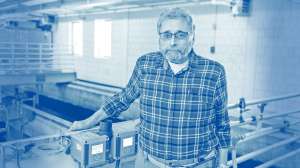
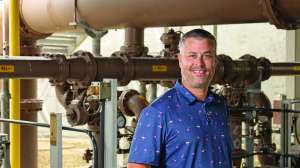
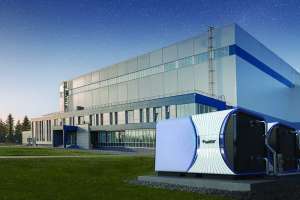
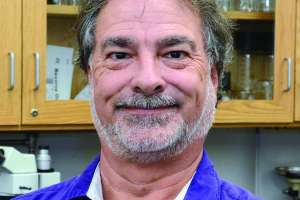
One of these is the Training, Research and Education for Environmental Occupations Center at the University of Florida in Gainesville, which opened in 1977. Ron Trygar is program manager for water and wastewater and a certified master environmental trainer through the National Environmental Safety and Health Training Association.
Based on his own experience and his exposure to other training centers, he talked about their programs and value in an interview with Treatment Plant Operator.
TPO: How did you become involved in water and wastewater operator training?
Trygar: While I was working at the Ocala treatment plant in 1989, my supervisor saw that I was able to get points across to our trainees and help them pass their exams and run the plant effectively. Later on I worked with the Florida Rural Water Association as a circuit rider, providing technical assistance and training to help operators troubleshoot and run facilities on their own. I came to TREEO Center in 2007, and we had an EPA program to provide in-depth technical assistance and training to utilities. It was a much more focused effort toward a smaller number of treatment plants around the state.
TPO: How would you describe operators’ awareness of the environmental training centers?
Trygar: They are under-recognized. As an example, during COVID when everything was shut down, I got an email from a small water and wastewater utility in another state that needed serious help. Through phone calls and Zoom meetings, I was able to guide them through some operating difficulties. The utility owner didn’t even know that one of the environmental training centers was in his town.
TPO: From your perspective, what is the value of training at centers like TREEO?
Trygar: We are here to support operators in learning how to run their facilities more efficiently, how to troubleshoot problems, how to pass exams and more. We provide a lot of safety classes. The centers provide unbiased, nonjudgmental training. The instructors are there simply to help people advance their education and knowledge.
TPO: Is there a component of training beyond skills enhancement?
Trygar: Yes. The training centers are actually developing leaders of the treatment facilities who can then train the next generation of operators. EPA and the centers have established train-the-trainer programs because the idea was not just to train operators to develop new trainers and keep that concept going. At TREEO we have annual or semiannual train-the-trainer courses designed solely to help people become trainers of adult learners. Right now we have an in-person water treatment class here at TREEO in which someone I trained over the past several years is the lead instructor. That’s an example of what we’ve been able to accomplish.
TPO: Are there any particular advantages to taking courses at a place like TREEO?
Trygar: The training centers have the advantage of being away from the operators’ places of employment. They’re not getting any kind of distraction from their workplace. When they come to TREEO, for example, they are here to learn and the focus changes for them. They become more committed to the actual learning.
TPO: How is that different from taking training at short schools or conferences?
Trygar: In those settings they’re also away from their work location, but there are so many people taking all the courses that there tends to be a dilution of the idea of training. Going to conferences and getting CEUs is more social; there are usually activities in the evenings, and that’s nice, but at a training center you have an environment more conducive to producing committed, dedicated and knowledgeable operators.
TPO: How broad is the curriculum at the training centers?
Trygar: I would say they cover anything and everything involved in water and wastewater treatment, including collection and distribution systems. Many centers offer exam preparation courses. And nowadays they devote a lot of attention to process control and new technologies, like membrane treatment and advanced disinfection. Some bring in experts from the state regulatory agencies to teach topics such as sampling protocols.
TPO: How are the training centers funded?
Trygar: We have to rely on student enrollments. All of the operating costs, including the staff salaries, are paid for out of registration fees. Many other training centers around the country are similarly self-funded. That’s why the course costs are as high as they are. In some cases there is funding from the states. Here in Florida, there is funding from the Department of Environmental Protection for some training, but usually that goes to the Florida Rural Water Association. We are self-funded as an auxiliary of the university.
TPO: Aside from funding, are there other challenges facing the training centers?
Trygar: What I find the most challenging is finding people who are interested in becoming trainers. A lot of people are intimidated or nervous and don’t feel they have the skill set to do what trainers do. We’re constantly trying to groom new trainers. There is an operator shortage, but there is an even bigger trainer shortage. I’m trying to cultivate people to become trainers, to work with the operator associations and rural water association meetings, really any kind of training they may be interested in.
TPO: What was your experience as an operator taking training center courses?
Trygar: When I was an operator, my colleagues told me, “You’ve got to take a course at TREEO.” In 1992 I attended a course here, and I was blown away. I went back to my treatment plant with all this knowledge, and I wanted to share it with everybody. I swore that if I ever had a chance to be a trainer, I wanted to work in a training center.
TPO: Would other training centers around the country offer similar quality training?
Trygar: I would say yes, without a doubt. At the facilities I’ve visited, the trainers are dedicated to the profession and to protecting the environment, but also to training and helping others. The level of excellence I’ve seen from the instructors tells me we’re all working out of the same train-the-trainer manual.