A Minnesota clean-water plant is taking energy production to the next level — molecular.
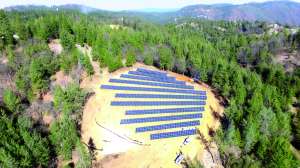
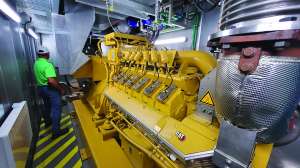
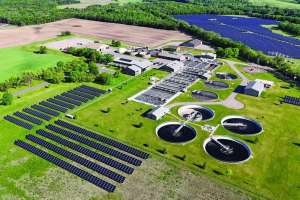
For years St. Cloud’s Nutrient, Energy and Water Recovery Facility has generated power with solar arrays (525 kW installed and another 1 MW under construction) and a biogas-fueled combined heat and power system (two 633 kW Jenbacher engines).
Now the city is installing an electrolysis system to separate water into its components: hydrogen to be used in a variety of ways, and oxygen to be used in the existing aeration treatment process. Heat from the electrolysis process will also be captured and reused. Power for the electrolysis will be generated by the existing renewable systems.
Diverse sources
One impetus for the electrolysis was more efficient use of biogas. “There are times we have to flare biogas because of a production cap we have with the utility,” says Tracy Hodel, public services director and city administrator. “Hydrolysis gives us a way to continue to use that biogas and store the hydrogen.”
Another motivation was to continue diversifying the energy portfolio. In addition to the solar arrays and the CHP, the city takes part in community solar projects and has a waste-to-energy program to process food waste in the anaerobic digesters.
“It’s really helpful when natural gas prices can go up and down,” Hodel says. “A few years ago, we had this massive price increase that we were able to avoid because of CHP. I hope one day we won’t need any natural gas. In Minnesota, that would be pretty spectacular.”
The NEW Recovery Facility (17.9 mgd design, 9.5 mgd average was built in 1976 and upgraded in 2010-13. It serves about 122,000 customers in seven cities. The city hopes to cover the entire $11.9 million cost of the hydrolysis project with various grants plus funding through the federal Inflation Reduction Act.
Small footprint
The hydrolysis equipment, a proton exchange membrane system manufactured in Connecticut by Nel, is to be operational in early 2026. It will use potable water at about 7 gpm, but because much of the water will be recycled, the system will consume only about a bathtub’s worth per day.
At full production, the system will produce 20 kg of hydrogen per hour, to be compressed on site and stored. One possibility is to store it in trailers that can be moved to where the gas hydrogen is needed.
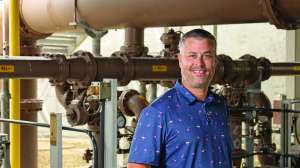
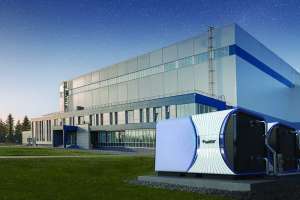
Jacob Ethen, wastewater services manager, says the electrolysis system can be easily integrated to the facility: “The container that houses all the equipment, including for water purification and cooling, is about 40 feet long. The stack for the electrolyzer is no larger than a large electrical cabinet, about 3 feet wide by 6 feet tall.”
The electricity for the electrolyzer will count against the facility’s production cap; the city is working with its public utility to restructure that agreement.
Hydrogen customers
Even before the system is operating, St. Cloud is finding potential customers for the hydrogen. The NEW Recovery Facility can use it, mixed with biofuel, to operate the CHP engines and the boilers, but other entities are also interested.
A bus manufacturer, New Flyer, has a factory nearby that will start building hydrogen fuel-cell buses in 2026. “Another area is our public transit system,” says Hodel. “Nearly all their fleet uses compressed natural gas, so we are working with the University of Minnesota on a way to blend in the hydrogen to further decarbonize the buses.”
Another industrial company has also expressed interest, and a distributor has told St. Cloud that it can sell and transport any amount of hydrogen the facility produces.
No more wasted fuel
St. Cloud has learned a lot about producing energy at its treatment plant. The first solar array, a 20 kW rooftop unit, was installed in 2016. One issue with renewables is supply variability: Solar panels produce only during daytime, and the biogas supply varies with the volume and types of food waste fed to the digesters.
“Several food and beverage industries haul waste to our facility, and we generate significant power from it, but we can’t control the volume,” Hodel says. “There are times when we have too much coming in, and times when we have too little.”
When there is too little high strength food waste, hydrogen can supplement the biogas to run the CHP system. When there is a surplus of food waste, all the biogas can be used to produce electricity for the hydrolysis system, and the hydrogen can be stored.
Nutrient recovery is also part of the picture in St. Cloud. The city used to land-apply up to 14 million gallons of Class B biosolids at 4% solids. When storage became an issue, the city installed a system from Lystek that produces Class A material at approximately 12% solids.
“It still has the viscosity to flow like a liquid and can be pumped, so we can use our existing land application equipment,” Ethen says. “We now land-apply about 5 million gallons a year, reducing our miles driven and fuel consumed.”
A sidestream from the dewatering centrifuge yields struvite, a high-phosphorous agricultural fertilizer component marketed as Crystal Green. Says Ethen, “It’s an environmentally responsible way to make sure the phosphorus doesn’t end up in the waterways and gets sent to areas that need it. It’s a way to recycle phosphorus.”