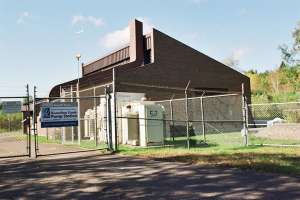
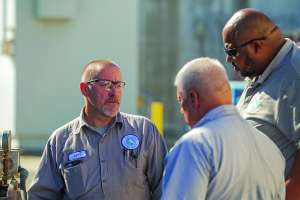
The Gloucester County Utilities Authority found that incineration of biosolids was no longer viable due to aging equipment and tightening air-quality regulations.
Amid growing concerns about energy resiliency, the New Jersey authority embarked on a transformation. What started as a compliance challenge quickly evolved into a pioneering model of sustainable infrastructure.
By replacing incineration with anaerobic digestion and combined heat and power, the authority turned its clean-water plant into one of the region’s most energy efficient and environmentally responsible. The project stands as a technical achievement and a regional blueprint for resilience.
Regulatory hurdles
Aging infrastructure and rising environmental compliance costs left little choice but to confront long-standing operational challenges head-on. For decades, the authority relied on fluid-bed incinerators to reduce biosolids to ash.
But when the U.S. EPA established new air standards in 2016, the incinerators exceeded the limits for mercury, dioxins and furans. Upgrading to comply would have required $12-$15 million in pollution control retrofits with no added capacity and escalating maintenance challenges.
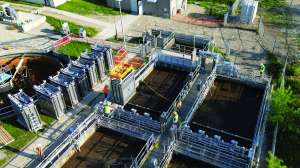
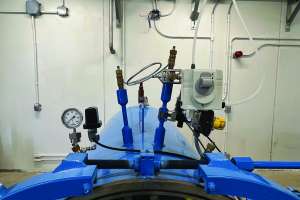
Therefore, the authority chose a cleaner path. Engineers designed and constructed two 1.6 million-gallon egg-shaped anaerobic digesters, the only ones of their kind in New Jersey. Egg-shaped digesters eliminate dead corners where solids accumulate, ensuring more effective mixing and significantly reducing maintenance.
With the new digester in place and compliance goals met, the next challenge was to navigate a complex and time-sensitive permitting process.

Creative engineering
A significant hurdle involved air permitting for the CHP engine-generators. The COVID-19 pandemic slowed state reviews to a crawl while a proposed regional formaldehyde study threatened a two-year delay.
In response, the project team pursued a creative solution: raising the exhaust stacks 56 feet higher than required. This eliminated the need for the study, satisfied regulators and kept the project on track. But another critical question remained: how to handle a large volume of biosolids in a state with strict management regulations.
New Jersey prohibits landfilling of raw sludge. Accordingly, GCUA worked with state regulators and county officials to develop new pathways for biosolids. Anaerobically digested material was piloted as alternative daily cover at the Gloucester County Improvement Authority landfill, turning the biosolids into a resource.
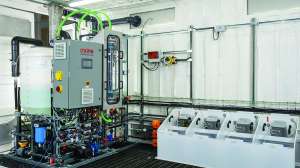
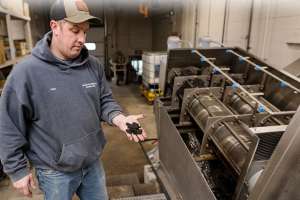
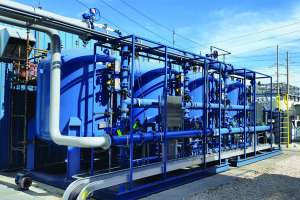
To support this shift, the authority invested in a thickening and conveyance process. Pretreatment steps improve materials quality and simplify handling, and conveyors transport biosolids directly to trucks. The approach met regulatory demands, improved operational efficiency and controlled cost. The next step was to make sure the new systems were practical, reliable and manageable for operators.
Operator friendly
While advanced, new system was designed with operators in mind. The digesters maintain an optimal 98 degrees F for mesophilic digestion, enabling reliable performance without excessive oversight. Maintenance agreements with equipment providers further reduced the burden on staff, allowing them to focus on core operations.
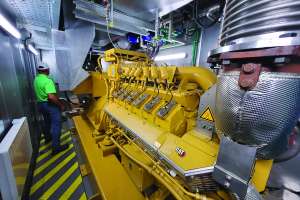
Strategic choices also ensured resilience and simplicity. For example, installing two 600 kW engine-generators rather than a single 1,200 kW unit provided redundancy and avoided triggering more complex federal permitting requirements.
Similarly, careful energy modeling kept the facility just below thresholds that would have required grid export status, introducing more regulatory complexity. While operational simplicity drove design choices, the financial realities of a $50 million transformation required equally thoughtful planning and creative funding strategies.
Innovative finance
The $50 million project also required creative financing. Support came from the New Jersey Environmental Infrastructure Trust and grants from the Bureau of Public Utilities. To qualify, the authority complied with stringent federal labor and material requirements, enabling capture of up to $2.3 million in performance-based incentives.
The investment promised significant returns. By replacing incineration with anaerobic digestion and CHP, the authority avoided retrofit expenses, reduced landfill costs and gained a renewable energy stream able to meet 80% of the plant’s power needs. The investments were also part of a broader mission to ensure that the facility could withstand future disruptions and keep essential services operating under any circumstances.

A significant outcome of the project is its contribution to regional resilience. After Hurricane Sandy in 2012, wastewater facilities across New Jersey and New York were crippled by flooding and power outages. While GCUA escaped inundation, it lacked the backup systems to remain operational during extended outages.
Now the biogas-fueled CHP engines generate most of the plant’s energy and can operate in island mode, disconnecting from the grid, during utility blackouts. Black start capability ensures that even in case of a total loss of external power, the plant can restart independently, safeguarding essential services for residents and providing reliability to regional partners that depend on the facility’s continuous operation.
Achieving this resilience depended not just on technology but on collective effort, trust and shared vision of everyone involved in the project.
Stakeholder engagement
Throughout the project, GCUA fostered trust and alignment by holding weekly meetings with staff, contractors and stakeholders. Decision-making was transparent: design options were presented alongside their costs, benefits and risks. This ensured informed decision-making and secured buy-in from the operators.
Educational outreach was another priority. The authority hosted symposiums for local colleges and engineers, sharing lessons learned and promoting knowledge transfer. This ensures that the project’s impact extends beyond the plant gates, inspiring other municipalities to pursue similar paths.
True transformation
The anaerobic digestion and CHP project was more than an infrastructure upgrade — it reimagined what a wastewater treatment facility can be. By shifting from incineration to anaerobic digestion with CHP, the authority resolved pressing compliance issues and created a sustainable, resilient and community-serving operation.
Its success demonstrates that with vision, collaboration and persistence, municipalities can turn regulatory challenges into opportunities for innovation. For civic leaders grappling with aging infrastructure, rising costs and environmental mandates, the project demonstrates that the future of wastewater treatment is not just about disposal.
It is about transforming waste into energy, facilities into resilient hubs and challenges into benefits for communities and the environment. The project shows what is possible when public utilities embrace bold thinking and commit themselves to long-term sustainability.
About the authors
Dennis K. Yoder, P.E., (dennis.yoder@rve.com) is a principal and Greg Sullivan, P.E., (gregory.sullivan@rve.com) is a senior associate with Remington & Vernick Engineers.