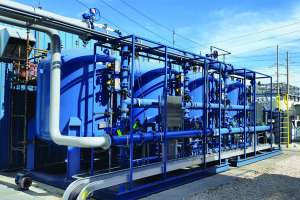
The Louisiana city of Lake Charles credits secondary containment vessels for 1-ton chlorine gas containers with strengthening its risk management plan audits and improving both community safety and storm resilience.
Efron Simon, water technical supervisor, says two 1-ton vessels have been in operation since 2020 at one of the city’s seven water treatment facilities. In early 2026, four more 1-ton vessels with upgraded loader systems will be installed, and plans are to extend this secondary containment technology to the remaining five sites.
The expansion will boost the system’s total production capacity to an average of 20 mgd, serving some 90,000 residents through about 33,000 service connections.
“We haven’t had any gas releases, but it’s good to know that if there are any, they are not only captured in the secondary vessels but are put back into disinfection production,” Simon observes. “When a risk management plan inspection team from the state Department of Environmental Quality came in recently, they were rather impressed.”
“One question they asked was why the secondary vessels weren’t at all our facilities. I said, ‘They could be if you loaned me the money to purchase them all.’” The inspectors noted that secondary containment is recommended for treatment facilities using chlorine gas.
Valued alerts
On weekends, the water plants operate with reduced staffing but a weekend operator who discovered a ruptured gas container could allow the system to continue functioning without interruption. “And then Monday, they could go in and take care of the problem,” notes Simon. “So, it becomes an urgency instead of an emergency.”
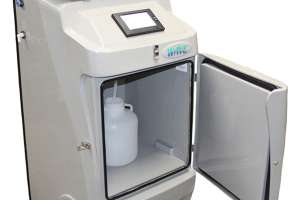
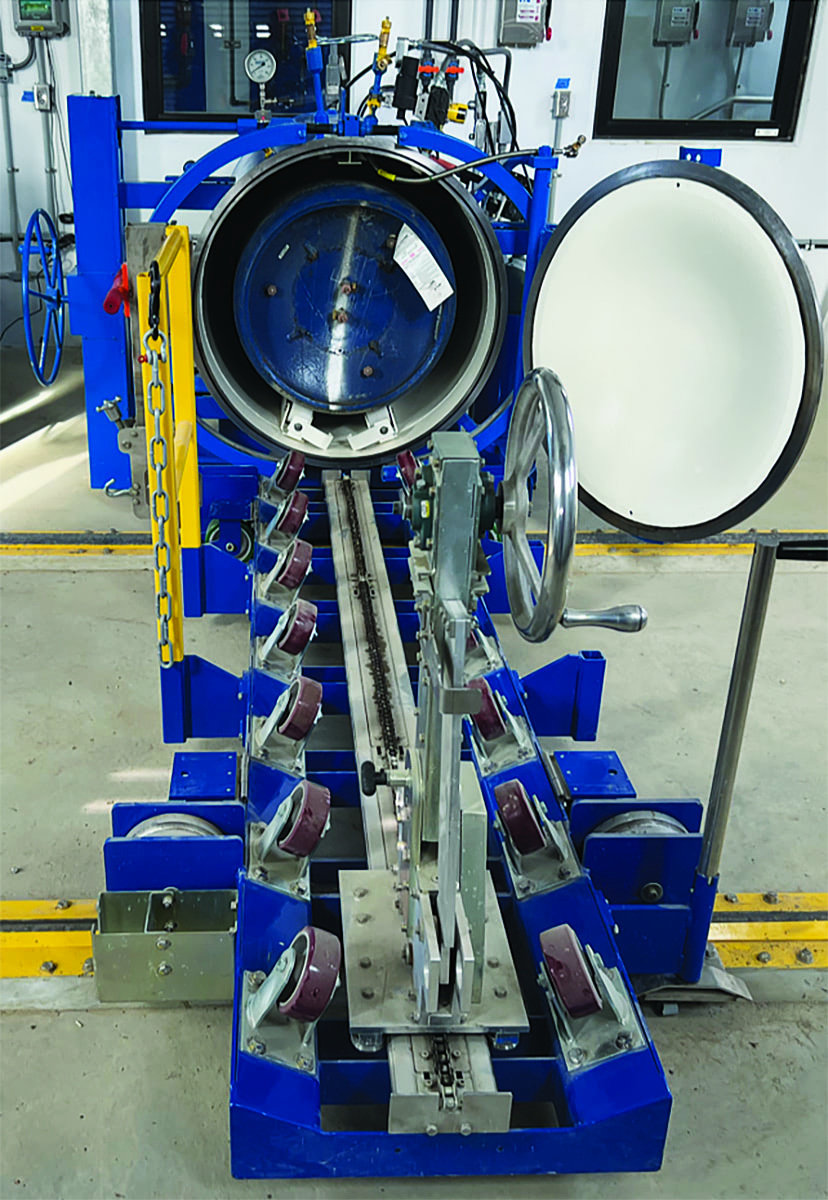
The sensor system is directly tied into the containment vessel. One it detects a problem and issues an alert, team members responding do not require full hazmat gear; a face shield is sufficient when opening the vessel door. “The DEQ team was impressed because they saw no scrubber system,” says Simon.
“Instead of a leak from scrubber containment, there was capture by the vessel. I can keep pulling from the ton container until it’s empty and then go through the normal container change out. When you use the secondary vessel containment, you see how friendly it is and how much better it is than dealing with a scrubber system or any other system.”
Simon notes that the advantages of secondary containment include having no moving parts and eliminating the mixing, regeneration and other handling of chemicals: “With this alternative, you can just spend two work-hours doing the seal and greasing the threads, and making sure that the seals are good. And then we have a change out system where we take one container off, send it to the shop and put out another one.”
Storm safeguards
Given the treatment facilities’ location about 30 miles from the Gulf of Mexico, routine precautions for storm preparedness are firmly in place. “It helps that we have our chlorine ton containers inside containment vessels that are sealed,” he adds. “It makes it easier to see that they are secured. Our ultimate plan is to put them inside a building, but for now we just take our rotometers off.”
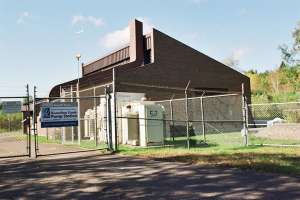
On the community safety front, one facility placed its containment vessels outdoors. A school sits directly across the street, making safety especially important. The containment vessels provide an added measure of security: “Otherwise, we might have to deal with emergency response and deal with the DEQ.”
The initial deployment of the secondary containment vessels required close coordination with the manufacturer, ChlorTainer/TGO Technologies, to determine appropriate placement and to ensure they were positioned away from doorways and primary access points.
The company also provided extensive support to plant operators, helping to update procedures for handling chlorine containers and to resolve operational challenges. For example, ChlorTainer personnel worked with staff to implement motorized doors for the vessels.
Responsive manufacturer
“Once they got those issues resolved, it became something that the operators don’t complain about,” Simon recalls. “Then we just had to focus on the proper times for upkeep and maintenance. After having them for a few years and working out the kinks and the concerns we had, we feel pretty good with them.”
“I call those minor technicalities — nothing to cause us a major issue. I like their customer service. If you have an issue and reach out, an email or a phone call comes back to help you. Their team has also visited.”
The secondary containment vessels designed for 1‑ton chlorine gas containers are also available in configurations for 150‑pound cylinders, and a dual 1‑ton model is offered as well. Each vessel is an ASME‑rated pressure tank, and any chlorine released inside the vessel is automatically routed back into the injection system at a normal flow rate.
A fail-safe valve is integrated with the chlorine leak‑detection sensor so that in case of an external release the nitrogen fail-safe valve closes to fully stop the discharge. With proper maintenance, the vessels have an expected service life of at least 100 years.
Routine maintenance consists of replacing the Viton O‑ring on the vessel door once per year, a process that takes about 30 minutes and costs about $200.