Adsorption is a proven and reliable method for removing PFAS from water. Now two companies have joined to produce and deploy a sorbent material tailored specifically for PFAS.
Cyclopure brings a PFAS-selective and regenerable adsorbent while Kurita America offers expertise in treatment system design and fabrication. The companies say that they provide a combination of engineering capabilities and advanced material science that enables reliable, cost-effective and sustainable PFAS management solutions.
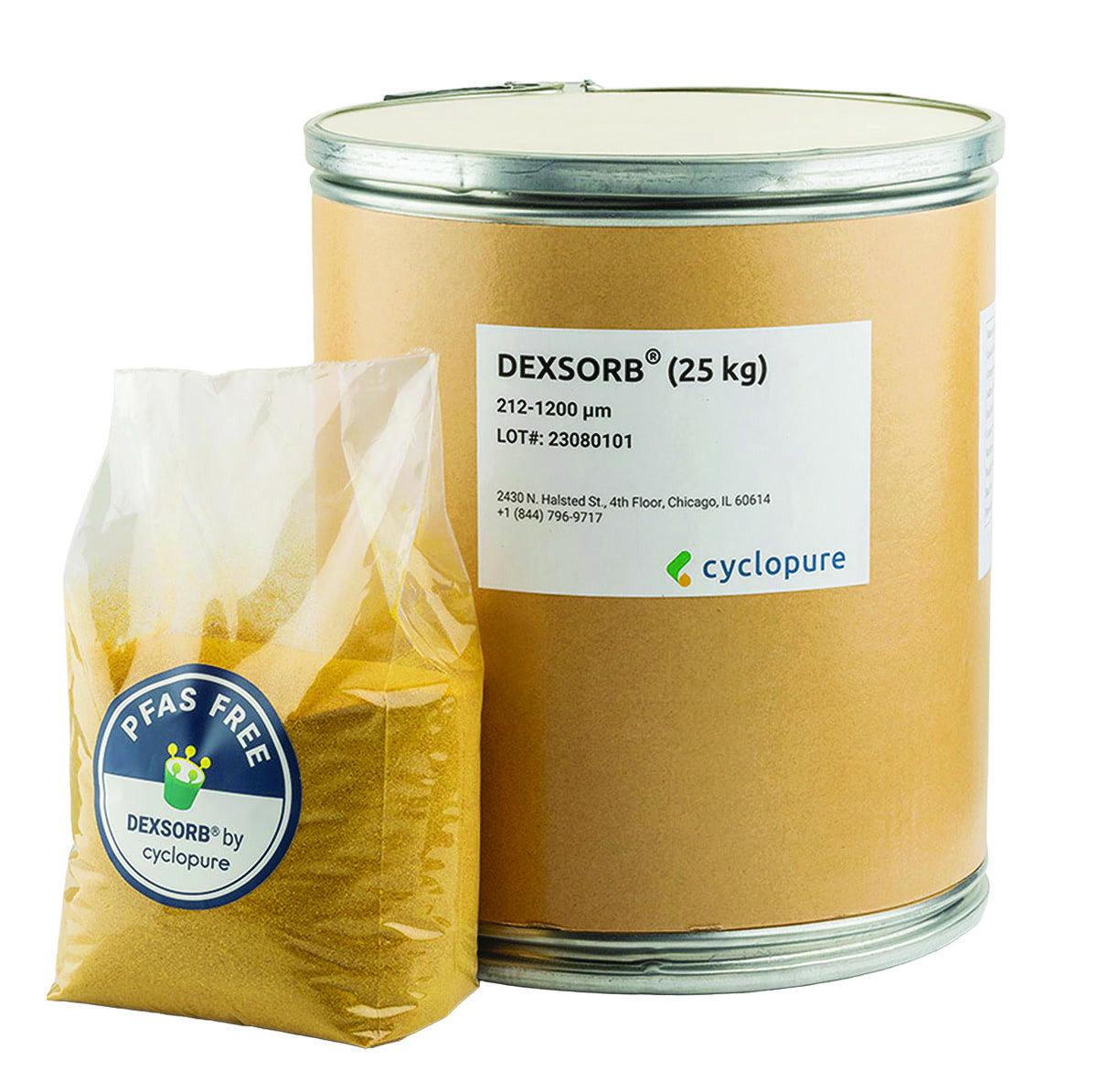
Cyclopure says its media delivers four to 10 times higher adsorbent capacity than traditional activated carbon and ion exchange resin while removing a broad spectrum of short- and long-chain PFAS. Its DEXSORB material has been deployed in residential, municipal, military and industrial applications.
The company also offers a regeneration and concentration process that enables affordable PFAS destruction without risk of recontamination and with reduced liability exposure. Meanwhile, Kurita specializes in filtration equipment design and fabrication.
A new regeneration facility in Kalamazoo, Michigan, serves as a source for scalable PFAS treatment. Cyclopure CEO Frank Cassou and Kurita America CEO Todd Emslander talked about the offering in an interview with Treatment Plant Operator.
TPO: What is the motivation for bringing this technology to market?
Cassou: The U.S. EPA has adopted strict contaminant limits for PFOA and PFOS. The need for treatment is not limited to municipal groundwater and surface water supplies. It also applies to PFAS in industrial discharges to wastewater treatment plants, Department of Defense remediation sites and landfill operations.
TPO: What differentiates this offering from other solutions in the marketplace?
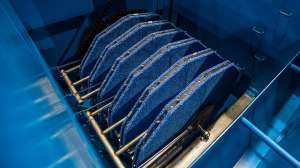
Cassou: The legacy activated carbon and ion exchange resins have been used for years, but DEXSORB is designed specifically to target and remove PFAS. It does not adsorb co-contaminants in water, such as natural organic matter, that would otherwise take up adsorption capacity and slow down the removal process. It enables shorter contact time, which means less media volume and greater treatment capacity. This translates into advantages that include more compact footprints and less frequent media change out.
TPO: What would be a generic descriptor for the sorbent?
Cassou: It is a molecularly selective adsorbent. The base material is beta-cyclodextrin, which is derived from corn starch and potato starch.
TPO: In basic terms, how does this technology operate?
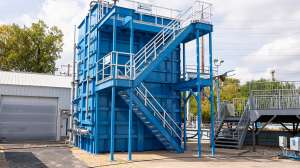
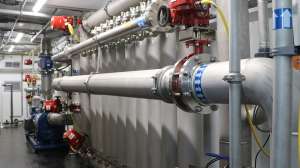
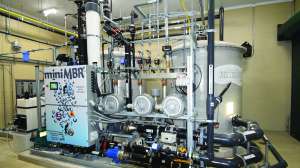
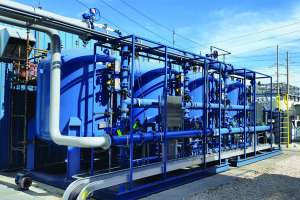
Cassou: Our specialized vessels are similar to those used for ion exchange and activated carbon. When the time for change out arrives, we replace the media in one of the vessels and take the spent media to a regeneration facility we built with Kurita in Michigan. We put the material through a simple ambient-temperature backwash that separates out the PFAS. We concentrate that and send it out for incineration. Then the media is ready for reuse. There is 100% PFAS recovery although we lose about 3% of the media to friction and breakage.
TPO: Where in a drinking water treatment process is the technology typically deployed?
Cassou: It would follow conventional or membrane treatment. We think of it as a polishing step after all the other processes and before distribution.
TPO: How easy is the adsorption process for plant personnel to learn and operate?
Cassou: It’s very simple and straightforward. Operators typically are experienced with gravity or packed-bed filtration and pressurized vessels. We have smooth hydraulics and low pressure drops. They simply have to monitor the pressure drop and make sure nothing in the system is affecting the hydraulics.
TPO: What maintenance does the process require?
Cassou: The maintenance requirements are minimal. Because the media is selectivity designed at the molecular level, it is not affected by natural organic matter or bacteria in the water that could lead to biofilm formation. So there is less need for frequent backwashes.
Emslander: For customers who are not as savvy with the operations side of the offering, Kurita has a growing focus on aftermarket support through maintenance, parts and service packages. That’s another key to our partnership with Cyclopure.
TPO: What kinds or sizes of facilities is this offering best suited for?
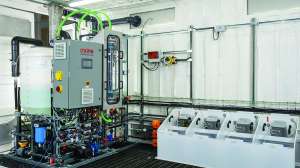
Cassou: It is applicable all the way from pitcher filter cartridges, to residential point-of-entry, to small-scale systems where we have a number of installations around 100 gpm, to full-scale treatment from 5 mgd to 75 mgd where we are working with Kurita. We’re going through a lot of evaluations and due diligence.
Emslander: Technologies like ion exchange and activated carbon work in drinking water but not as well in other applications. There is a lot of activity and interest around PFAS mitigation in industrial wastewater — food and beverage and other sectors.
TPO: How was this technology proven reliable and effective before commercial release?
Cassou: We started piloting it in 2022, and since then we have done about 40 pilot installations for drinking water, industrial wastewater and Department of Defense remediation. Toward the end of 2024 we started going full-scale, and we continued that last year. We now have full-scale systems that have been operating for over a year and are performing as intended.
TPO: How would you describe the synergy between your companies with this offering?
Cassou: Cyclopure offers the media and has engineering capability, so we can explain the technology, do treatability studies and run pilot tests. When customers say they like the media and ask how to deploy it, Kurita is already in the market providing pretreatment and other services to municipalities, and that enables us to go turnkey. They have a lot of technical expertise in their sales and engineering teams. This is more than a distribution relationship. We are aligned with a smart technology company.
Emslander: For Kurita, this is a user-friendly technology that fits naturally into treatment processes operators already understand. It uses infrastructure similar to conventional adsorption systems. That familiarity creates a sense of comfort – they know how to run it, maintain it, and integrate it into existing treatment trains. What’s new is the performance of the media and the circular regeneration model behind it. Kurita helps deploy this solution across multiple applications, from municipal drinking water to complex industrial wastewater. That gives users a practical path to address PFAS using systems they already trust.