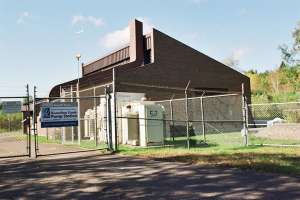
The Oro Loma Sanitary District/Castro Valley Sanitary District Water Pollution Control Plant is more than 80 years old. That doesn’t mean it can’t be held to high standards.
Despite its age, the plant can churn out up to 20 mgd of high-quality effluent in serving a population of 180,000 in the Oro Loma (California) Sanitary District. The plant consistently outperforms regulatory standards. Plant personnel track 25 performance benchmarks that cover everything from regulatory compliance to energy use and customer service.
The plant’s advanced nutrient removal process maintains total inorganic nitrogen below 10 mg/L, well under the permit limit for nutrient discharges to San Francisco Bay.
For these and other accomplishments, the plant was named 2024 Plant of the Year (medium-size facilities, 5-20 mgd) by the California Water Environment Association after winning a regional CWEA award.
The Oro Loma district serves the communities of San Lorenzo, Ashland, Fairview, Cherryland, Castro Valley and parts of Hayward and San Leandro via 271 miles of sewers. Apart from treatment excellence, the district is cutting its fossil energy footprint through solar power, biogas-fueled cogeneration and a FOG receiving program that supports renewable energy generation. The FOG essentially supercharges production of biogas for the cogeneration engines.
“Our ammonia removal rate for the year has averaged 99.5%,” says Joe Carlini, operations manager for the district. “Our BOD removal was 98.5% while our TSS removal rate was 99.1%. Our effluent total inorganic nitrogen has measured less than 400 kilograms per day.”
Eleven operators run the plant; 10 are Level III licensed and one is Level IV. (Level V is the highest in California.) “They must have a minimum Level III operator certification,” Carlini says. “They work 24/7, 365 days a year.”
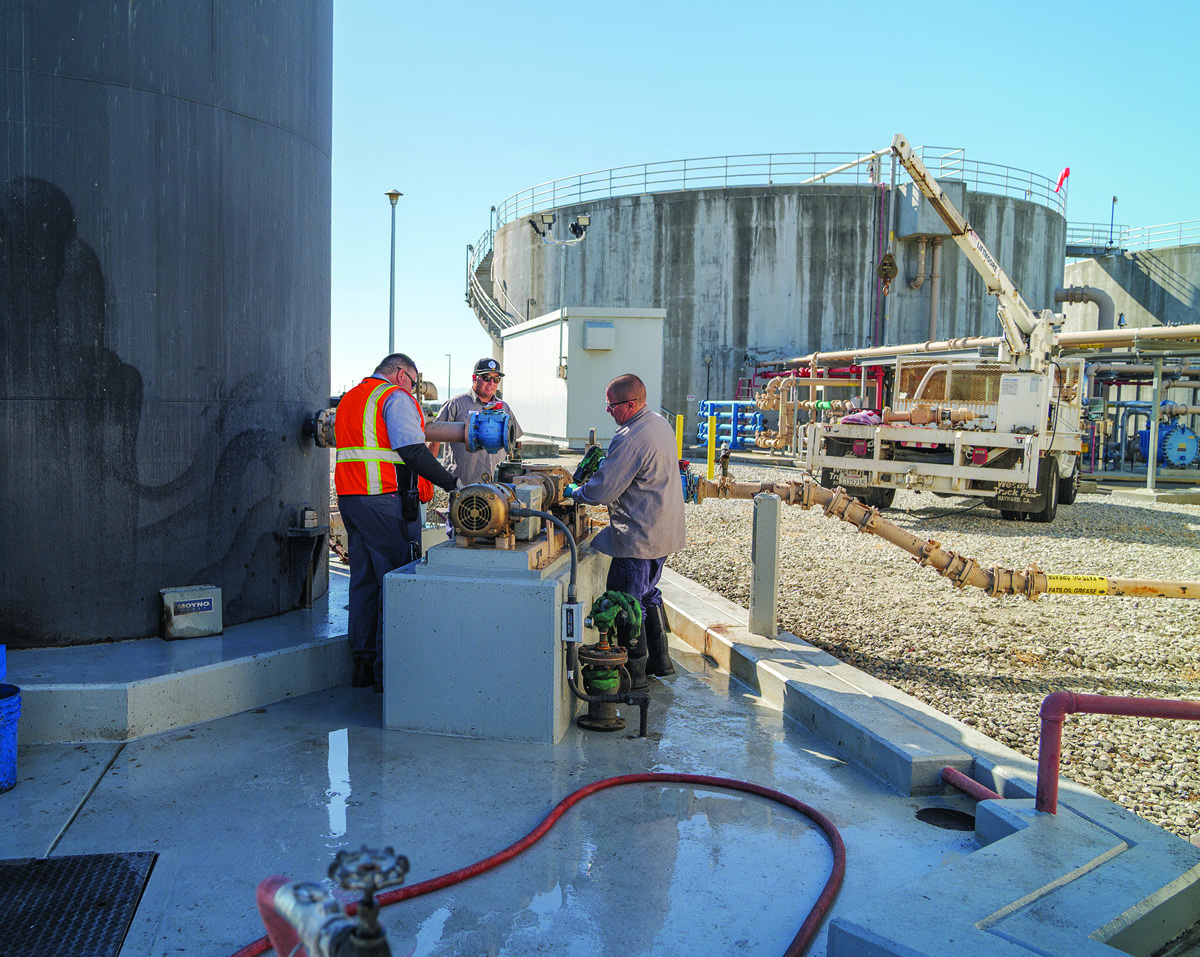
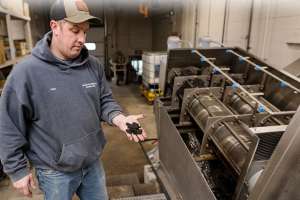
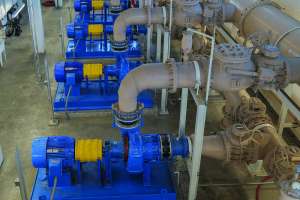
In the treatment process, four Worthington influent pumps (Flowserve) deliver raw wastewater, which first passes through two Vulcan Mensch bar racks. Screenings are dewatered in two Vulcan compactors.
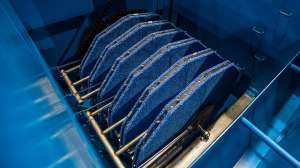
The flow then travels through a grit glassifier system (WesTech Engineering) with a sedimentation tank and two centrifugal hydro-cyclones. Three primary sedimentation tanks follow. The flow then enters a modified Ludzack-Ettinger biological process that converts ammonia to nitrogen gas by nitrification/denitrification. Three 200 hp dual-core APG-Neuros turbo blowers deliver air to the basins via Ovivo Aerostrip fine-bubble diffusers.
Secondary effluent goes to three Envirex clarifiers (Xylem) before disinfection with sodium hypochlorite followed by testing to ensure compliance with regional water quality control board regulations.
Disinfected effluent is either dechlorinated before discharge to San Francisco Bay (requiring a higher level of treatment) or sent to East Bay Dischargers Authority and dechlorinated for discharge to the bay or reused at Sky West Golf Course.
Waste activated sludge is sent to four anaerobic digesters, followed by dewatering to 12.5% solids on two pressure and gravity zone belt filter (BDP Industries). The dewatered biosolids are transported to solar drying beds to increase the solids content to 80%. The resulting material is applied to farmland.
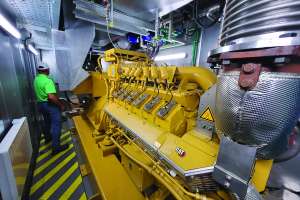
Biogas from the digester fuels a cogeneration system driven by two Waukesha reciprocating engine-generators (INNIO) with a combined 720 MW capacity. The two meet 80% of plant electricity demand; the remainder is fulfilled by a 0.35 MW solar panel array and a 0.25 MW battery system (Tesla). Excess electricity is exported to the Pacific Gas & Electric grid.
Although built in 1950, the Oro Loma plant has been updated over the years. “The original plant is probably about 40%-45% of the plant we have today,” says Carlini. “We’ve had upgrades over the last 20 years; the biggest was finished in 2020.
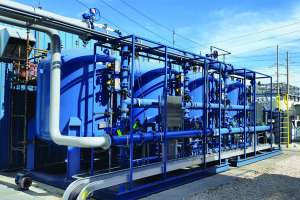
“At the time, we converted from activated sludge to a biological nutrient removal system. We added a fourth processing treatment unit and modified the first three units to incorporate anoxic zones and a fine-bubble diffuser system with three new turbo blowers. The system is efficient and effective, and with several process modifications, it allows us to meet our ammonia reduction requirements.”
Jimmy Dang, district general manager, observes, “We started by taking an outside-the-box look at what we had. We quickly determined that we didn’t need a new plant; we already had most of what was necessary and just needed an upgrade.”
As for equipment that hasn’t been upgraded, “Most of it has at least 60 years left before it needs to be replaced,” Carlini says. “However, we are working on our electrical and instrumentation systems. So we have to treat it with care.”
The facility uses a Mainsaver computerized maintenance management system. The district’s Wonderware SCADA system (AVEVA) provides overall control and alerts team members to anomalies in plant performance or operations.
Carlini attributes the plant’s success to all district staff: “We excel because everyone contributes to the goal of protecting the community and the environment. I have never seen a maintenance or operational group better than the team at Oro Loma, and I’ve been in this business for 37 years.
“Facility personnel keep equipment running that might have been replaced 10 to 15 years ago. They keep our cogeneration system at 95% uptime. Our operational group has also stepped up: They are dedicated to the profession, and they want to learn.”
One factor that keeps everyone motivated is having input to plant management practices. “Operations and maintenance and in fact the entire district, have a voice and that makes a big difference,” says Carlini. “Everybody has a say: We discuss everything that happens, and then we move forward with an idea or a process change that has been thoroughly vetted.
“It’s a compromise from all groups: It’s not just my way; it’s everybody’s way. We compromise on our ideas and our thoughts to come up with the best solution. We leave ego at the gate.”
That approach has proven to be a winner, but Carlini says the real winners are the 180,000 residents who count on the district for reliable wastewater treatment, and the waterways that receive the effluent. By proving that legacy infrastructure can evolve sustainably, Oro Loma offers a blueprint for aging treatment plants facing modern environmental demands.