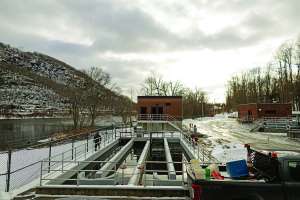
The picturesque Vermont town of Bellows Falls along the Connecticut River is known for historic Native American petroglyphs.
These anthropomorphic bedrock figures are believed to be unique to New England, but the biggest visitor attraction might be the town’s wastewater treatment facility. The plant uses an innovative solids handling system that is attracting wide interest among wastewater utilities.
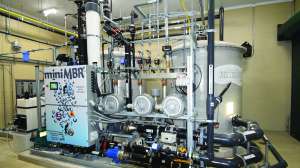
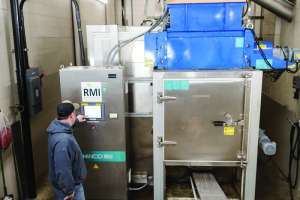
The system includes a Volute dewatering press from Process Wastewater Technologies (PWTech) to thicken and dewater biosolids followed by a Shincci -USA low-temperature, belt-type dehumidifier to dry the cake to more than 90% solids. The result is a Class A material suitable for agricultural use.
“We have people coming from Vermont, New Hampshire, Maine and all over the country to see our solids handling system,” says Josh Kemp, assistant chief of operations. “The dewatering and drying process is working really well for us, producing a 93%-95% dry Class A product.” Area farmers pick up the biosolids for application to their fields.
The solids innovations are just a part of several plant upgrades since the early 2000s that make wastewater treatment more efficient and cost-effective. For those improvements, and the meticulous upkeep and maintenance performed by the Bellows Falls staff, the facility received a 2025 Facility Excellence Award from the Green Mountain Water Environment Association.
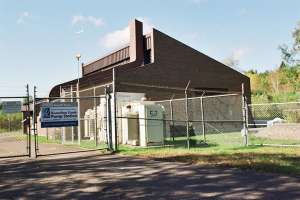
The Bellows Falls plant serves its home village of about 2,800 people in the town of Rockingham on the state’s western border, along with several small communities on the New Hampshire side of the river.
The facility dates to 1962 when primary treatment began; it has undergone a number of upgrades since. In 2010, quarter-inch fine screens (Lakeside Equipment) were added to the headworks. In 2012 the plant’s rotating biological contactors (Walker Process Equipment) were modernized with new shafts and gearboxes. The plant’s electrical system was updated in 2018, and a new chemical storage facility was built.
In 2020, the solids handling system was commissioned, allowing the village to discontinue landfilling dewatered biosolids; landfills capacity is significantly restricted in the New England states. Today, the plant has a design capacity of 1.4 mgd and average flow of 0.5 mgd. It takes in some 300,000 gallons of septage and light industrial wastewater per month.
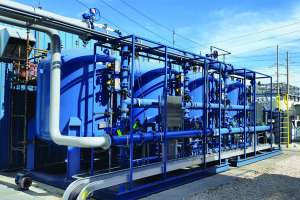
After screening and grit removal in a vortex separator (Gorman-Rupp Pumps), the flow is pumped to primary settling tanks. Floatables are skimmed off, and the clarifier overflow is gravity-fed to the RBCs. The plant has four RBC trains but generally operates one for most of the year and two in winter.
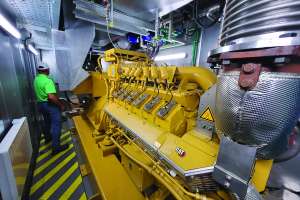
After circular secondary clarifiers, the water is disinfected with liquid chlorine and discharged to the Connecticut River. The plant meets and outperforms effluent quality limits of 16 mg/L BOD and 15 mg/L TSS. At present there are no permit requirements for nutrient removal. A SCADA system (LCS Controls and Electrical Installations) controls and monitor operations; plant operators can monitor data remotely on their smartphones.
Before 2020, Bellows Falls anaerobically digested biosolids and dewatered them on a conventional belt press to 18%-20% solids. The material was then hauled 20 miles to a compost facility in New Hampshire. Biogas was and still is recovered for building heat.
When the compost facility closed, the biosolids had to be landfilled. With landfills becoming less available, the Bellows Falls staff sought an alternative dewatering process. While reviewing technologies, they learned of a pilot installation of a Volute press. After successful testing, Bellows Falls became the first in its area to install the new technology.
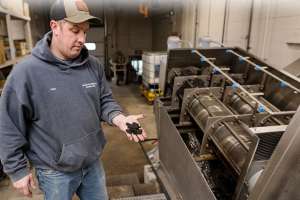
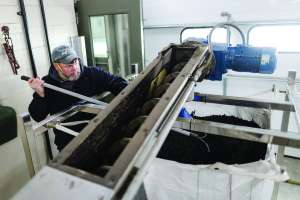
In the press, polymer is added to flocculate the solids. Then, using an auger, the press sends the solids slowly and steadily through a dewatering drum that both thickens and dewaters the solids to a semi-dry cake.
The press increased the solids content to 27%-30% but the cake still had to be trucked to a distant landfill. Transportation costs were high and rising. Consequently, in 2020, the plant turned to the Shincci - USA dryer to reduce moisture even further.
The dryer operates at 10 gpm for eight hours per day, using about 600 kWh per day, according to the manufacturer. Inside the dryer, the temperature is 70-75 degrees C (158 to 167 degrees F). The machine reduces volume by 60%-80%. It is designed to function with no need for odor control or dust suppression.
The 93%-95% solids cake meets Vermont and New Hampshire standards for Class A land application. The material is packed into 1-ton super sacks, which are picked up by farmers.

Next on the plant team’s drawing board is a biosolids storage silo, says Kemp. It will enable storage of dewatered solids so that farmers can pick up bulk loads at their convenience.
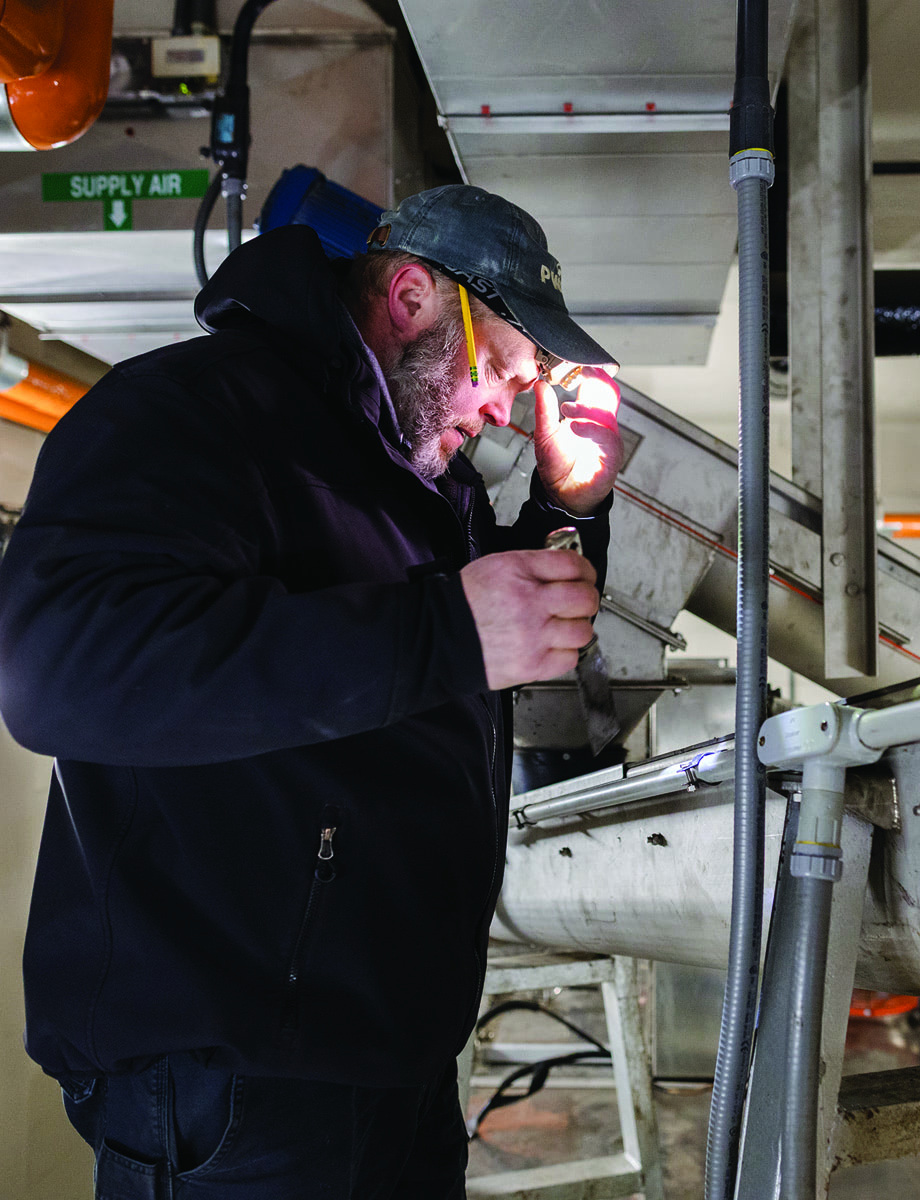
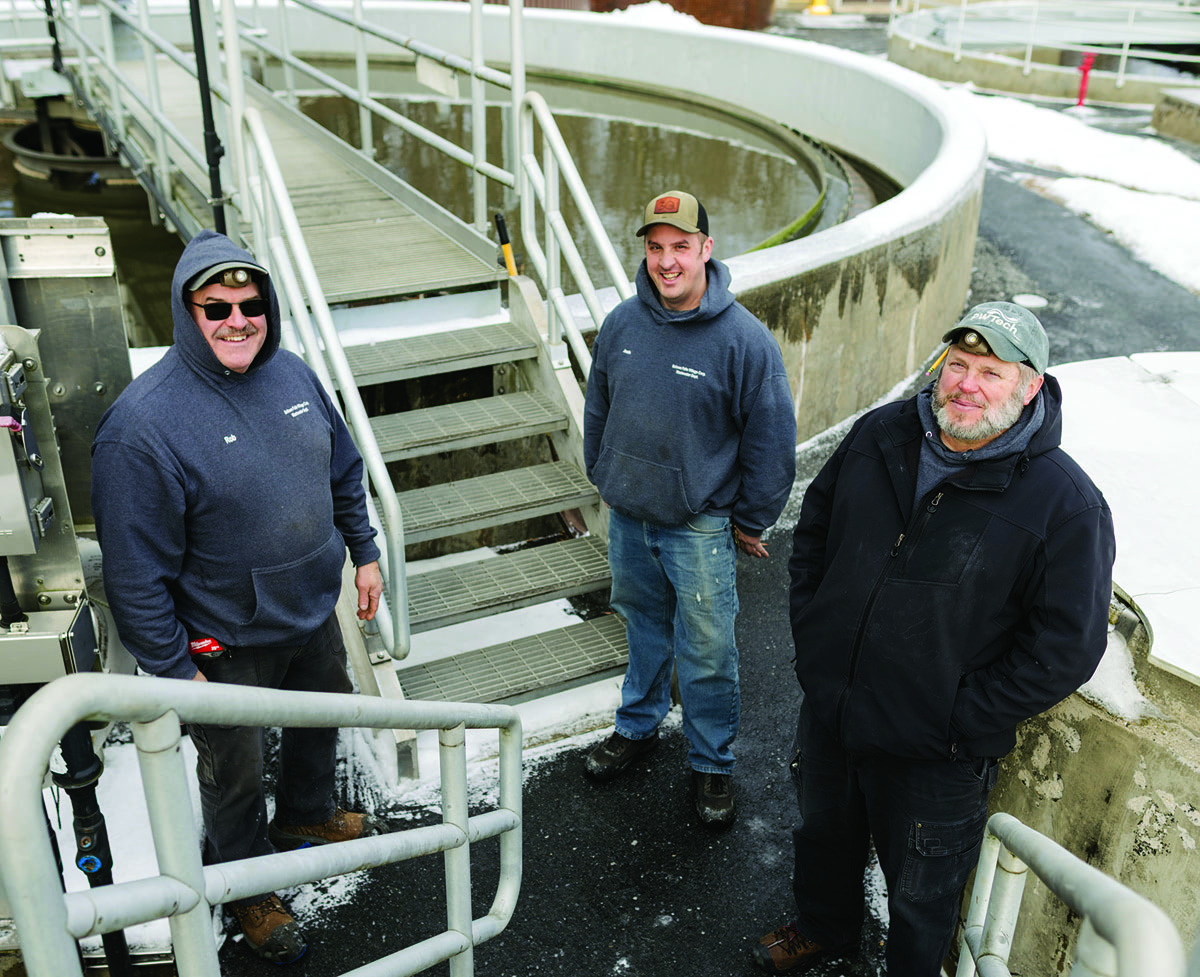
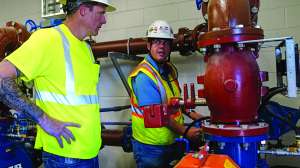
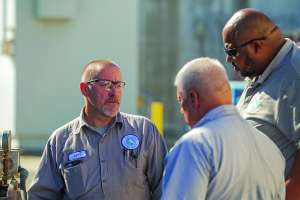
Kemp and Rob Wheeler, chief of operations, are enthusiastic about the biosolids system but just as proud of the small staff and the operators’ efforts to keep the plant clean and organized. The team staffs the treatment plant 24/7 every day of the year. Operators John Petrie and Bill Bennett also take care of the collections system.
Kemp, who started at the plant years ago shoveling snow part time, observes, “We keep everything shipshape from landscaping to snow plowing to keeping the tanks and other facilities as clean as we can. If we see something, we take care of it immediately.”
Staff members enjoy showing the facility off to visitors, especially the solids process — and with good reason. “Before, we were hauling our solids to a landfill in Vermont,” says Kemp. “It was costing us $70,000 to $100,000 dollars a year. Now we’re distributing it for free.”