Potable reuse of wastewater gains importance as communities face stress on their drinking water supplies.
A potential barrier to growth of reuse is a public reaction (the “ick factor”) to the thought of wastewater coming back through the tap.
Water professionals know that advanced treatment makes reuse water entirely safe and of excellent quality. The question is how to deliver that message convincingly to often skeptical customers.
Carollo Engineers offers an answer in the form of a new book, The ABCs of Water Reuse. It steps readers through essential water concepts, literally from A to Z, making a clear and simple yet compelling case for indirect and direct potable reuse and the larger principle of One Water.
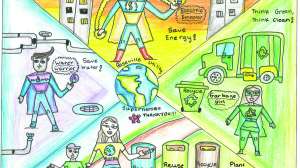
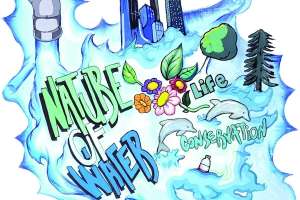
It’s an easy read. It covers square miles of essential territory. And it’s beautifully illustrated with full-color artwork that supports the ideas on each two-page spread.
The technical made simple
Brian Biesemeyer, interim executive director of the WateReuse Association, noted that while reuse is an intuitive concept, its technical aspects can be challenging to explain to the general public. “This book offers language and the visuals that elected officials and utility staff can use to build community confidence in water reuse projects,” he says. “I expect it to become an essential resource for communities working to advance public acceptance of water recycling.”
The book starts with a brief introduction and then moves straight into 26 key concepts, pegged to letters of the alphabet. For example:
- A is for Aquifer
- H is for Health Protection
- J is for Jobs
- L is for Log Removal
- P is for Partnerships
- Z is for Zero Wasted Water
One of the concepts, F is for Fashionable, is a bit surprising. The spread makes a case that a tide is turning against water sold in throwaway plastic bottles: “Reusable water bottles filled with local tap water have become a symbol of environmental awareness — a fashion statement that speaks to both sustainability and smart water choices.”
The messages on each spread are easily digestible. All in all, the book makes a simple yet compelling case for water reuse. It is easy to envision readers coming away at the very least intrigued by the concept, and perhaps even fully on board with it.
Where to get it
I asked Cameron McWilliam, Carollo’s senior public relations manager, why the book doesn’t name an author or illustrator as recognition for their work.
He replied, “All of the writing and illustrations were done by our in-house team of communications professionals and water reuse experts. Multiple writers and illustrators contributed throughout. We chose not to include individual credits to keep the focus on the content and its value to utilities, elected officials and others.”
The ABCs of Water Reuse is available in print and digital formats. The digital version can be easily integrated into websites, presentations and social media campaigns.
McWilliam observes, “The resource is designed for multiple applications, including public meetings, facility tours, school programs and as an educational tool for elected officials who need to explain water reuse fundamentals to constituents.”
For more information or to order copies, visit carollo.com/abcs-of-reuse/ or email to media@carollo.com.