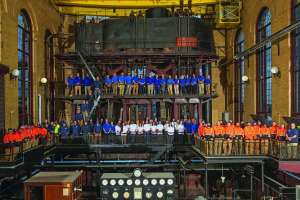
Des Moines Water Works improved its energy performance by 19.4% over eight years with auditors keeping watch every step of the way.
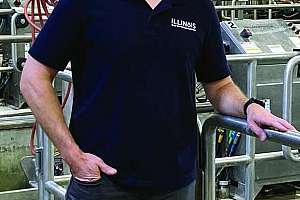
Ted Corrigan, CEO and general manager, says committing to the ISO 50001 energy management process gave conservation efforts a boost. Des Moines Water was the first water utility in the nation to become ISO 50001 certified. The process involves regular third-party audits, which Corrigan found beneficial.
Energy management was one factor cited by the Association of Metropolitan Water Agencies when it chose Des Moines Water for a 2024 Gold Award for Exceptional Utility Performance. Other factors included water loss reduction and watershed protection efforts that involve educational initiatives with customers and landowners.
“It keeps getting harder and harder and harder to improve energy usage, but you have to show continuous improvement in some area of the process to pass your audit each time,” Corrigan says. “So I do think the auditing is important.
“They do a very detailed audit of the entire process: change management, management oversight, maintenance and repair and calibration. They do pretty intensive audits of all of that when they’re here. Knowing all of that is going to be checked inspires attention to detail and good performance.”
Intensive monitoring
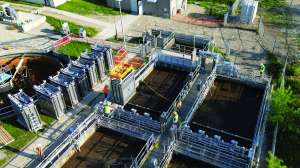
Des Moines Water operates three drinking water treatment plants and supplies about 600,000 people in the metro area. It also sells water to other central Iowa cities. Its largest water source is an infiltration gallery, a 4-foot buried pipeline that runs along the Raccoon River for 3 miles in Water Works Park, the location of the largest treatment plant. The water that collects in the gallery has been filtered by the sandy soil and is high-quality, but it needs to be supplemented by surface water from the Raccoon and Des Moines Rivers.
One way the utility discovered excess energy use was by monitoring devices, mostly pumps, that are significant energy users.
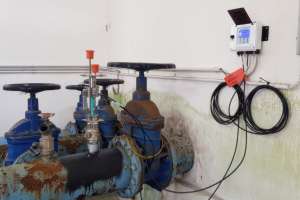
“Part of the process was to put individual meters on every one of those SEUs,” Corrigan says. “In almost every case where we have multiple units that are the same, we could see that one was using more power than the others — so there’s a problem.”
The staff then could determine why that pump was an outlier and fix the problem. “Monitoring energy usage, asking the questions, doing the investigation and solving those problems was a key part of this,” Corrigan says. “One of the biggest factors was knowing what was and wasn’t using energy efficiently. And if it wasn’t, why not? And let’s fix it.”
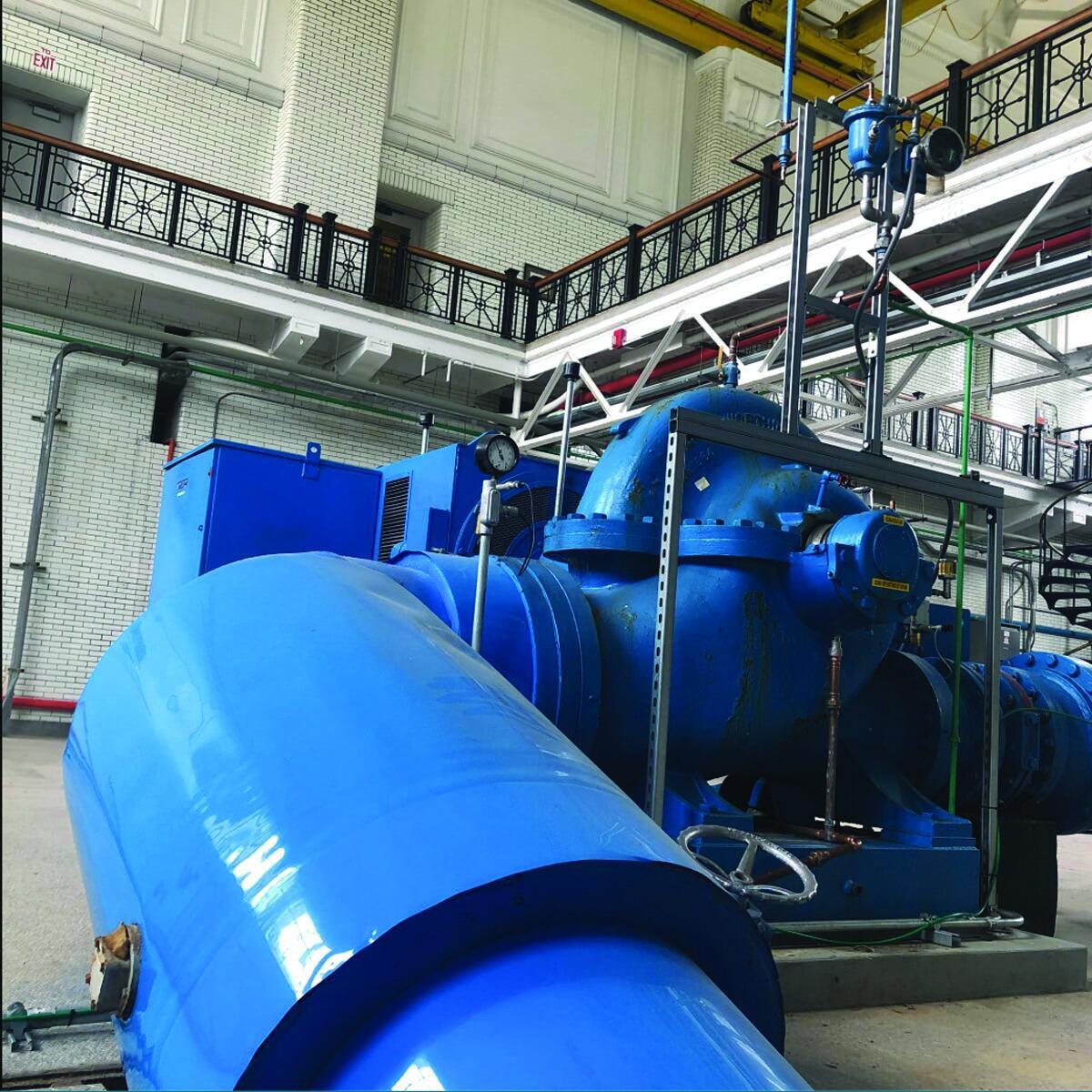
Over time, the utility staff added ABB Drives & Controls and Allen-Bradley (Rockwell Automation) variable-frequency drives to motors. As motors and pumps wore out, they replaced them with high-efficiency models from manufacturers, including Flowserve, Aurora, Fairbanks (Pentair), Goulds Water Technology (a Xylem Brand), Johnston, Peerless, Flygt and KSB.
Those were the big contributors to reducing power consumption and saving money; others included putting occupancy sensors in rooms for lighting, changing lights to LEDs, and automatically adjusting room temperatures for nights and weekends.
“We did a lot of little things that maybe don’t save tons of electricity but do show the commitment,” Corrigan says. “Electric utility rebates paid for half sometimes, so the paybacks were very short on some of those projects.
“We did those kinds of things across the board, and they save energy, but they don’t compare to monitoring and managing those SEUs, installing VFDs and replacing outdated motors. Those are the really big-ticket items.”

Watershed protection
The utility’s performance excellence citation includes work to protect the watershed and therefore the source water.
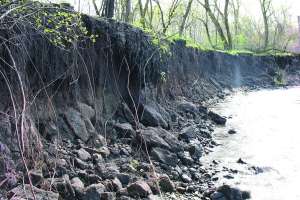
“The surface water is heavily impacted by land-use practices in our watershed,” says Corrigan. “A lot of the farmland in our watershed is rented to producers who don’t own the land. We’ve tried to help the landowners understand that there are things they can do as the owners, through their agreements with the producers, that can help improve water quality.”
These can include edge-of-field practices such as buffers zones, saturated buffers, bioreactors and even installed wetlands. They could also include no-till farming, fertilizer rate limits and cost-sharing for cover crops.
Unlike energy management measures, the impact of the outreach isn’t measurable, but Corrigan still thinks the meetings are useful: “We’re still trying. There’s a long way to go.”
Listening for leaks
The utility also has a continuous leak detection program. One team member is dedicated to that task and inspects the whole system every year. Half of it is surveyed conventionally by listening at every valve. The other half is tested with magnetic microphones attached to the tops of fire hydrants.
When a hydrant-top unit detects a sound indicating a leak, it is marked on the GIS system: yellow for soft sounds, red for loud ones. Usually there are several yellow marks around the red ones on the map. Leak correlation equipment (Fuji) is then used to narrow the search. Leaks found on the utility system are repaired; customers are notified of leaks found on their properties.
A hydrant-top survey for leaks goes quickly compared to conventional surveying. “There are more valves than hydrants, and they’re closer to the pipe,” says Corrigan. “But they’re harder to survey because you have to open the lid of the valve box and usually clean some dirt out before you can listen. That takes about three-quarters of the time to do the conventional survey. With the hydrant-top units, we can move through those very quickly.”
Addressing nitrates
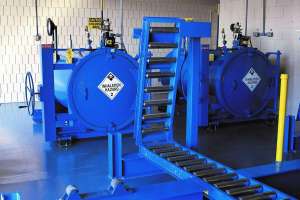
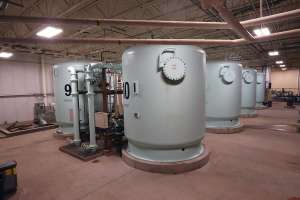
Innovation also extends to the water treatment plants. A recent addition to the flagship Fleur Drive Treatment Plant (75 mgd capacity) is a nitrate removal system that consists of tanks filled with resin beads that attract and absorb the nitrates. It’s a sidestream process that operates when nitrate levels in the raw water are high. The nitrate-free water is then blended with the rest of the water to bring the nitrates to acceptable levels.
“It takes nitrate out of the water and puts chloride back in. but a little bit of chloride is not a problem,” Corrigan says. “It’s like a home water softener, except that instead of removing calcium, we’re removing nitrate.”
The nitrate removal facility is included on tours, and Corrigan says people find it interesting to see and learn about. Des Moines Water gives tours to farmers and agri-business groups and also offers tours to new members of the state legislature.
“We try to get the legislators to understand the challenges we have with water quality because of the land uses we have,” Corrigan says. “When we can tell our story to folks directly, it’s a pretty compelling message. We use that to our advantage whenever we can.”