Many drinking water and wastewater treatment plants schedule and track samples and report results using manual paper-based processes.
This can lead to missed samplings and inspections, communication breakdowns between teams, operational delays and risk of noncompliance.
Digital platforms are an alternative, offering speed and accuracy, plus benefits like automated alerts when samples are due, real-time data validation, a reliable chain of custody and integration with laboratory partners.
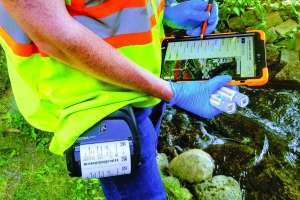
One such offering, SampleServe software, provides web and mobile platforms that streamline the three basic functions of sample planning, sample collection and reporting of sample data. It helps operators manage recurring sampling events and track, edit and adjust sampling schedules to ensure that nothing is missed.
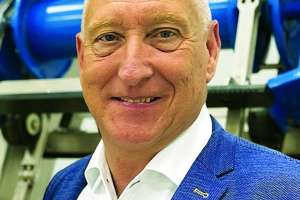
Field and laboratory apps digitize the entire process, streamlining workflows and reducing errors. A built-in digital chain of custody makes sure that samples are tracked accurately and that labs receive real-time data directly from the field. A. Russell Schindler, company CEO and founder, talked about the offering in an interview with Treatment Plant Operator.
TPO: How did you conceive and develop this enterprise?
Schindler: We started in 2001 as a sampling-as-a-service company doing everything on paper. I created software to make the process more efficient just for our own purposes. Then people who saw the software started asking if they could use it themselves while doing their own sampling. After hearing that enough times I decided I should let them, and we reconfigured as a software company. We kept building and improving it and adding features. The impetus was to create efficiencies — to be faster and more accurate.
TPO: In basic terms, how does the software improve the sampling process?
Schindler: In the traditional process, people would take the samples, fill out paper forms and then go back to the office and type everything into a computer. When putting labels on sample bottles, they had to handwrite them. Chain of custody instructions were filled out by hand. All that takes a lot of time.

TPO: How would you quantify the time savings from using a digital platform?
Schindler: If you’re out sampling and writing down data all day, you’re looking at up to an hour and a half back at the office typing in that data. But when you enter the data into a tablet, you just have to sync that to the cloud, so you save that an hour and a half every day. Most customers say we save them about 20% of their time; some say even up to 40%. As for the lab, the chain of custody is digital, so they don’t have to enter hand-written data. A cooler of samples traditionally meant 20-30 minutes of data entry for the lab. We’ve got it down to about 15 seconds, and there are no penmanship or data-entry problems.
TPO: What differentiates your offering from others that have a similar purpose?
Schindler: We go beyond data entry to provide a holistic product. For example, we enable users to schedule all their sampling events. For one wastewater treatment plant contract operator, we set everything up for the entire year. Sampling schedules at plants can be complicated. We help them get organized and set up recurring schedules. The sampling details pop up on the mobile app that people use in the field. The app pairs to Bluetooth thermal label printers, so they no longer have to fill out sample bottle labels by hand.
TPO: How easy is it for people to learn and use this technology?
Schindler: To cite an example, at one new client in, I set up their account and gave a tutorial to one team member. We spent about 90 minutes, and halfway through I asked her to take over and do it herself. That afternoon she gave a presentation to other people on how to use the software, and the next day she gave a presentation to senior management. She became an expert inside of a day.
TPO: Beyond legibility and reducing data entry errors, how does the software enhance data accuracy?
Schindler: We built in guardrails for data validation. For example if entering a pH value, they can’t put in 15. Users can also create a set of guardrails inside that. So for example, if a pH value is below 5 or above 9, they have to verify and comment on the reason why. The guardrails are customizable by the user. The best time to validate data is at the time of entry.
TPO: How does the software ensure that the sampling schedule is followed?
Schindler: We built in alerts. Because the events are scheduled and the app is connected to the cloud, the software knows whether samples have been collected and delivered to the lab. There are two kinds of alerts. If for instance an effluent sample hasn’t been collected by 8 a.m. as scheduled, a text message, email or phone call is sent to designated parties. Similarly, an alert is sent if the sample hasn’t been received at the lab by the designated time.
TPO: Are there any other safeguards for accuracy and data integrity?
Schindler: We offer virtual audit capability as an option. We do a screen recording of every sample collected and every piece of data entered. We also plan to use AI to watch all those videos. It will be able to give users a rating on how closely they followed the standard operating procedures. It can also flag actions that look suspicious and send an alert to the project manager.
TPO: Are there any other features unique to your platform?
Schindler: We include geo-fencing. Users can enter the GIS locations of their sample ports. So if someone is taking a sample and their device is more than a preset, customizable distance from the designated spot, an alert will appear on the screen asking them to verify that they are at the right location. They can then bypass the alert by typing in an explanation.
TPO: How is the technology offered for sale?
Schindler: It’s a subscription service with a monthly fee per facility. Customers can have as many users as they want.
TPO: Is the technology best suited to any particular type or size of facility?
Schindler: It has value across the board. We have operators using it on sites like lagoon wastewater treatment plants where they may only have to sample every quarter. And we serve some big cities with multiple facilities where they have sampling twice a week, or twice a day, or twice per shift.