
Market-based approaches to reducing pollution aren’t new. Perhaps the best known is the emissions trading program in the 1980s used to curtail acid rain.
The plan set a cap on total emissions of sulfur dioxide and nitrogen oxides and allowed companies (mainly electric utilities) to trade emissions allowances. By creating economic incentives to reduce pollution, the program solved the acid rain problem, improved air quality and yielded benefits to human health.
Now a market-based approach to reduce pollutants in water bodies, called water quality trading, is taking hold. It enables municipal wastewater treatment utilities and other NPDES permit holders to trade credits with other entities in the same watershed to reduce pollutants (mainly nutrients) at costs lower than for treatment upgrades.
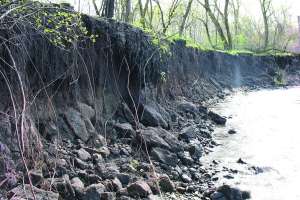
For example, a city faced with an expensive project to reduce phosphorus discharges from its treatment plant could achieve part of the reduction by trading credits with another city that has exceeded its phosphorus reduction requirements. Alternatively, the city could contract with rural landowners to finance nutrient-reducing projects like stabilizing stream banks to stop erosion, planting cover crops or excluding cattle from access to streams.
The Minnesota Pollution Control Agency has promoted water quality trading since the 1990s and has overseen a number of trades that helped treatment agencies meet pollutant reduction goals.
The MPCA’s Water Quality Trading Group consists of Emily Zanon, program coordinator; Marco Graziani, TMDL coordinator; and Bruce Henningsgaard, engineer principal. They talked about their program in an interview with Treatment Plant Operator.
TPO: What is the background of water quality trading in Minnesota?
Zanon: In the early 1990s, the U.S. EPA conducted a study on the cost for municipalities and industries to upgrade their treatment facilities to meet Clean Water Act standards. They found that the costs were quite staggering. That spurred them to enact programs that offer flexibility and cost-effectiveness in meeting water-quality criteria. The first water quality trade in Minnesota, between Rahr Malting and private landowners, was approved in 1997. In 2006, a state statute enabled NPDES permittees to use trading.
TPO: How is Minnesota’s water quality trading program structured?
Zanon: It is housed with the MPCA Municipal Division and any approved trading plans are incorporated into NPDES permits. Our group coordinates with facilities and municipalities that are interested in trading. We guide them through the planning process and touch base with them as they create their plans.
TPO: Who can take part in water quality trading?
Zanon: Any wastewater or stormwater discharger covered by an NPDES permit can propose a water quality trade. Trading can occur between two permitted facilities in a point-to-point trade, or a facility can contract with a private landowner in a point-to-nonpoint trade.
TPO: Why is trading sometimes better than traditional nutrient reduction approaches?
Zanon: The first word that comes to mind is flexibility. Facilities that have trouble meeting permit limits gain time to raise more capital for facility upgrades. And trading can be a more cost-effective approach to meeting a permit limit. It also can help facilities that are brand new. Consider a treatment plant that needs to be constructed in a watershed where there is a total maximum daily loading for a pollutant, but there is no allocation for that facility. Through trading, that facility can offset discharges of the pollutant of concern.
TPO: Are there ancillary benefits to trading?
Graziani: Yes. Nonpoint best management practices can bring benefits that are not possible through treatment alone. Cattle exclusion, cover crops, stream bank stabilization and wetland restoration, for example, provide ecological services like wildlife habitat, erosion prevention and carbon sequestration. So a city looking to offset a phosphorus discharge could design a project that also works to protect drinking water sources, or mitigate flooding or achieve aesthetic priorities. These projects can have dual or triple benefits.
TPO: What pollutants can be included in water quality trades?
Zanon: In Minnesota, we have only seen approved trades for phosphorus and CBOD5 , but nitrogenous compounds, TSS, salinity and oxygen-depleting pollutants are also eligible. At present we don’t allow trading for E. coli or toxic pollutants like mercury, but we would consider them if anyone wanted to submit a pilot project.
TPO: How is the value of water quality credits established?
Zanon: We break it down into four steps. First we estimate the amount of pollutants at the sites to establish a baseline. Then we calculate the amount of pollutant reduction we expect for the project. Next we apply a watershed assimilation coefficient that helps us understand what the impacts of the pollution reduction from the project site will be to the receiving water. And finally we apply a trade ratio.
TPO: What is the purpose of a trade ratio?
Graziani: A trade ratio accounts for the uncertainties around these projects. We can model outcomes, but there is significant variability and a lot that we don’t know. So for example, we have a standard ratio for point-to-nonpoint trading of 2.6:1 — for every pound of credits a permittee needs, they would have to purchase 2.6 pounds of pollutant reduction. For wastewater point-to-point trades, our ratio 1.1:1, and for stormwater it is 2:1. We allow for the possibility that trade ratios could be reduced, if the uncertainty is reduced.
TPO: What is an example of the uncertainties of point-to-nonpoint trades?
Henningsgaard: Consider a cattle exclusion project where the idea is to keep cows out of a stream. In calculating the project value, we consider how many cows are in the pasture? How big is the pasture? How often are the cows in or near the water? And as a result how much phosphorus gets from the cow pies into the water? We have estimates for all of that, but there are many variables to consider. The trade ratio take cares of those uncertainties.
TPO: What is an example of a successful point-to-point trading project in Minnesota?
Graziani: In 2004 we developed a dissolved oxygen TMDL for the outlet reach of the Minnesota River. It was a low-flow problem largely related to wastewater. Under the TMDL, we established the possibility of point-to-point trading and issued a general permit in which the 40 largest continuously discharging facilities received individual phosphorus allocations based on reduction goals. Those facilities had the ability to trade with each other.
TPO: How did this program work out in practice?
Graziani: At the outset, every operator I spoke to thought they would participate as buyers. But over time some facilities upgraded and exceeded their reduction requirements, and so were able to generate credits and sell them to other facilities. As more facilities upgraded, the demand for credits decreased. We now have only a couple of buyers left, and we plan to terminate the permit soon. We expected to take more than 10 years to achieve the TMDL, but within six to seven years all the wastewater facilities were meeting their allocation goals.
TPO: What is an example of a point-to-nonpoint trade?
Henningsgaard: Rahr Malting produces malt for brewing. Back in the day, their waste was treated by the municipal wastewater treatment plant. They were sending a lot of high-strength waste and therefore received a big bill. They thought having their own treatment plant and discharge would help them control costs. They requested a discharge to the Minnesota River, but there was no waste load allocation available to them. So we allowed them a certain amount of discharge that they had to make up for through trading.
TPO: How was this project structured and carried out?
Henningsgaard: We calculated the amount of credit they needed from nonpoint trades. They worked with a consultant and organizations in the watershed to identify projects. They did a number of stream bank stabilization to almost eliminate erosion. They did a cattle exclusion and two critical-area set-asides, where they purchased floodplain areas that had been farmed and put them into natural woodland and prairie.
TPO: How do you make sure that trades actually improve water quality?
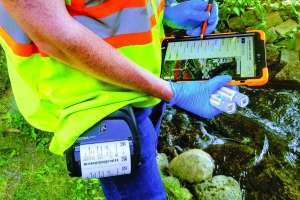
Zanon: First, we require parties interested in trading to meet a minimum permit level. They have to do something to improve the quality of their discharge before they can trade. Second is the trade ratio that provides a margin of safety that there will be environmental benefit. And third, we go on site to look at these projects and make sure they are working as designed and that meaningful pollution reduction is happening. We also require permittees to inspect the practices and submit their findings in an annual report.
TPO: What are some keys to successful water quality trading programs?
Zanon: We strongly believe the number one success factor is communication, especially with the three of us. We provide guidance to folks who are interested in trading, and we prefer that they talk to us about their interests and goals before they put too much time and resources into trading planning. There are a lot of moving parts, and we want to make sure that time and resources are spent efficiently.
TPO: Why is this kind of communication so essential?
Henningsgaard: One concern is that a company or municipality may spend a lot of money planning a project and then come to us and say, ‘Here’s our project. How many credits do we get?’ We don’t want to be in a position of telling someone their project is worth zero credits, for whatever reason. We want people to know: Even if you’re just thinking about trading, talk to us before you spend a bunch of money, time and effort. We want to help people be successful.
TPO: Are there any other critical success factors?
Graziani: Another aspect that makes programs successful is local leadership: having someone, whether a wastewater operator, an engineering consultant or a local watershed district person, who spearheads the program. Trading is different from what has been done before, and someone really needs to take the lead to make good things happen.
TPO: How would you respond to critics who might say that water quality trading is an example of “paying to pollute”?
Zanon: MPCA’s goal is to protect high-quality waters and restore those that are degraded. Water quality trading works to achieve that. Whether it’s point-to-point or point-to-nonpoint trades, we get meaningful pollution reduction. In addition, we feel it’s important to provide alternative and cost-effective pollutant load options that have multiple benefits.
Graziani: There are limited funds at all levels — local, state and federal. Imagine a treatment plant with a phosphorus limit of 0.7 mg/L that can cost-effectively treat to 1 mg/L, but the next 0.3 mg/L really escalates the cost. Maybe they can use trading to pursue that last 0.3 mg/L. The savings could be substantial, especially for a smaller community.
Henningsgaard: Permittees are not paying to pollute, They’re paying to do things that ultimately provide more benefit to the waters than just additional treatment processes.
TPO: How can people find out more about the MPCA water quality trading program?
Zanon: We have a web page at pca.state.mn.us/business-with-us/water-quality-trading that includes guidance materials, fact sheets and our contact information. We’re happy to talk to anyone interested in trading or in getting a trading plan going.