In the water treatment industry the transition from paper-based systems to digital solutions isn’t just about precision and convenience. It’s about ensuring water quality and public safety.
Erie (Pennsylvania) Water Works has made a digital transformation and continues to streamline processes, using the Hach WIMS system powered by Aquatic Informatics to improve daily operating efficiency.
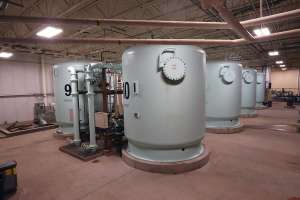
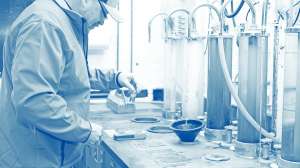
Drawing 22 mgd from Lake Erie, the utility supplies 52,000 customers with water by way of two treatment plants. At an in-house laboratory, two chemists and a lab technician take basic wet chemistry samples and perform bacteria testing.
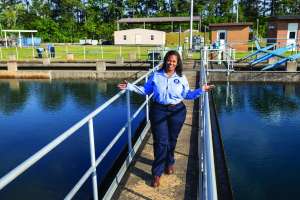
Madelyn Groover, lab supervisor, who spearheaded the WIMS implementation, recalls the challenges of the previous system: “We had multiple physical forms to fill out. That process took time and was prone to transcription errors. It was difficult to get a full picture of where the plant was at any point in time.” Report generation was also time-consuming.
Making sound decisions requires access to all operational and historical data to show trends and cause-and-effect patterns. WIMS addresses three critical areas: data integrity, error prevention and access to information.
Reliable data management is key: The treatment process includes some 500 instruments pulling data on turbidity, phosphate, fluoride, chlorine and more, and Erie Water’s accredited lab runs about 150 bacteria samples per month.
Chain of custody
A key advantage of the digital system is its ability to maintain data integrity through comprehensive tracking. Previously, the utility provided auditors with handwritten bench sheets, “Sometimes it was hard to decipher handwriting and determine who wrote what,” notes Groover. “The audit trail that WIMS provides is invaluable. We now know exactly when data has been entered and by whom.”
This simple digital footprint is especially valuable for regulatory compliance, providing an unbroken chain of custody for monthly reporting to the Pennsylvania Department of Environmental Protection. Its value became evident during a recent audit under Method 334.0, a quality-control procedure that ensures compliance with daily monitoring and analysis of chlorine residuals.
“It made a big difference,” says Groover. “I was able to pull all of our stations’ Method 334.0 data and provide it without having to physically drive to the stations. Before, we had it all recorded in a binder, and nobody saw the data unless they reported issues at a station. We never knew if it passed or failed, or if all the stations were even done.”
Data accuracy
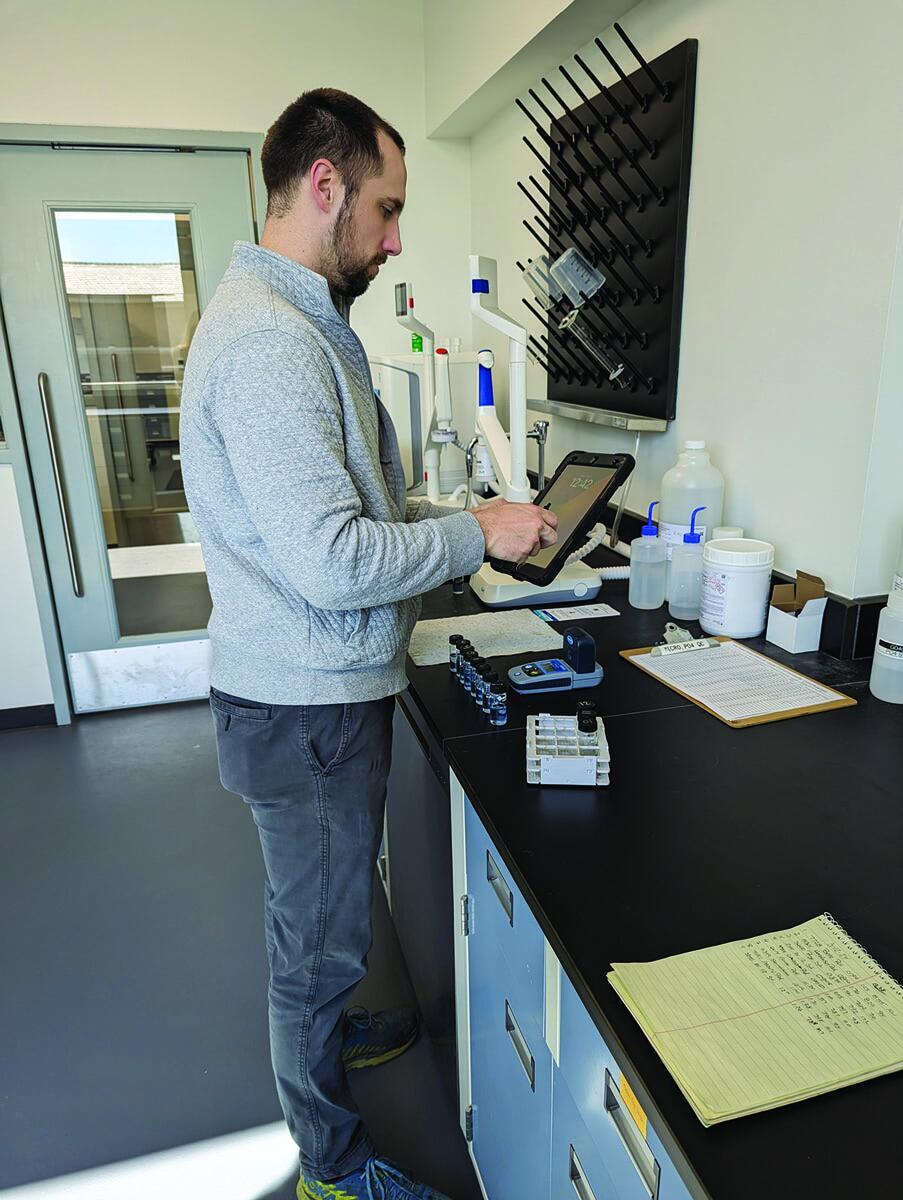
The new platform significantly reduces data-entry errors. Groover can build in safeguards such as variable entry limits to prevent common mistakes that could occur with manual entry. For example, “If someone attempts to enter an incorrect pH value like 79.8 instead of 7.98, the system won’t let them because I have set a user entry limit on that variable.”
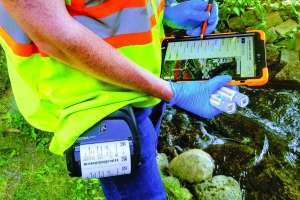
The WIMS mobile app, Rio, further streamlines field operations and reduces errors: “It has saved our field sampler a ton of time, since he can enter data on his device in the field. It improves workflow because the data automatically comes into the system for all stakeholders to see.” This eliminates the multiple error-prone transcription steps previously required — from field notebooks to bench logs to databases.
Breaking down silos
The system greatly improves sharing of information across the organization. It serves as a central repository for all water-quality data, accessible to authorized personnel regardless of location and across shift changes.
“We have a supervisor’s log for better communication between our supervisors on each shift,” Groover explains. “Personnel on every shift log data into their unique digital logbook. At the end of the night, they click the email button on their dashboard, and the data goes to the supervisor for the next shift. This means supervisors don’t have to be in the office to review what happened on that shift.”
Search capability enhances problem-solving and pattern recognition: Supervisors can quickly search through historical data to identify trends or previous occurrences of issues, an aid to decision-making.
Groover observes, “They can add notes, such as, ‘There were issues at Sigsbee Reservoir,’ with an explanation. They can then search the logs for Sigsbee Reservoir, see if the issues have happened before and maybe find an explanation or see a cause for concern that needs to be escalated.”
The supervisor logbook has been such a success that Groover is developing digital logbooks for all operators: “Right now, operators do hourly paper logs. At the end of the month, all those papers get scanned and placed in a binder. If you want to know what happened on June 10, you have to open the big June folder that has all the scans for the month, find the day and then decipher the handwriting.”
Streamlined compliance
Meanwhile, compliance is simplified. For example, the Method 334.0 report needs to be available on request when Erie Water has an inspection. That requires weekly comparisons of grab samples taken with a handheld meter against values from chlorine analyzers at pump stations and storage facilities.
The 13 operators use Rio to input chlorine levels from 19 stations weekly, and the data goes into WIMS. “I have a checklist that goes out automatically to confirm these samples were taken, and when,” Groover says. “This ensures that we meet our seven-day program requirements.”
The utility also submits a monthly Drinking Water Electronic Lab Report to the DEP. Before WIMS, Groover used a homegrown database that SCADA integrators had built but no longer wanted to maintain. “Having all our data in one platform streamlines this reporting process,” Groover says.
Data in a single platform can be checked and graphed in real time from one location. “We can see fluctuations in the chlorine results, which can help with maintenance, too,” says Groover. “For instance, if it seems like the percent difference between grab and online analyzer is creeping up, operators may consider a window clean or refresh the tubing.”
Maintenance records are now kept in the software, enabling maintenance personnel to perform a comparative grab of data before and after a task is completed. They can add comments, which may include suggesting change to the frequency of a task based on the comparative analysis. They can also set a reminder for the next time it needs to be done.

Saving time
The lab module for Hach WIMS manages the distribution of raw and finished water samples. With the old database, technicians had to click on a sample and enter the data, hit save and repeat for each sample — a tedious process.
Some samples are done in analytical batches, and the batch feature in WIMS allows analysts to enter all the sample results at once, perform the quality control, and then save everything one time. “I can also enter by test,” says Groover. “For example, I can select all my turbidity samples, rather than opening each sample. It’s a big time-saver.”
The system’s automated alerts and scheduled tasks further enhance efficiency. The system automatically monitors chlorine sampling schedules and sends alerts when samples are due. It can also trigger reports based on specific conditions, such as when turbidity levels exceed certain thresholds for extended periods.
Erie Water is expanding its digital capabilities, with plans to digitize more operational aspects. “We are at the forefront of trying to go paperless,” says Groover. “Team members ask me if the program can do something to remove another manual step or improve a process. I can usually make it happen. It’s very rewarding to be able to make our jobs better.”
The success at Erie Water demonstrates that the future of water treatment operations is digital, data-driven and interconnected. As Groover and her team have shown, the journey to digital transformation requires investment and adaptation but yields returns in efficiency, accuracy and operational insight.
About the author
Mary Pinard (mary.pinard@aquaticinformatics.com) is customer success manager with Aquatic Informatics.