A fast-spreading wildfire ripped through the British Columbia village of Lytton and surrounding homes on the Lytton First Nation reserve.
The weather that day, June 30, 2021, was a big factor, the land dry, the wind blowing, the day scorching hot. One day after flames had burned 90% of Lytton and 39 nearby structures on the First Nation land, the village set a Canadian all-time temperature record of 49.6 degrees C (121.3 degrees F).
First Nation residents were ordered to evacuate, and most did. But Warren Brown, manager of the reserve’s operations and maintenance department, stayed behind with members of his team to keep the water running for the fire department and a few residents determined to save their homes.
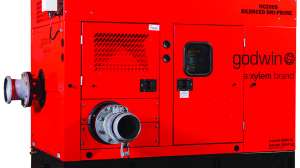
“Since the power was off, we did the best we could to keep the water flowing using gravity,” Brown recalls. “In some cases, we disconnected the system and installed firefighting water pumps to feed the hoses directly.”
Just as things were starting to settle, in November, the reserve was hit with devastating floods caused by an atmospheric river. Then in July 2022, the Nomemeen Creek Fire burned down seven Lytton First Nation structures and came within feet of the main slow-sand water plant and its water distribution system. And in September 2023, the Stein Mountain Fire came close to the reserve, but did no serious damage.
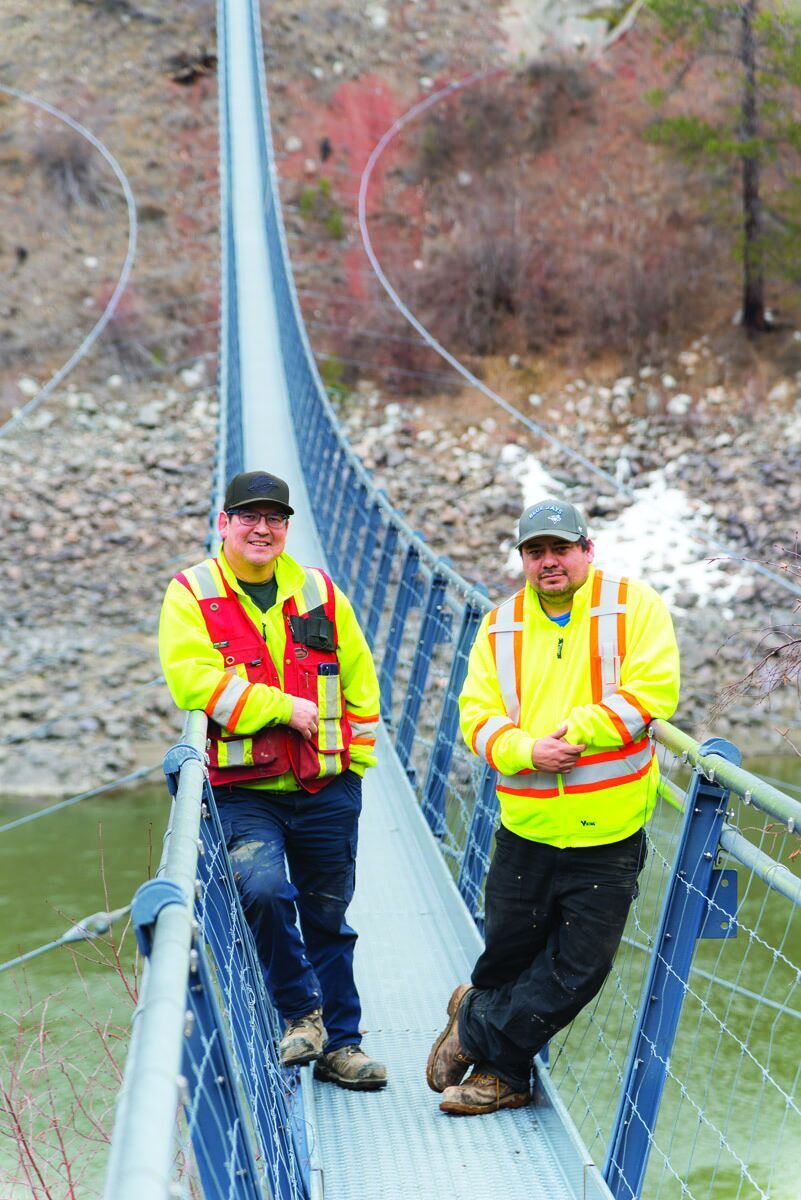
It could have been a one-two-three knockout punch, but it wasn’t because of Brown. For his efforts, in 2023 he received the National First Nations Water Leadership Award. Brown and colleagues continue to stand firm to defend the reserve’s water infrastructure, at great risk to himself.
Unconventional path
Brown was born in Kamloops, British Columbia, in 1972. He was raised by his mother and graduated from Kumsheen ShchEma-meet School (K-12) in 1992. He then enrolled at Justice Institute British Columbia, the province’s public safety college in New Westminster, graduating as a paramedic in 1993 and working before going back to upgrade his skills further.
“Being a water operator wasn’t my first choice,” Brown says. He went back to school to become a social worker, but he and wife-to-be Angela had a baby on the way. “So we had to make the decision: Do I go to school and we live off a student income, or do I go to work and make some real money for us?
“I chose to go to work, so I went to Lytton First Nation looking for a job. The water system manager figured that I would be a good fit because of my paramedic background, with regards to reading gauges and knowing about pressure differences and so forth.”
Brown started at the bottom without qualifications; he wasted no time enrolling in water certification courses offered by the province’s Environmental Operators Certification Program. Today he is certified Level 2 in Water Distribution, Water Treatment, Small Wastewater System/Lagoons Operator. He also has a diploma from Thompson River University in its Water Treatment Technology program.

Distributed network
Lytton First Nation is in British Columbia’s mountainous interior, along a 60-mile radius encompassing both sides of the Fraser River. “LFN is made up of 56 reserves scattered throughout the valley, with 33 of them being occupied,” says Brown, “So we’re all spread out in different locations.
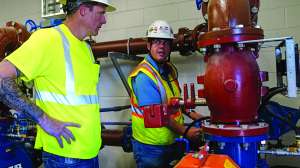
“We have four surface water systems and three groundwater systems, and we also have five point-of-entry units inside individuals’ homes. We also look after more than 30 km of roads and multiple band buildings, a total that is going up as people rebuild. All told, we provide water to about 1,000 people.”
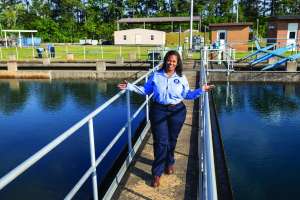
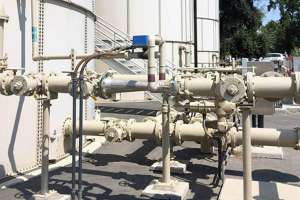
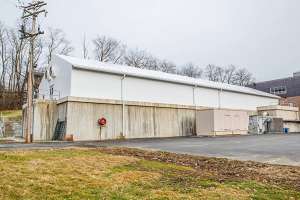
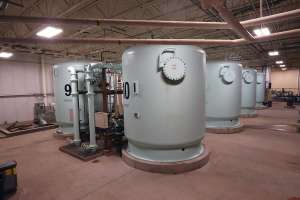
The largest of the water plants is the Stein River water system, which takes water from the river using two 30 hp pumps and sends it to a treatment plant. The water goes through slow-sand filtration, is chlorinated and then is pumped into three reservoirs with a total capacity of 120,000 gallons. They output 87,000 gpd in winter and 175,000 gpd in summer. Two of the reservoirs deliver water using pumped pressure while the third relies on gravity.
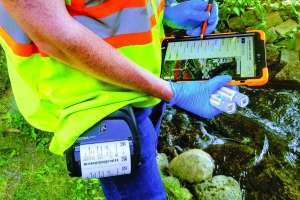
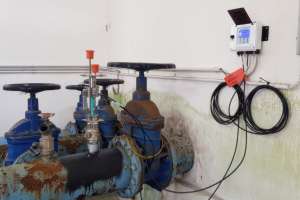
Lytton’s smaller water systems work by taking in water from creeks or wells. All of the water is then chlorinated. Some of the sites also use UV disinfection. The five point-of-entry systems are treatment units at individual buildings in remote areas.
Since the recent run of fires, LFN has been upgrading the capacity of its water distribution system. “We are now up to about 150,000 gallons of peak output per day,” Brown says. “This is what we use now, with water restrictions, until the new reservoir is built.”

Dedicated staff
- Brown has a staff of 11 to keep the water clean and flowing:
- Bryan Phillips, water operator
- Dion Moody and Dennis Spinks, water/equipment operators
- Jamie LaVallee, equipment operator
- Donald Jackson, Jesse Stewart and Darian Moody, equipment/laborer
- Richard Swan, mechanic
- Ted Phillips, waste management
- Hunter Spinks, laborer
Given the size of the territory, they split their duties between the Stein River water system and inspecting and servicing the other facilities in the distributed infrastructure.
“They are all very important to me in regards to looking after our community, because our community has been expanding since the Lytton Fire,” says Brown. “For instance, we have 28 temporary homes that were set up for the people who lost their homes, all of which had to be set up and serviced with water.
“Once the people get their new homes built, other people who are on the housing waiting list will move into the temporary homes as rental units. So there’s always a lot of extra work to be done as LFN recovers.”

Harrowing experience
There is no doubt that Brown and his water crew have been brave in the face of disasters, but that doesn’t mean they weren’t afraid. The fires and flooding in recent years have been intense, fast-moving and unpredictable.
That was especially true during the 2021 Lytton Fire. Brown and three of his crew members — Moody, Phillips and Daniel Mundall — stayed behind with electrician Andrew Loring to keep the water running using generators and gravity.
“We did this mindful that we were inside a mandatory evacuation area, and that nobody was coming to get us if we were to get hurt or get into trouble of any sort,” Brown says. “We played it as safe as we could, but we never forgot how dangerous the situation was.”
During the 2022 Nohemeen Creek Fire, things almost got away from them. “We were protecting a house, and at one moment I thought we were surrounded by flames,” Brown recalls. “So I turned off the pump we had for spraying water.
“My partners came running around the corner and they’re like, ‘Are we out of water?’ I said, ‘No, I think we’re surrounded.’ The water in one tank was all we had left. So, if worst came to worst, we would douse ourselves with that water, run down the road and hope for the best. All my partners could do was look at me, look at the fire, look at the smoke and say, ‘Good idea. Let us know when you’re going to do that.’”
As it turned out, Brown and his crew were engulfed only by smoke, not flames. That became apparent when the wind shifted and the smoke thinned out.

Calm after the storm
Today, life has returned to normal at Lytton First Nation, although the push to rebuild homes goes on. To protect the calm, “We’ve been fireproofing our area,” says Brown. “That means doing a lot of brush and tree clearing and removing anything else that could catch fire and threaten our water systems. And we’re also increasing our stock of generators.”
Helping to keep Brown and his crew going is the gratitude they’ve received from community members. “For instance, after we saved a house during the 2022 fire, the kids from that house gave us nice thank-you notes,” Brown says. “That’s all we needed. It was just a good recognition of the work we’ve done and continue to do.”