Little girls dream big. Actress. Influencer. President.
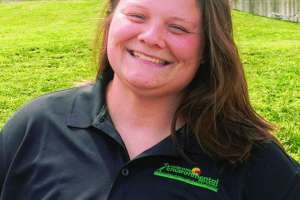
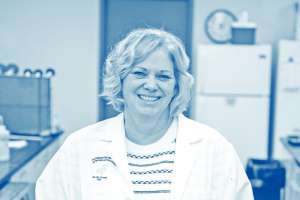
A little towheaded girl growing up in the small northern Illinois community of Galesburg had a big dream of her own. Inspired by her grandfather and uncle who farmed row crops, dairy cattle and hogs, Joy Hall fell in love with science.
“I was fascinated by the life cycles of plants and livestock,” says Hall, now director of laboratory services with the Bloomington-Normal (Illinois) Water Reclamation District. “Everything grows, expands, adapts and dies back, only to start over in the spring. Thanks to good teachers in school, I knew I wanted a science-based career.”
Her dream was to live out west and become a wildlife biologist, researching populations and genetics, but not gentler creatures like elk and mule deer. Her passion was apex predators, the type that would just as soon eat a biologist as be studied. “I was fascinated with the ability of grizzlies and wolves to flourish despite the increasing presence of humans. I wanted to know how they did it,” she says, laughing.
A career turn
One industry she never considered was wastewater treatment. “The teachers didn’t tell us about those careers, and there wasn’t a Wastewater Barbie,” says Hall. So wildlife biologist it was. In summers during college, she worked in Montana and Wyoming for the National Park Service.
After graduating from Western Illinois University with a biology degree, Hall interned with the McHenry County Conservation District, learning about wetlands. She relinquished her wildlife biologist dream when she married her longtime sweetheart, Steve Hall, and moved to Bloomington-Normal, population 175,000.
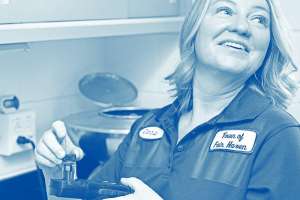
In 2019, after nearly 20 years with the Bloomington-Normal district, Hall was promoted to her current position. In 2025 she received the Laboratory Analyst Excellence Award from the Illinois Water Environment Association. “I was completely shocked,” she says. “Even my husband showed up and surprised me. I have no idea who nominated me, but thank you!”
Getting started
The early-career move to Bloomington-Normal was a bit of a shock to her system: “It was so much bigger than my hometown, which had fewer than 30,000 people. Most of the people grew up in Bloomington, and many worked for State Farm Insurance, which is headquartered there. Steve and I were definitely different. He was and still is a funeral director. I was a lab nerd — a technician at a contract lab in Peoria.”
Lab nerds are a special breed, Hall admits: typically quiet, reserved and focused on minutia. Preparing samples and running tests could be monotonous. At independent third-party labs, technicians didn’t know the clients or the details behind the samples they ran. The data went to the clients, who did the final data analysis.
Despite this, Hall embraced her entry-level job, and it made a profound impact. “The lab rotated us through all of the processes, so it gave me a great background,” she recalls. “The biggest lesson I learned is that trust and integrity are fundamental to lab work. Without it, you can’t build a successful career. If people lose trust in you, you never regain it.”
In 2000, Hall and her husband welcomed their first baby. The hour commute to her job was too long, and she regretfully resigned, not knowing the big opportunity that lay ahead.
Greater impact
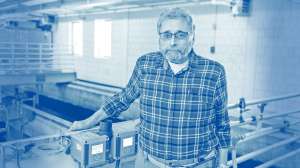
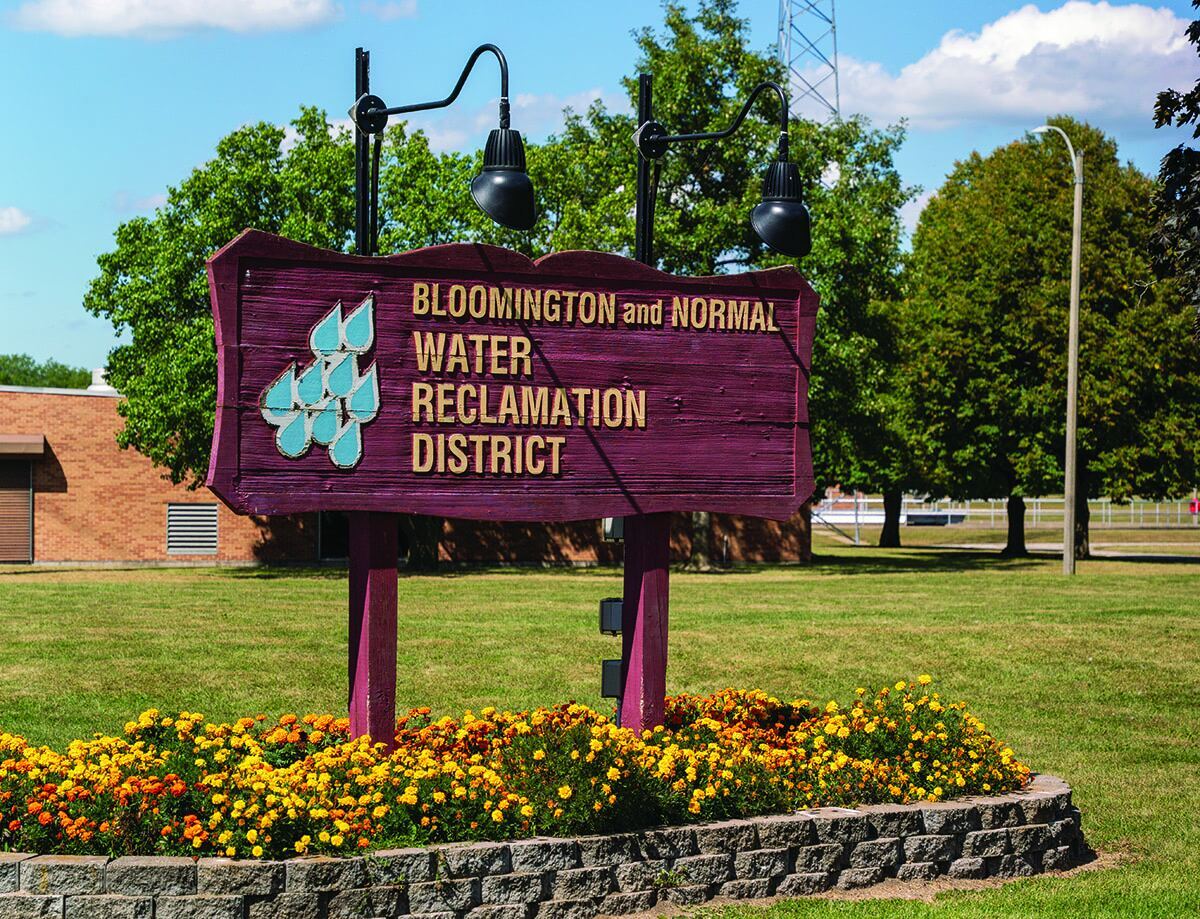
After a brief stint at a bank, Hall landed a role as chemist with the Bloomington-Normal district. She found working in a municipal wastewater lab totally different. The district operates two water reclamation facilities that serve the two cities and smaller communities.
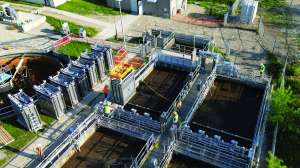
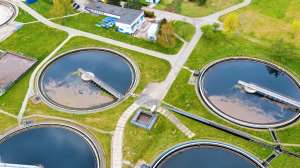
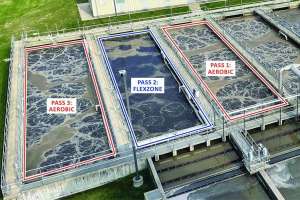
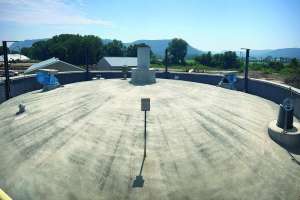
The original West Plant is more than 100 years old and has an average flow of 22.5 mgd. The newer South Bloomington facility has an average flow of 7.5 mgd. Both plants use activated sludge processes, trickling filters, sand filters and UV disinfection. The district is experimenting with wetland treatment.
Hall says the district strives to use innovative and cost-effective methods to improve quality of life and protect public health and the environment. “We know our clients — the people and industries in our community,” she says. “The test results tell our operators how to run the plants, so together we help keep people and communities safe and our plants in compliance.”

Up the ladder
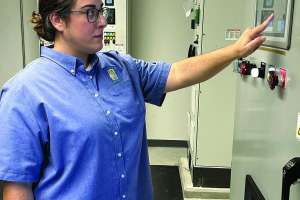
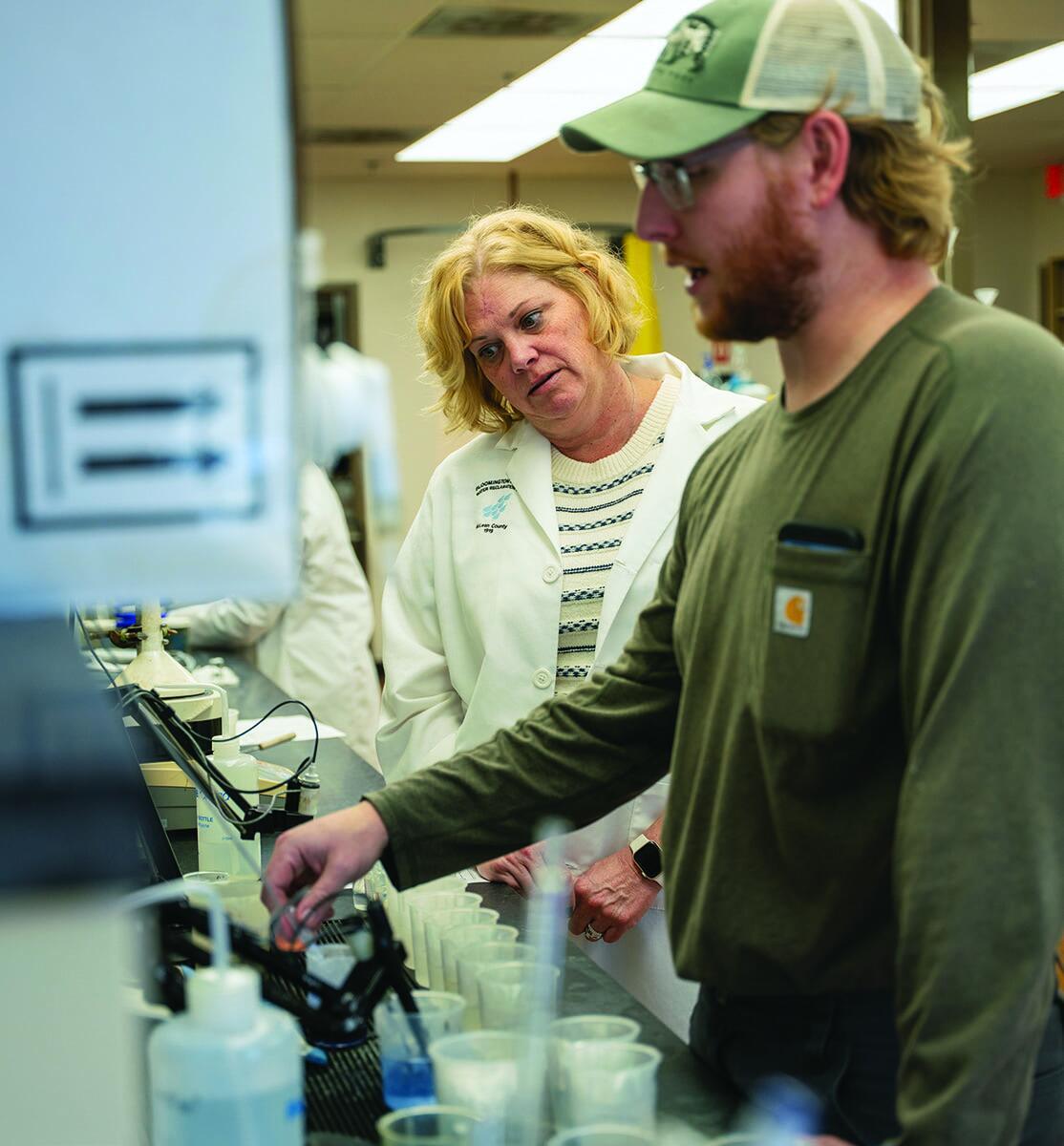
When offered the promotion to lab director, Hall jumped at the opportunity. She’s the first woman to hold the role. She oversees lab operations, regulatory compliance and quality assurance, and also supervises biosolids analytical compliance and industrial pretreatment. In 2020, she earned a master’s degree in biology from Illinois State University.
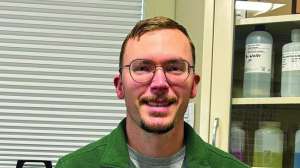
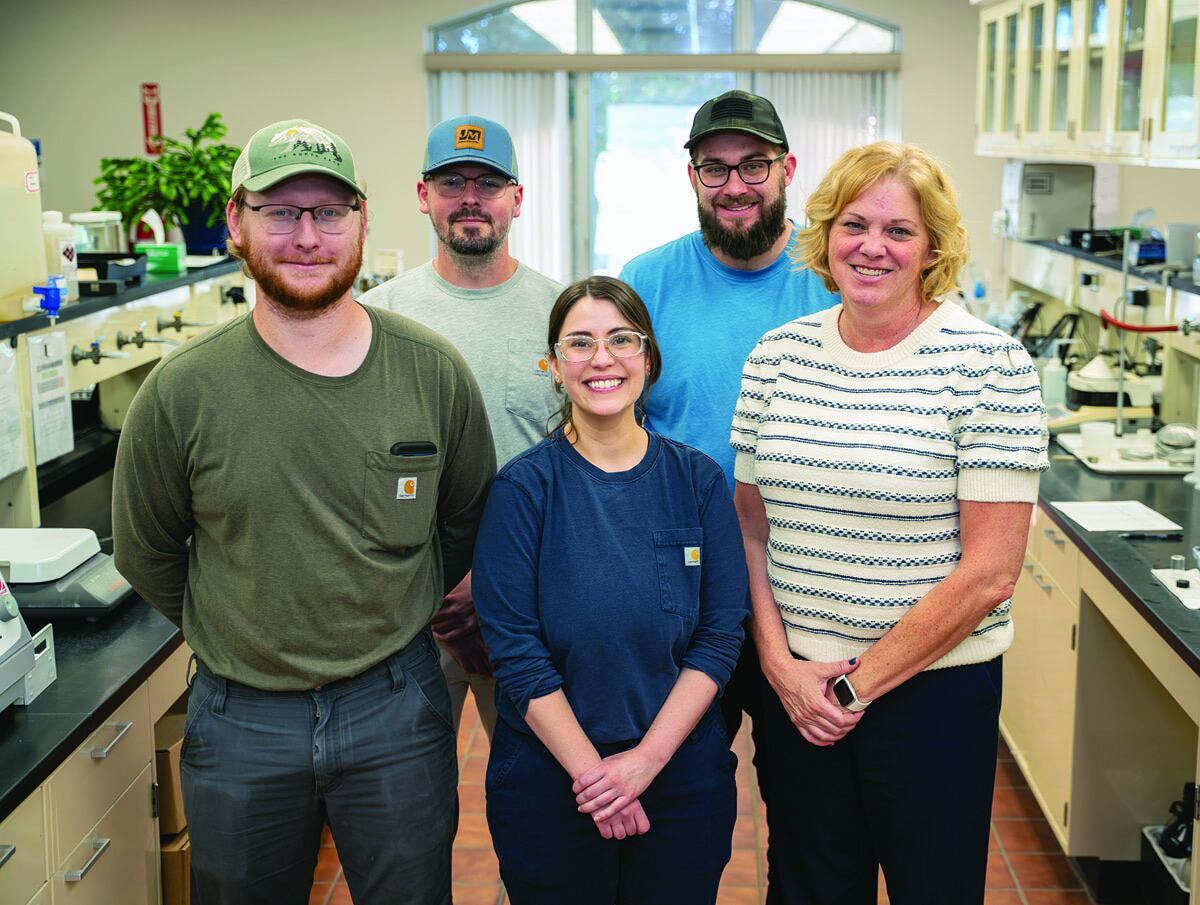
Hall credits her staff of four — Brandon Tackett, lab supervisor; Kent Frantz, chemist; Katherine Jobst, lab technician; and Kyle Clark, pretreatment coordinator — for the lab’s high performance.
“A teamwork mentality is critical for our workplace success,” she says. “Each team member understands their individual responsibilities but also the importance of our collective role. By keeping the bigger picture in mind, we ensure that all tasks are completed properly and on time, meeting all permit requirements and maintaining high standards for our operation.”
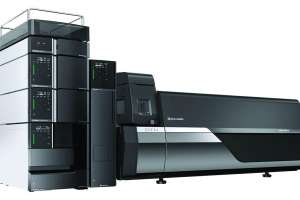
The equipment she relies on includes:
- PerkinElmer Avio 220 inductively coupled plasma optical emission spectrometer
- PerkinElmer Titan multipurpose sampler
- Hach DR 3900 lab spectrophotometer
- Barnstead MegaPure water distillation system
- A&D Weighing balance and MX-50 moisture analyzer
- Thermolyne muffle furnace (Thermo Fisher)
- Labconco TKN apparatus
- YSI Multi-lab DO Meter with Polargraphic DO/BOD probes (Xylem)
People person
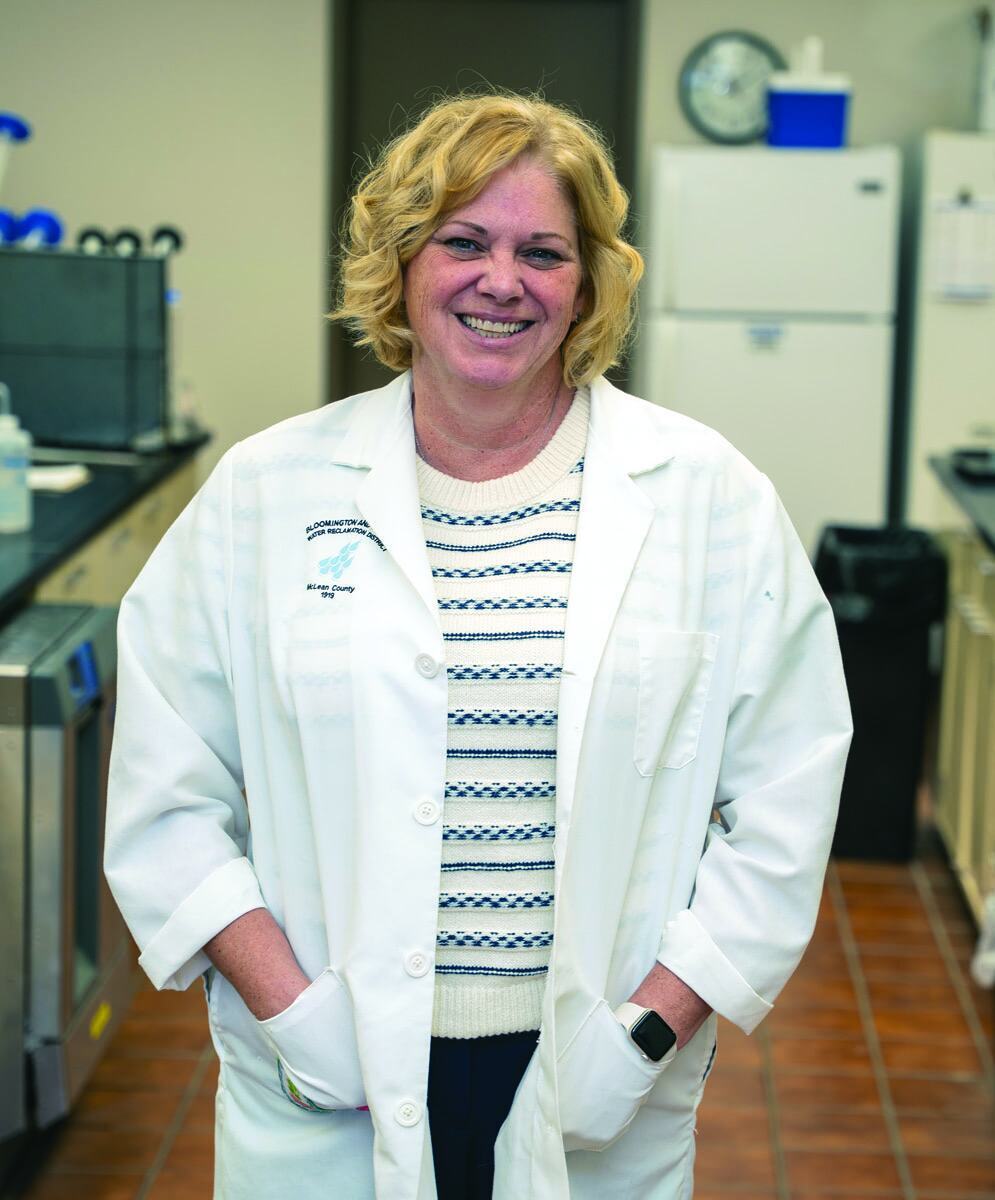
Hall is bubbly and outgoing, quick to share funny stories. It’s learned behavior that she credits to her wastewater career. “Most of our friends work at State Farm,” she says. “When Steve and I go out for dinner, our jobs are the topic of conversation. Wastewater and funeral directors are not at the forefront of people’s minds. People are very curious.”
What really brought out Hall’s gregarious side was the industrial pretreatment program, which requires her to meet with customers multiple times a year. Area companies include electric car maker Rivian, Bridgestone tires, Beer Nuts and a Ferrero chocolate factory. “I love inspecting their plant,” admits Hall. “It smells like caramel and chocolate.”
The inspections are serious business and enable the district to verify that each customer is compliant with discharge limits and permits. The visits give customers a chance to discuss changes or expansion of their operations.
“Meeting face-to-face is fun,” Hall says. “I’m fascinated by what they do. Taking time to learn about their businesses has created strong relationships. Our industrial customers don’t hesitate to communicate with us if they have a problem with their discharge limits or a spill. It’s important to let our operators know.”
Supporting progress
The lab is also involved in treatment upgrades. The West Plant, which has aged gracefully, nonetheless has its retirement on the horizon. Under pressure to meet new EPA limits on phosphorus, the district has launched a 10-year, $300 million project to reduce phosphorus effluent concentrations by 2035. The West Plant will keep operating during construction.
“The current phosphorus load in our domestic wastewater ranges between 4 to 7 parts per million,” says Hall. “Influent from industry can drive it higher. The new permitted level will be 0.5 ppm. That’s a big drop for us to achieve, but we’ll get it done.”
Tim Ervin, district executive director, is driving the project, but Hall has an important role. “As each stage of construction is completed, we’ll increase our testing for phosphorus and ensure all processes are working accordingly to meet effluent guidelines,” Hall says. “We have to help our operators meet daily processing goals despite the construction going on around us.”

Industry advocate
Although Hall likes nothing better than working quietly in her lab, she has become an outspoken advocate for the wastewater industry. She is a member of the IWEA Laboratory Committee and vice chair of its Industrial Pretreatment Committee.
She also chairs the Illinois Association of Wastewater Agencies Pretreatment Subcommittee. Last May she gave her first national industry presentation at the annual meeting of the National Association of Clean Water Agencies.
Hall also makes herself available to counterparts across Illinois looking for help in their labs and plants. “I’ve gotten to know so many people; I call them my work family,” she says. “Wastewater processing is constant. We run 24/7, holidays and weekends. We never stop. We’re all in this together. We take each other’s experience and knowledge and build on it. We’re all willing to help each other.”
The Laboratory Excellence Award gave Hall a new appreciation for her profession: “The lab’s work is critical to the health of fellow employees, the community, our creeks and rivers, and wildlife. We see our impact instantaneously as the testing we provide dictates how we process the water and ultimately release it to the environment. The impact is on a far greater scale than I could have had as a wildlife biologist.”
Hall believes it’s time for the “silent” utility, wastewater treatment, to make some noise: “Our work is critical. We need to get out there and explain what we do.”