Biogas is a renewable energy source that remains a long way from reaching its full potential.
The American Biogas Council is looking to help change that with its Digester Operator School.
The school includes 15 modules, all designed to help operators optimize their biogas systems and repair, maintain and troubleshoot anaerobic digester components. Nine of the modules are required for participation in the council’s operator certification program, an accreditation for digester operators and the only certification of its kind in the United States.
Designed by and for operators, the online and in-person classes cover all topics required for recognition as an ABC-certified Digester Operator. Participants learn the science of anaerobic digestion and proceed through modules that include digester math, mechanical systems, maintenance, hydraulics, lab testing, odor management, safety, nutrient recovery, regulatory reporting and more.
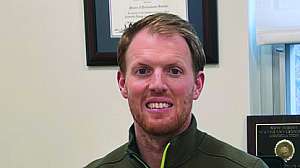
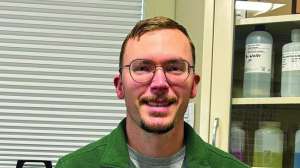
The week-long in-person school is offered at Michigan State University. The online school comprises eight four-hour sessions held during February. Bernard Sheff, an operator school instructor and ABC board chairman, and Payton Shelafoe, a certified digester operator at the Grand Rapids (Michigan) Water Resource Recovery Facility who attended the in-person school, talked about the program in interviews with Treatment Plant Operator.
TPO: What is your background in the biogas sector?
Sheff: I’m a professional engineer with bachelor’s and master’s degrees from Michigan State. The first anaerobic digester I designed was at a meatpacking house in Michigan in 1990. I became in awe that we could treat wastewater and make biogas — I was able to get all those bugs to do something for me. Once that flare came on, it changed my career. I worked for consulting firms, I had my own company for a while, and now I work for Burns & McDonnell as an associate technical consultant.
TPO: How would you describe the potential of biogas as a renewable fuel?
Sheff: Probably the biggest area of development is in dairy farms, but there are also hog manure facilities, food waste facilities and slaughtering facilities. The potential is huge and has far outstripped the number of operators. That’s why the ABC has its operator school and has set up a complete career program.
TPO: What was the impetus for creating the education and certification programs?
Sheff: Ten years ago, I was in Washington, D.C., meeting with Sen. Debbie Stabenow, who was chair of the Agriculture Committee. She heard me say that anaerobic digesters would bring jobs, but she told me that unless there were a training and certification program and a career ladder, she would have trouble going to the U.S. Senate to push bills on our behalf. I took that very much to heart, and in 2017 ABC put together a top-notch, many-faceted training program. We’re constantly pushing operators to get to that next level.
TPO: Beyond the operator school, what does the career program look like?
Sheff: It goes far beyond spending a week at MSU. We have continuing education, and we have the certification program. We teach basic theory, but we also talk about math, the mechanical pieces, the hydraulics. We have what we call the business of biogas, where we go into detail on the economic and financial side. All of these are included with what operators need to know to operate a digester. And we make sure that the exam is very rigorous; hard enough so that only about 60% of students pass the exam the first time, the same passing rate as for the Professional Engineer exam.
TPO: What are the current barriers to more biogas development?
Sheff: What is holding the industry back is offtake, and that has much to do with government policy. For example, if the EPA’s position is now that greenhouse gas emissions do not endanger public health and welfare, that could slow down demand. Companies may decide that now they don’t need to purchase clean-energy certificates the way the rest of the world does. That said, ABC polling shows that 86% of American voters are favorable toward biogas and federal government investment in it. The ABC is working hard to ensure the U.S. does not fall behind. We can see the benefits of advancing biogas development in Europe and the rest of the world, where biogas development is moving like a freight train.
TPO: Where are the opportunities to maximize biogas in the municipal market?
Sheff: Digestion of waste activated sludge is obviously No. 1. Beyond that, there is opportunity anywhere a municipal wastewater facility can bring in residuals from food processing. The Grand Rapids Water Resource Recovery Facility is an example. They’re reducing sludge volume, they’re treating the waste, they’re making renewable natural gas, and they’re taking phosphorus out of the water to make granular struvite that goes to local greenhouses for fertilizer.
TPO: How many people attend the operator training schools?
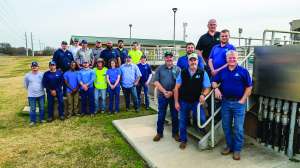
Sheff: We had 44 this year at the in-person school. We sold out and had a full facility. We’ve had as many as 100 people at our online school, held in February for four hours every Tuesday and Thursday. For the past two years we’ve had all the people we could take, which means we need to get bigger. We’ll have one in-person and one remote per year, and a lot of training and certification courses in the middle.
TPO: How do you recruit people into the schools?
Sheff: Probably 30% is word of mouth from people who have taken the training. We also do a lot of outreach through LinkedIn and through emails to our membership. And we have an extensive list of people who in one way or another have shown an interest in biogas.
TPO: Who are the instructors for the training schools?
Sheff: To a great extent they’re a group of ABC members who have been running, designing and building digesters for a long time. The group includes mostly Ph.D.s and engineers.
TPO: Where specifically do operators struggle with biogas optimization?
Sheff: To a great extent, it’s because folks haven’t learned enough about the biology. It’s the same thing wastewater treatment plant operators struggle with: truly understanding what the bugs are doing and how to keep them happy. Beyond that, operators have to expand their horizons, because there’s more involved than the digester. Digesters rarely fail because of the digester. They fail because of conveyance in or conveyance out. And there’s a thermodynamic side to it. It’s a complex system, and ABC has taken up the mantle to really train operators. We’re trying to drive up knowledge across the board. The ABC is a huge believer in the rising tide that lifts all boats.
TPO: How would you sum up the potential for biogas as a contributor to renewable energy and climate protection?
Sheff: We have a tremendous opportunity in the biogas world to create a lot of renewable energy that’s available 24/7 — both renewable natural gas and renewable electricity. We are seriously underdeveloped in the United States. There is no reason we shouldn’t be maxed out. What’s going to make this happen is education. We have a lot of opportunities to put RNG into the grid, to make electrons and do other things with biogas.
TPO: What is the outlook for operators’ careers in biogas?
Sheff: Every digester that comes online needs three more full-time operators. These are minimum $60,000 per year jobs. It’s a real opportunity for young people who are in technical college or coming out of high school. We can train them up and give them great careers. I think biogas is one of the ways we’re going to change this world and make it a better place.
TPO: What is your role in the Grand Rapids operation?
Shelafoe: I started as an operator-maintainer in 2023. I came to the city with some training and with my Class B license, which is the second highest. That allowed me to be promoted to wastewater supervisor. We convert biogas to renewable natural gas that we feed to our gas utility. We can also use it to fuel the combined heat and power system that heats our digesters, although we aren’t currently doing that.
TPO: How would you basically describe your experience with the operator school?
Shelafoe: I took the program in 2023. To qualify, they require at least 2,000 hours of anaerobic digester experience. I was able to surpass that through previous jobs. Once I got there, it was a phenomenal week. I was surrounded by people who wanted to talk about how energy can be made from anaerobic digestion and how to do it effectively.
TPO: What was the makeup of the school’s faculty and attendees?
Shelafoe: It was taught by the stars of the ABC, and they also brought in equipment vendors. My supervisor at the time, and I, were the only municipal operators there. Many others were utility operators from RNG sites and farms with biogas systems. It opened my eyes to know that other people are learning how to get energy from food waste, manure or co-digestion. It’s amazing what we could do if more people were on board and understood what’s possible.
TPO: How were the five days of training structured?
Shelafoe: They broke it down into modules. The first two days were classroom instruction. The next two days were half instruction and half visits to digester sites. One of those was to a dry digester processing food waste, and the other was a farm. The last day was the exam. It was similar to the state exam — my head hurt the same way.
TPO: How would you describe the course content?
Shelafoe: The school wasn’t about just operating. It included doing math calculations. For example, if you have 500 head of cattle, how much gas production would you expect to see from these cows in one year, or five years? So you would be able to verify whether the capital cost of digestion is justified by the return on investment. They also covered the mechanical aspects. And they had a licensed safety consultant talk about things that can go wrong. We need to follow safety procedures so that everyone can go home at the end of the day.
TPO: Were there benefits beyond the instruction itself?
Shelafoe: Yes. The first thing that comes to mind is the support and networking. Everybody was able to talk about experiences they had. It’s great to feel that people are willing to be there for you. If they can’t answer a question, maybe they can send you to someone who can. So if you’re banging your head against the wall and can’t figure something out, you can always reach out to someone.
TPO: What are the benefits of passing the exam?
Shelafoe: You receive a plaque and a business card saying you are a certified operator in anaerobic digestion. It’s something you can put on your resume that will help you climb up the ladder. It’s actually pretty significant, because the ABC is a globally recognized association.