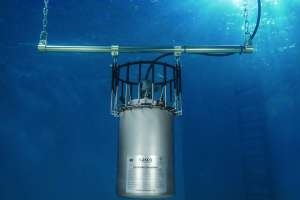
Submersible mixers in water tanks and reservoirs play a key role in helping water system operators ensure consistent chlorine residuals, prevent disinfection byproduct formation and maintain regulatory compliance.
However, mixers are not all created equal, and their effectiveness depends on proper selection, installation, and operation and maintenance. By following best practices, utilities can maximize their investment, improve water quality and reduce operating costs.
Consider certifications
A first consideration when choosing a submersible mixer for drinking water applications is to ensure that it meets industry certifications and regulatory standards. The U.S. EPA requires compliance with stringent safety measures to prevent contamination and maintain water quality. The gold standard for water system mixers is compliance with:
NSF/ANSI 61. This ensures that mixer materials and components do not leach harmful substances into the water — critical for protecting public health.
NSF/ANSI 372. This confirms that the mixer meets lead-free standards, an essential requirement for potable water infrastructure.
These certifications guarantee that the equipment meets safety and performance criteria established by regulatory bodies. Without them, utilities risk using equipment that may compromise water quality or fail to meet compliance standards, leading to costly violations.
Proper sizing
Selecting a mixer of the correct size is essential to achieving optimal water movement and mixing efficiency. A mixer that is too small may not provide adequate circulation, while an overpowered mixer will likely waste energy and operate inefficiently. Key factors in mixer sizing include:
Tank capacity. Larger tanks require mixers with enough power to maintain uniform distribution of disinfectants and prevent stagnation.
Daily flow. Understanding peak and off-peak demand helps determine the appropriate mixing power to maintain consistent residuals.
Water supply demands. Users must consider fluctuations in usage patterns and make sure the mixer can adjust to seasonal variations without overloading the system, or providing inadequate mixing during times of peak flow.
An improperly sized mixer can lead to ineffective water circulation, resulting in poor water quality, high disinfection byproduct formation and increased maintenance. Working with a manufacturer or engineering consultant to determine the ideal size ensures optimal performance and long-term reliability.
Ease of installation and service
A mixer should be designed for simple, low-effort deployment and maintenance, minimizing labor costs and system downtime. Key characteristics include:
Plug-and-play design. Mixers that require minimal wiring, have simple mounting and need no extensive modifications will significantly reduce installation time.
Light weight and submersibility. A compact, easily deployable mixer eliminates the need for heavy machinery and multiple operators for installation.
Minimal maintenance. A mixer with sealed components and durable materials will reduce the need for frequent servicing.
By selecting a user-friendly mixer, municipalities can reduce labor hours, leading to lower long-term operating costs.
Optimizing for efficiency
Utilities should carefully consider the total cost of ownership of a submersible mixer, not just the initial purchase price. Energy efficiency, maintenance costs and operational savings play a significant role in determining long-term value. Key cost-saving factors include:
Energy efficiency. Energy-efficient models have a low amp draw. For example, a 0.5 hp mixer may only draw 5.7 amps, saving an estimated $800 to $900 in electricity annually when compared to a conventional model and when operated consistently.
Savings on chemicals. Proper mixing helps accurately maintain the desired chlorine residuals, reducing the need for excessive chemical dosing to correct inconsistencies.
Water conservation. Without proper mixing, tanks may require frequent flushing to remove high levels of disinfection byproducts. Flushing wastes valuable treated water.
Lower labor and equipment expenses. A properly sized and installed mixer reduces the frequency of flushing events and saves on labor. Manual flushing requires multiple operators, vehicles and additional equipment, leading to unnecessary expenditures.
Ensuring compliance
Water systems must adhere to EPA and state-level drinking water regulations, particularly concerning disinfection byproducts. The EPA limits total trihalomethanes to 80 parts per billion; failure to comply can result in fines, public health risks and increased regulatory scrutiny. The right mixers can support compliance by:
Reducing DBPs. Proper mixing prevents stagnation and helps distribute disinfectants evenly, limiting DBP formation.
Maintaining chlorine residuals. A well-mixed tank ensures uniform chlorine levels, preventing areas of high or low disinfection.
Best operating practices
Once a mixer is installed, proper operation and regular monitoring will ensure that it continues to function at peak efficiency. Here are key best practices for system managers:
Regular performance monitoring. Utilities should routinely test water quality to confirm that chlorine residuals remain stable, inspect mixers periodically to ensure proper submersion and functionality, and track energy consumption to identify increases that may indicate a mechanical issue.
Optimized placement and operation. It is important to ensure that mixers are strategically placed within the tank for optimal circulation. Mixers should be run continuously or at programmed intervals to maintain water quality while conserving energy. Operational settings should be adjusted based on seasonal demand and fluctuations in water usage.
By implementing these best practices, utilities can ensure that mixers operate efficiently, extending equipment life and maximizing return on investment. A properly selected and optimized mixer can greatly enhance water system performance, providing benefits such as cost savings, improved compliance and better water quality.
To maximize these benefits, users should prioritize certified equipment, ensure correct sizing, optimize energy efficiency, and follow best operating practices. For utilities looking to improve water system efficiency, a well-designed, properly implemented mixer is a valuable asset that provides long-term cost savings and enhanced public health protection.
About the author
Bethany Thompson (bethany.t@kascomarine.com) is municipal category manager with Kasco, a manufacturer of surface and diffused aeration systems, mixing systems, and other products.