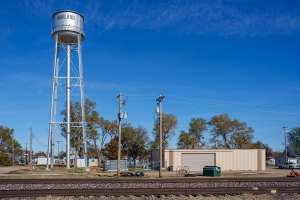
Stop in to see Wes Adams at work and you might find him tending the wastewater lagoon system on the edge of town.
Or adjusting the softening dosage at the water treatment plant. Or driving the grader on one of the town’s gravel streets. Or unplugging a storm drain, or maintaining a lift station, or …
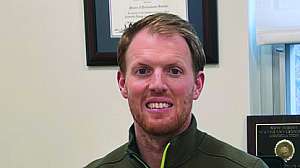
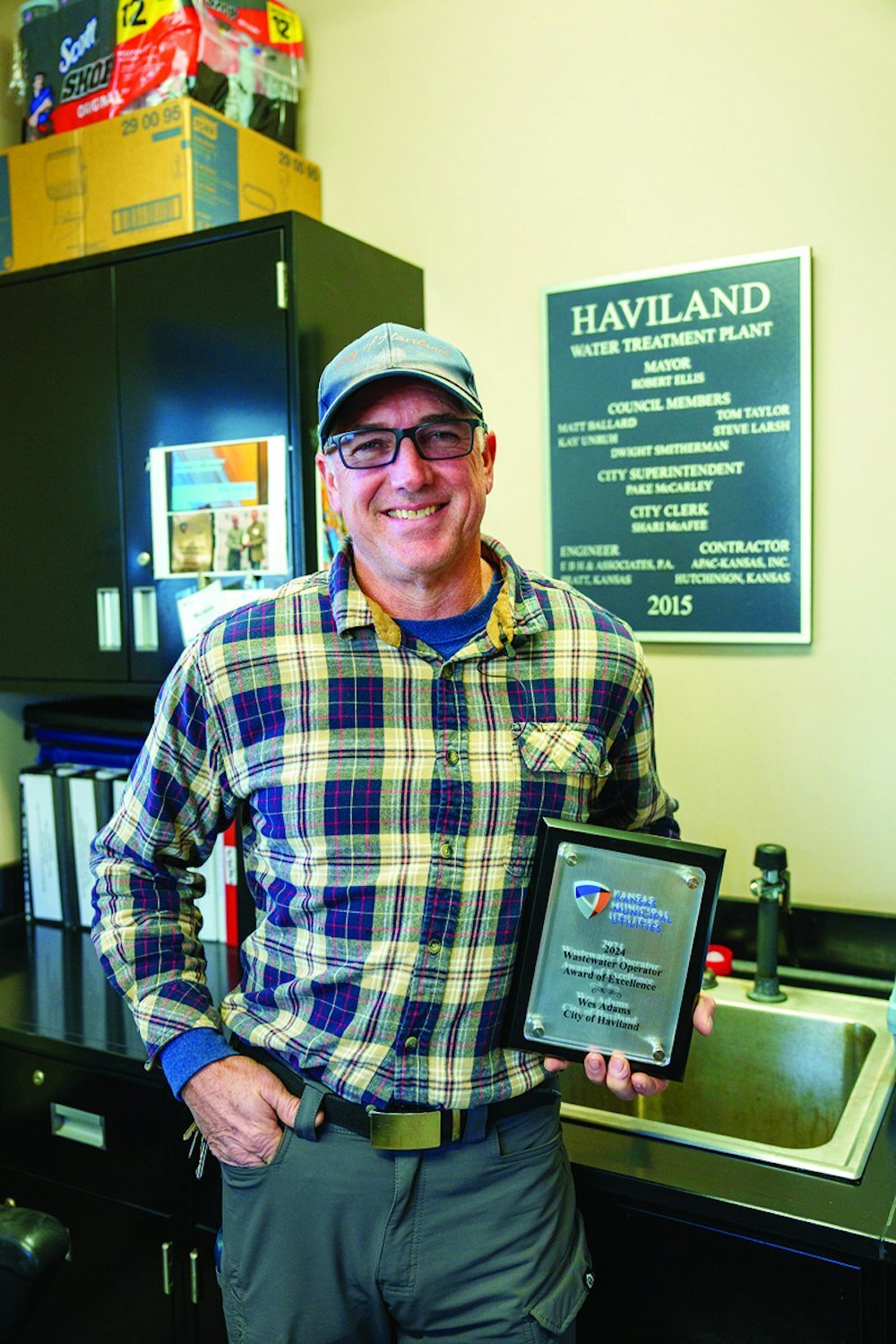
As the one-man Department of Public Works Haviland, Adams has a lengthy and varied to-do list every day for the city of 650 in southwest Kansas. He has carried out his clean-water duties with expertise and enthusiasm, earning a 2024 Wastewater Operator Award of Excellence from Kansas Municipal Utilities.
“Wes has been a tremendous asset to the city,” says Brad Lingafelter, mayor of Haviland, which is home to 150 students at Barclay College. “As with any small city, the employees sometimes wear many hats and need to be creative problem-solvers.
“Wes has been invaluable in his dedication to our lagoon project. He took the time to educate himself about all aspects of the project while seeking outside help to mentor him about strategies to help the city. His willingness to find a solution has saved Haviland a substantial amount of money.”
Broad responsibilities
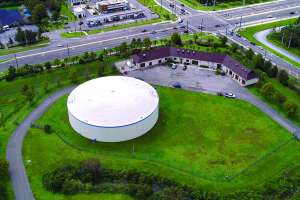
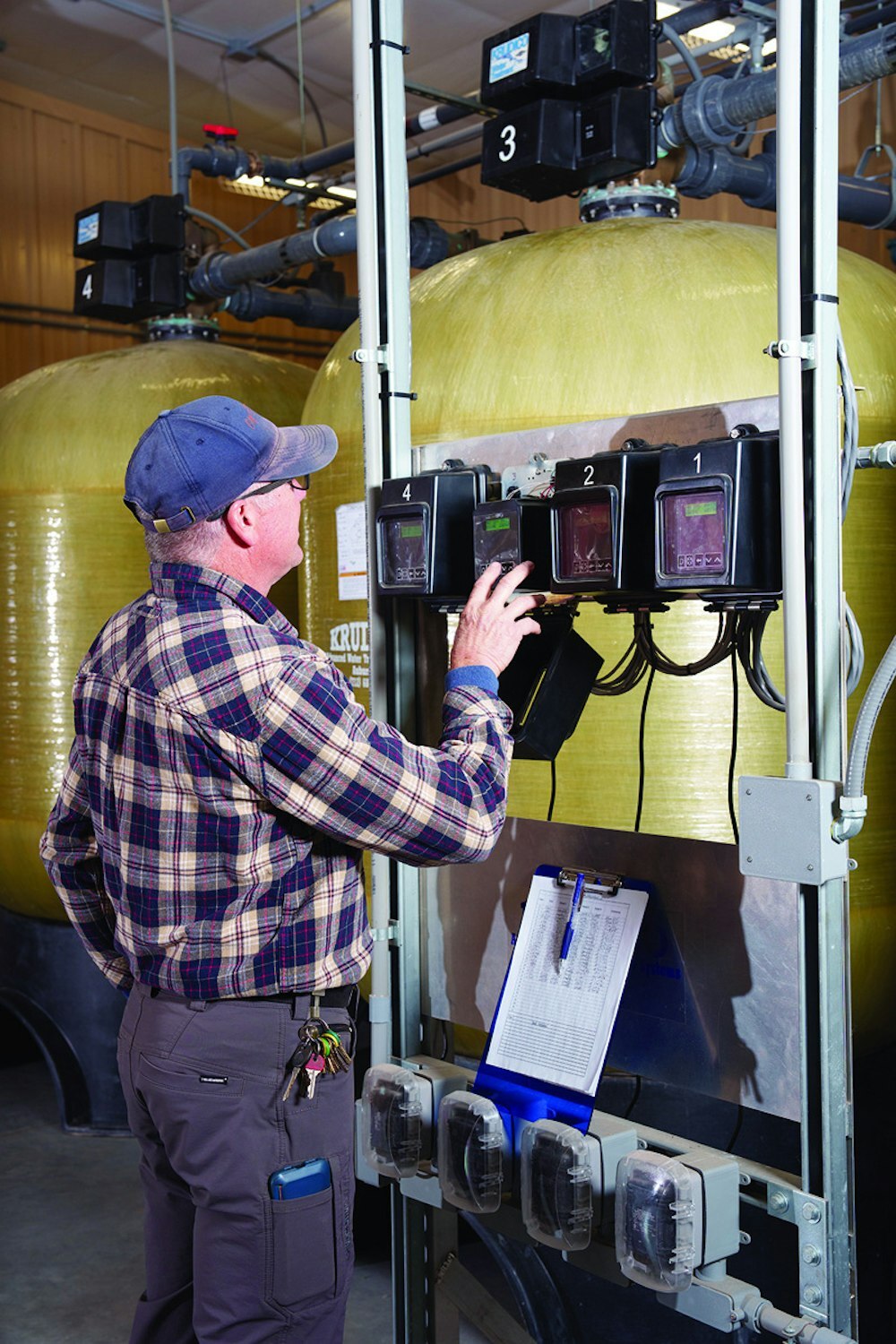
As the water and wastewater treatment operator, Adams is responsible for the city’s drinking water system, which draws from three wells. Treatment includes nitrate removal, softening of the brine used to regenerate the resin in the nitrate vessels, and chlorination.
Center-pivot systems irrigate the area’s sandy soil. Farmers fertilize crops with anhydrous ammonia, the source of nitrate in the groundwater. The water plant went online in 2016.
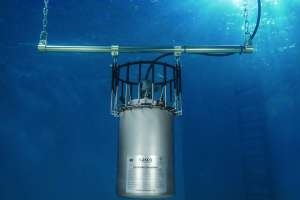
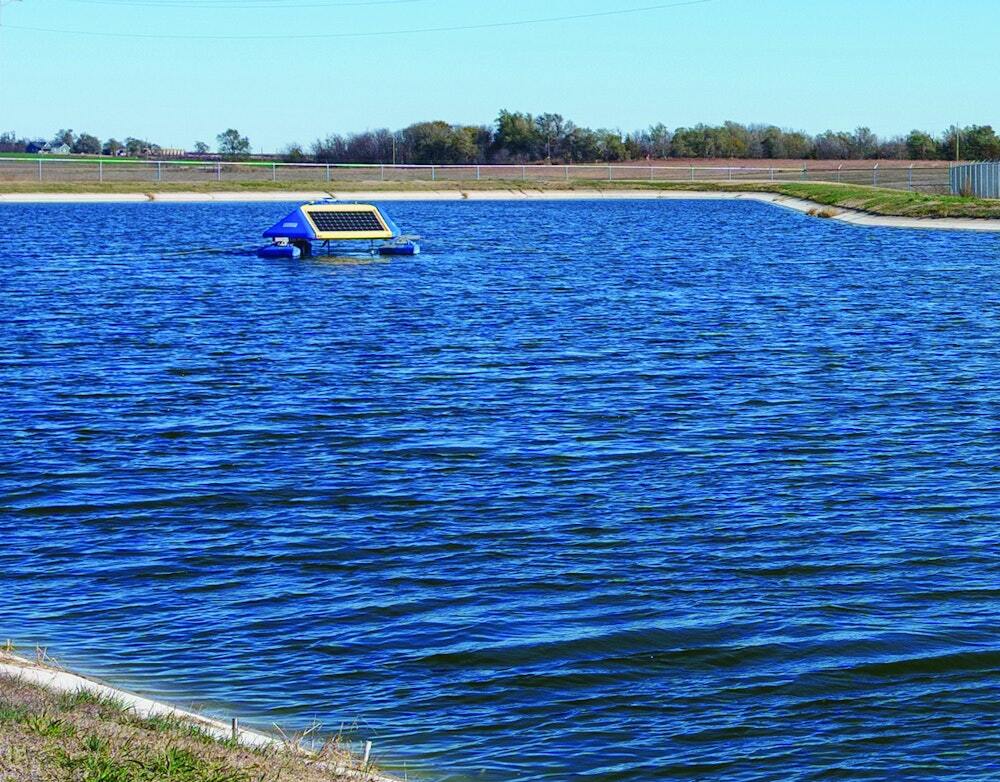
The wastewater system dates to the 1960s and includes a manually cleaned bar screen and a pair of 2.1-acre lagoons, circulated by Sunflo2 solar mixers (LiquidTEK). Semiannual discharge is to a dry creek that flows into a holding pond. Sludge is removed from the lagoons periodically and pumped to a nearby field. An original clarifier and digester were operated until the 1990s and then abandoned.
Adams looks after both operations by himself, on top of his other public works responsibilities. He has the benefit of a college intern during summer, but for most of the year, he’s on his own. Few in the clean-water profession have as varied a background. He grew up in Northern California, where his father was a firefighter. After being injured in an accident, his dad operated a 20-acre apricot orchard.
“We had cows, goats, chickens, pigs and turkeys,” Adams remembers. He went to a Catholic high school where he met his wife Michelle, and then for three years studied marine biology and chemistry at California State University Stanislaus in Turlock. He followed his father into firefighting and completed academy training, but when his hearing became compromised he switched to serving as a paramedic, a profession he practiced for 30 years.

Move to the Midwest
Then family intervened. His son married a woman from Kansas, and Adams and his wife say they “fell in love” with Haviland when they attended the wedding there in 2016. They bought a house there as a potential retirement place and at first rented it out, but grandchildren began arriving, and they moved to Haviland in 2020.
Michelle took a job as city clerk based on her years as an office manager at a veterinary clinic. Wes signed on as the custodian for the post office and supplemented that by helping the city with meter-reading, repairs and other tasks on weekends. Eventually, the water and wastewater plant operator planned to retire, and Haviland posted the position, which also included leading the public works department.
“I asked myself if I was challenging my brain enough,” Adams says. He decided he wasn’t, applied and got the job. With his background in farming and firefighting and paramedic service, Adams isn’t intimidated by challenges.
That was evident right away in his water and wastewater roles: “The existing manager explained the lagoon operation, but then he retired early. I was supposed to have about a year’s orientation, but it was just a couple of months. I was kind of thrown into it.”
A lot to do
To learn on his own, Adams read an article on lagoon design and operation in Lifeline magazine, published by the Kansas Rural Water Association. He soon realized that the information he’d been given by the retiring operator wasn’t accurate.
“Nothing he told me matched what was in the article,” Adams says. “I emailed the author and asked about it. Brian Bowles of KRWA came out and helped me with our first discharge and has helped us since then.” He also consulted with Clarence Banzet, the lagoon operator in a nearby community.
Meanwhile, the lagoon system was experiencing TSS and BOD violations. The city had hired an engineer to review the operation and make recommendations for upgrading it, at an estimated cost of $3 million to $5 million. The proposal also called for improving the wastewater collection system, even though the sewers weren’t experiencing much, if any, inflow and infiltration.
At the time, Adams was enrolled in the state’s operator-in-training program and met with Kurt Bookout, who visits plants around the state for Kansas Municipal Utilities. They walked the lagoons, and the basic conditions including color and odor were good.
“We discovered that the previous sampling hadn’t been done correctly,” Adams says. “When we did it the right way, all the samples passed within limits.” They met with the Kansas Department of Health and Environment and discussed lower-cost upgrade alternatives, including discharge to constructed wetlands.
Ultimately Adams convinced the city council to re-evaluate the original plan and adopt alternatives that cost about $324,000 — a savings of more than $2 million.
Hands-on approach
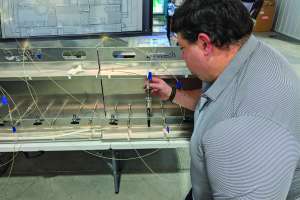
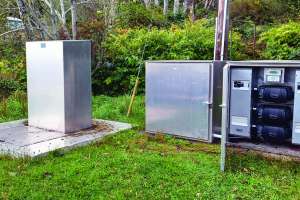
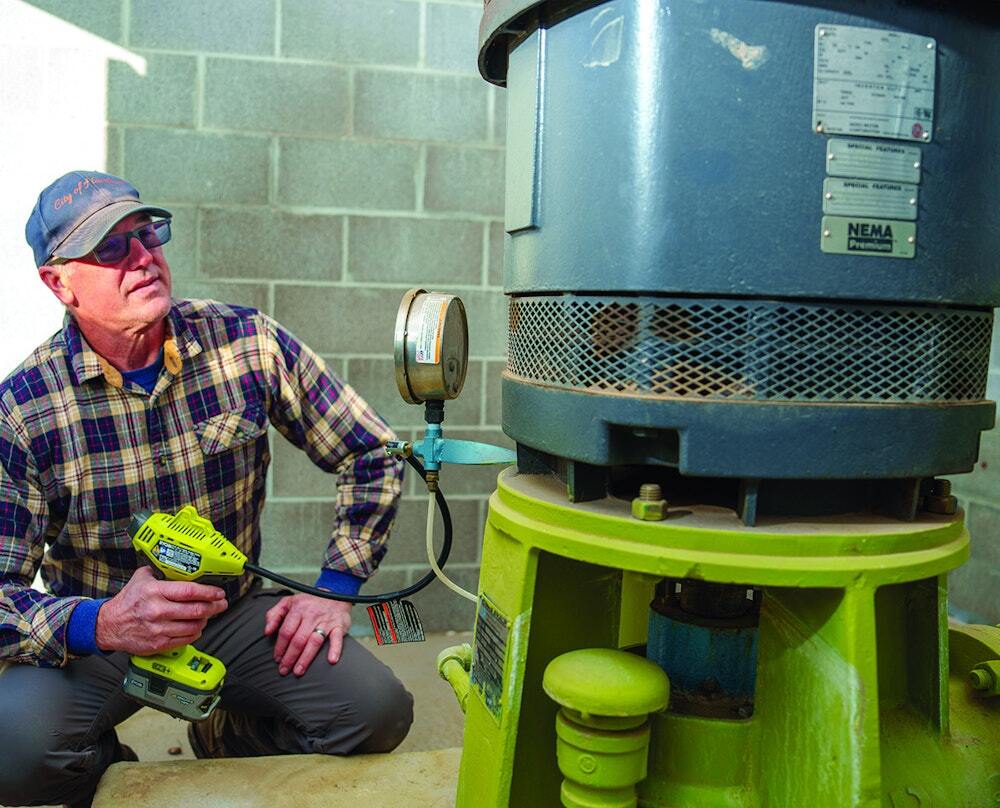
Adams has saved money in other areas, too: rebuilding pumps (Smith & Loveless) in the two lift stations he is responsible for, and making adjustments at the water plant. The valves in the nitrate removal vessels were old and sticking, so he took them apart and rebuilt them, saving several hundred dollars per valve.
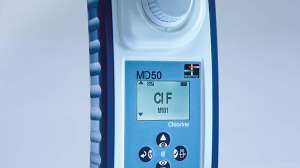
He fine-tuned the settings on the softening equipment and rebuilt the chlorination pumps, cutting costs while improving the processes — small, but effective measures, he notes. The plant uses Hach nitrate and chlorine analyzers.
More recently, Adams took classes to become a certified backflow preventer tester. “A lot of our citizens were complaining about the cost of having their backflow preventers tested annually,” says Adams. Now he can test them and save residents money.
His wife observes, “He’s good at fixing things and truly is a jack of all trades — plumbing, electrical, everything. He learned a lot from his dad, and he has that kind of scientific and mechanical brain. He can pull something apart and fix it. Recently he crawled under our house and repaired a gas line.
“He can be busy 24/7, because if something needs work around town, Wes is the guy.” She notes that his work as a paramedic trained him in doing things by the book and being of service to others: “He saw a niche here where he could be an asset to the community.”
An essential role
Even though he has been in the clean water profession for only a few years, Adams shares the belief of his colleagues that while clean water is vital, few people recognize the importance of the operations water managers are responsible for: “Safe drinking water, safe disposal of wastewater. That’s what we do and it’s really important.”
On the other hand, he doesn’t want personal credit for his accomplishments. Back in the day, he remembers, paramedics did a lot of the critical tasks in emergencies, but the fire department seemed to get all the glory. Adams just takes pride in coming to Haviland, learning how things work, and making them better.