When Raleigh Water decided to change how it handled biosolids at its Neuse River Resource Recovery Facility, it did so in a big way.
“This is a comprehensive biosolids upgrade project,” says Erika Bailey, P.E., assistant director. “We’re using an advanced process — thermal hydrolysis pretreatment — that preconditions the solids upstream of anaerobic digestion. It makes digestion more efficient. It does a better job of destructing the organic solids, and it produces more biogas.”
Previously, the plant in North Carolina’s capital used a mix of aerobic digestion, lime stabilization and composting. That required significant energy for aeration and costly trucking of the final biosolids. Now anaerobic digestion with preconditioning produces energy instead of using it, and it reduces the volume of solids. And the utility will convert the biogas into renewable natural gas to fuel the city’s fleet of buses.

A better way
The Neuse River facility (75 mgd design, 50 mgd average) is the largest of Raleigh Water’s three wastewater treatment plants. The Smith Creek (3 mgd) and Little Creek (2.2 mgd) plants both send their waste activated solids to Neuse River.
There, the biosolids are dewatered in centrifuges (GEA) before thermal hydrolysis (Cambi) which uses pressure and heat to condition the material. The pretreatment pasteurizes the solids, breaks down the organic compounds and hydrolyzes the solids into a pourable liquid.
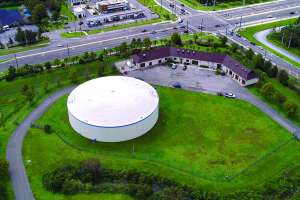
The solids are pumped into two new 2.2 million-gallon digesters and mixed by chopper pumps (Vaughan). After 15 days, the solids are dewatered again with centrifuges and belt presses (Alfa Laval). The Class A final product is spread on city-owned land.
The ability to produce Class A biosolids in just 15 days was one attraction of the process.
“This is considered an intensification technology,” says Bailey. “It lets us fit more capacity in the same size digester.”
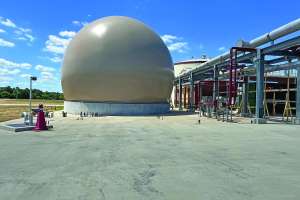
The process also reduces biosolids volume, and the material dewaters better. The larger volume of biogas is stored in a membrane gas holder (WesTech Engineering) and runs through a gas treatment process (DMT International) to meet renewable natural gas standards.
Lots of research
Developing the entire process took many years and significant research by Raleigh Water staff and consultants. Preliminary workshops and design began in 2014, and ground was broken in 2019. The thermal hydrolysis technology came online in August 2024, and the RNG connection to the gas grid is expected in spring 2025. Raleigh Water doesn’t sell the RNG to the utility; it pays a transportation fee to have the gas piped to the bus fueling station.
Nathan Howell, operations superintendent, says the COVID pandemic slowed the project down, but the utility also invested significant time visiting other utilities that had installed processes Raleigh was considering.
Besides visiting plants in the Southeast U.S., a delegation went to Europe to see some thermal hydrolysis installations. “We did a lot of our due diligence up front, and that’s what took so long,” Howell says. “We probably took 10 different trips just looking at equipment so that we were making the best decisions we could.”
The decision to produce RNG instead of using biogas to generate power and heat came after careful weighing of options. One advantage is qualifying for the U.S. EPA Renewable Fuel Standard Program. For the transportation fuel it creates, Raleigh Water will be assigned Renewable Identification Numbers, which can be sold to produce substantial income.

City climate goals
The bioenergy recovery project helps move the city toward the goal of its Community Climate Action Plan, which calls for reducing greenhouse gases by 80% by 2050. “This project has pretty significant benefits by converting buses to RNG from diesel,” says Bailey. “It’s an 11% reduction in our municipal greenhouse gas footprint.”
Bailey thinks the project can be a model for other communities, including some participating with Raleigh in a Water Environment Federation task force for utilities that produce RNG. “We are using it in our own city buses. That’s the model we’re setting,” Bailey says. “We have a good end user in that we have a large bus fleet that will ultimately use all of our RNG.”
The project was also driven by the desire to reduce costs and add biosolids processing capacity, according to Lisa Joseph, resource recovery manager: “We are trying to be good stewards of taxpayer dollars. Raleigh has seen rapid growth, so we’re trying to stay ahead of that as well.”
Exceeding expectations
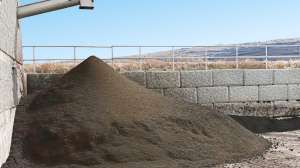
Before the RNG part of the project was operational, it was clear that bio-energy would yield substantial operational savings. “We’re seeing solids reductions even greater than originally predicted,” Joseph says. “It’s a huge savings. We were averaging about 15 truckloads out of here five days a week. Now, we’re not hauling at all; we’re stockpiling for land application.”
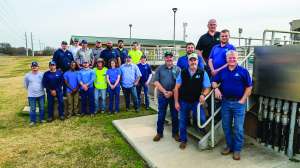
For utilities considering similar transitions, Howell says it is important to consider the effects of process changes on the staff: “One thing we learned along the way is not to discount the value of the human capital side of it. It’s one thing to build it and put it online. It’s another thing to staff it appropriately and have the right people with the right skill sets to do it.
“It has been a huge learning curve for our maintenance and operations staffs, and we continue to learn. We were all aerobic digestion, and we switched to anaerobic. That means relearning the anaerobic digestion process on top of thermal hydrolysis and learning what it takes in people and dollars to maintain all that new equipment.
“We had to learn as we went, but the operations and maintenance staffs have really stepped up and shown ownership. And our vendors and engineers were great about coming onsite and training our staff.”