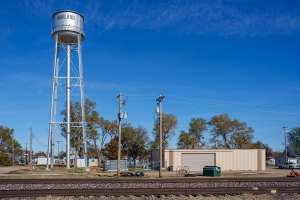
When bad weather hits, the Regional District of Mount Waddington might as well be in the middle of the wilderness.
The district, on the northern end of British Columbia’s Vancouver Island, is only five hours’ drive from the capital city of Victoria in the south. But its 17,000 residents across several small and remote communities lose electrical power frequently, and so do the plants that treat their wastewater.
“It is not uncommon to have outages of 12 or more hours multiple times each year, particularly in winter,” says Paul Getman, contract operator for the Coal Harbour water and wastewater systems as well as the wastewater system in Hyde Creek. “In fact, I just added up the power outages from this past year, and there were 13 significant ones for a total of 78.5 hours.”
To make matters worse, getting the power on back is a slow process. “Being on the very northern tip of Vancouver Island is like being at the end of a long dirt road,” says Getman. “You’re the very last one to get attention. Only one line from the main grid leads up to northern Vancouver Island. If it gets compromised anywhere along its length, then all of us are out of power. And this happens on a very regular basis.”
As a remedy, the district opted for battery backup power units with lithium-ion batteries — and built them in-house, significantly saving on cost.
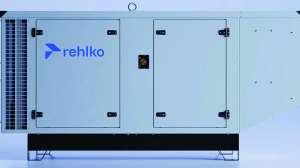
Most clean-water plants cope with power outages by having standby generators on site, but the cost made that a hard pill to swallow for the Mount Waddington region.
In the past, Getman dealt with outages by trucking a portable 30 hp diesel generator from site to site — one treatment plant and four pumping stations — so that each got power for a limited period. “I would try to keep ahead of the inflows and work it all down to the sewer plant and attempt to do some treatment at the same time,” he says. “But in reality, I was just going through the motions and not accomplishing much of anything.”
The provincial Ministry of Environment and Parks requires wastewater operations to continue during power outages. That’s why in autumn 2020 Getman’s supervisors asked him to look into battery backup systems.
“My initial feedback was that this would probably be prohibitively expensive and that the district should just go ahead and purchase stationary diesel backup generator sets,” Getman says. “But they insisted.”
Like any sensible operator, Getman shopped around for off-the-shelf battery backup solutions, but he found nothing. The closest items he found were uninterruptible power supplies such as those used for data centers. “They would hold things for long enough to get a diesel generator fired up, but that was about it,” he says. “There wasn’t anything off the shelf that you could apply to our situation.”
In light of that, he decided to build battery backup units himself. “These systems would need to cover the first 24 hours of a power outage and do so automatically,” Getman says. “Basically, we needed a large-capacity, 208-volt three-phase UPS for our pumping stations.”
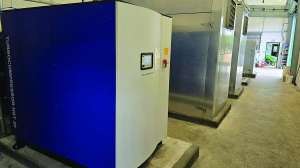
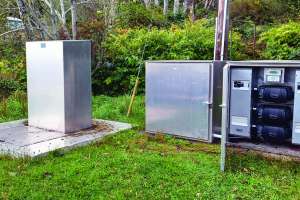
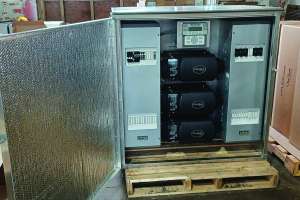
By early summer 2021, Getman had assembled one proof-of-concept battery backup unit inside a 48-by-48-by-30-inch aluminum kiosk like those used for the district’s pumping station controls.
“This unit used three 48-volt, 10 kWh LIFEPO4 lithium-ion batteries accessible from one side of the kiosk and three 3,600-watt OutBack inverters accessible from the other side,” Getman says. “The inverters were configured to produce 10.8 kW of 208-volt, three-phase power for the stations’ 5 hp pumps.
“By their nature, the inverters instantly and automatically switch from standby to full backup power output in the event of a power interruption on one or more phases, and automatically switch back to recharging the batteries and standby mode when the power is restored.”
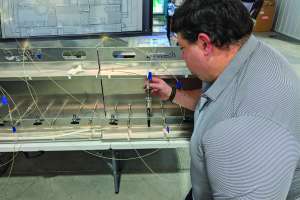
After much testing, the proof-of-concept battery backup unit worked exactly as hoped, and the district team decided to build eight more units. “We also decided to build rather than purchase 25 LIFEPO4 batteries for the units, as this would save about $25,000,” says Getman.
To that end, the district ordered 400 271 Ah LIFEPO4 cells from a vendor in China, each cell about 3 inches deep, 7.5 inches wide, and 8 inches high, weighing 11.5 pounds. Also ordered were:
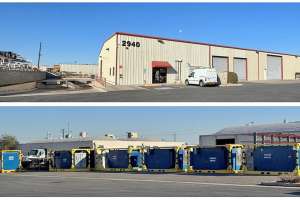
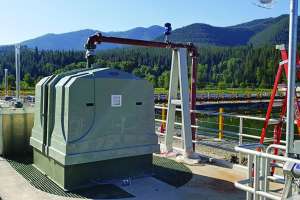
The eight aluminum kiosks were built locally. “Fully assembled, each battery backup in its aluminum case was 24 inches long, 16 inches deep, 13 inches high and weighed about 200 pounds,” Getman says. “Most of the units are in 46-by-468-by-32-inch kiosks and weigh 650 to 700 pounds. We rented warehouse space to assemble the units.”
Because this all took place during COVID-related supply chain delays, it took 10 months to assemble the backup units. The work was completed in spring 2022. Installation of the kiosks in Coal Harbour and Sointula was completed and the units were in service by the end of summer. Each backup unit is connected to the local SCADA system, can be monitored and adjusted remotely, and can send alarms as necessary.
Mount Waddington’s battery backup units have performed flawlessly. Each backup unit can maintain power for the first 24 or more hours of an outage. “In the event of a power outage that lasts longer than 24 hours I am able to use a portable gasoline generator and a 120-volt golf cart charger to charge the batteries.”
“The final cost to install the units was 150% to 175% of the cost to install stationary diesel generator sets,” Getman says. “The long-term payback will be in the minimal maintenance of these units. We expect they will need battery replacement in 10 to 15 years and inverter replacement in 15 to 20 years. Time will tell if our estimates are realistic.”
All told, “We wound up building some pretty nice-looking batteries and saved ourselves quite a bit of money. They’re operating famously now even as we speak.”