City rents retrievable diffused aerators for quick improvement
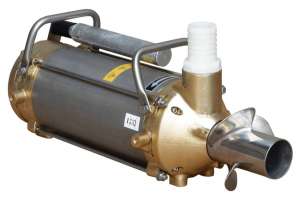
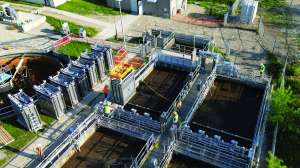
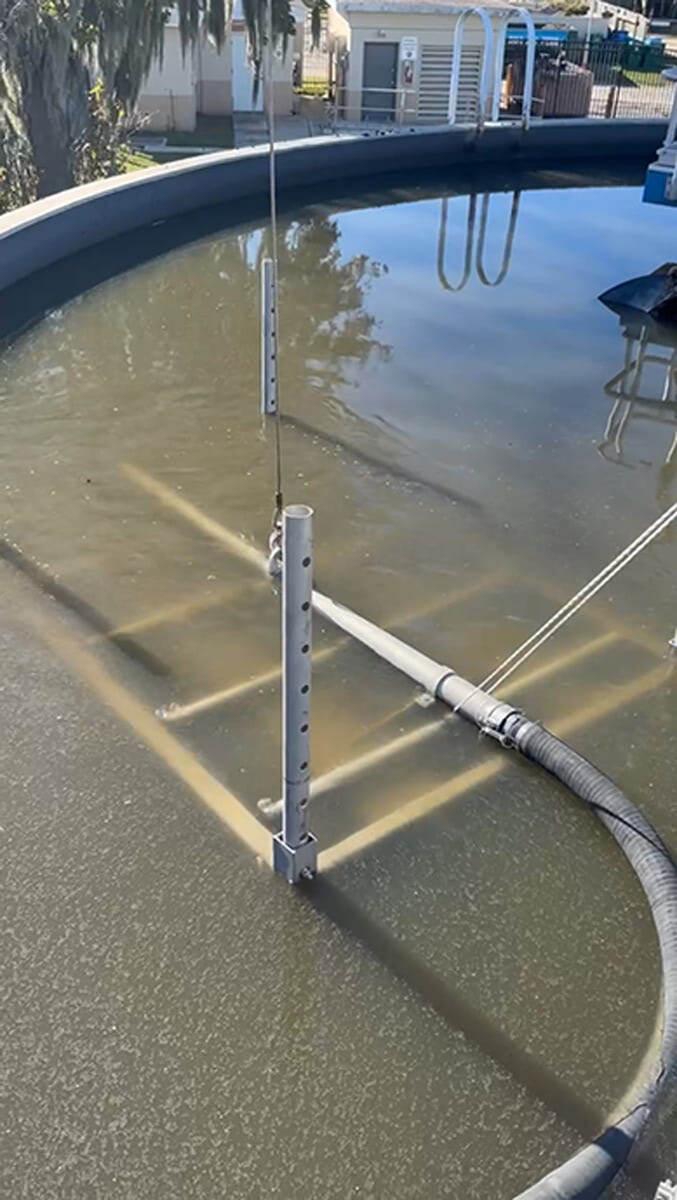
Problem: A wastewater treatment plant in the Southeast USA had a problem maintaining target dissolved oxygen due to an underperforming diffused aeration system. The tank’s permanently installed fine bubble diffusers were fed by a single multistage centrifugal blower and were either fouled or damaged below the surface which impacted their effectiveness. The plant team looked to temporarily augment the tank with a supplemental oxygen source.
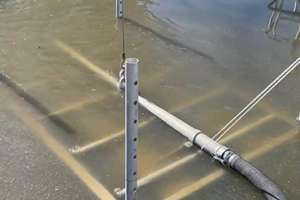
Solution: Fine bubble retrievable diffused aeration grids from AERZEN RENTAL SOLUTIONS were installed in the clarifier upstream with air temporarily piped from a spare permanently installed blower. Within a few days, DO levels were improved, allowing the plant to focus on the long-term repairs necessary.
Result: The plant met its permit requirements using a readily available rental solution. 844-400-2379; www.aerzenrental.com

Treatment system provides flexibility for future development
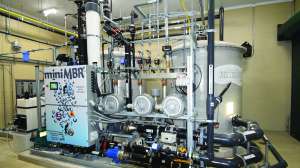
Problem: Just outside Nashville, Tennessee, a development of nearly 700 homes faced the failure of a recirculating gravel filter wastewater system. There was an immediate need to treat 120,000 gpd with flexibility for expansion as the community grew.
Solution: A BioMicrobics MyFAST 12.0 system was installed with a poured concrete tank partially set in the ground, to be housed in a decorative building. Effluent discharges to a large drip irrigation field. The high-capacity fixed activated sludge treatment system efficiently breaks down organic matter and nutrients and was easily installed with low life cycle costs and reliable performance despite variable flow.
Result: With capacity up to 160,000 gpd, scalable to 2 mgd, the system provided a robust, long-term solution. 800-753-3278; www.biomicrobics.com
Plant makes the switch from UV to peracetic acid for disinfection
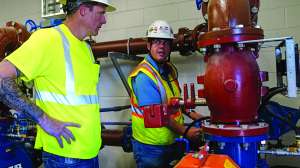
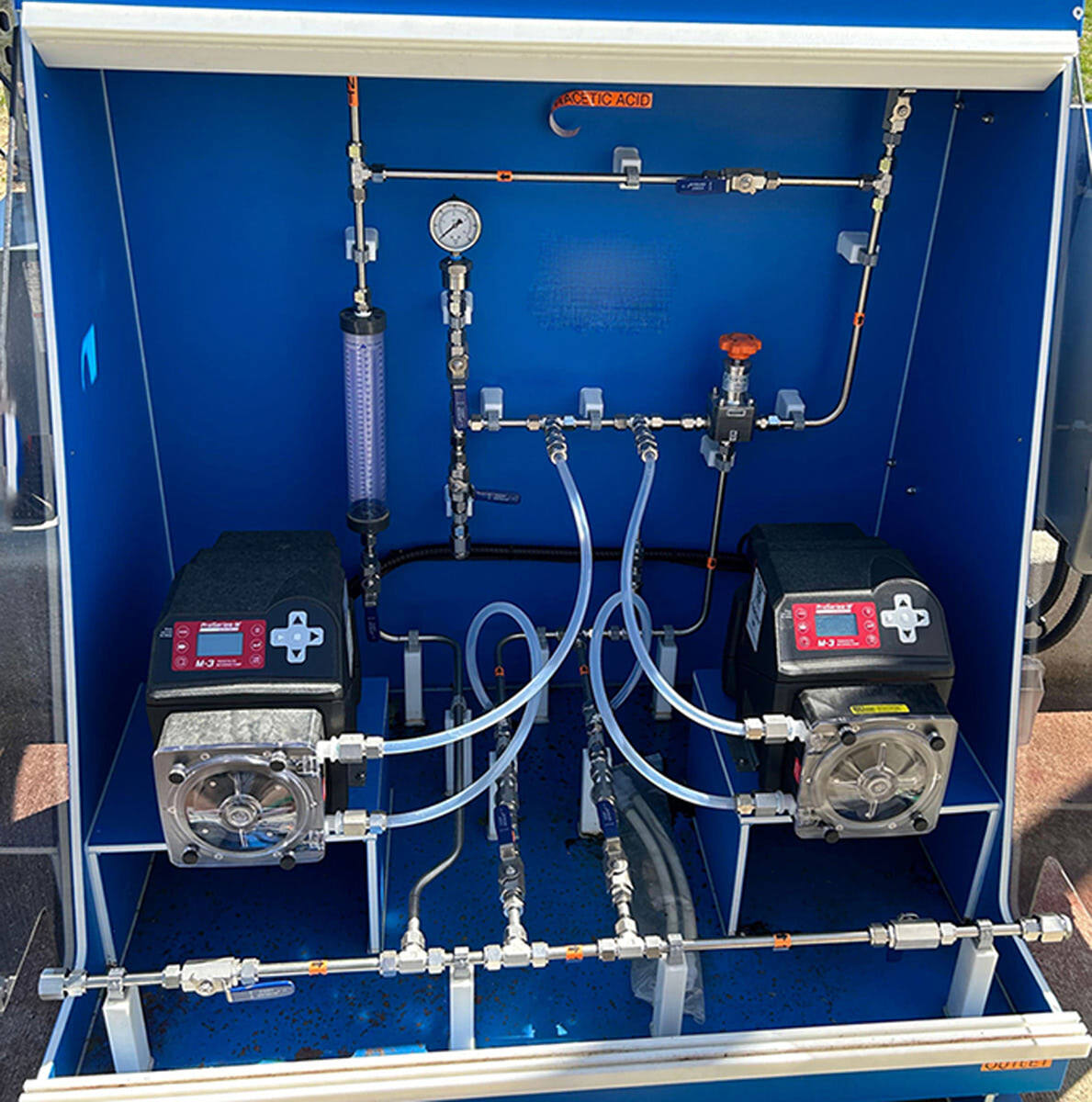
Problem: The SD1 Western Regional Wastewater Treatment Plant, on the Ohio River in heavily industrialized northern Kentucky, treats and disinfects municipal and industrial wastewater before discharge to the river. Issues with the UV system arose due to the industrial loading.
Solution: Dave Koetting, plant manager, worked with Pelton Environmental Products to pursue peracetic acid disinfection using Blue-White metering pumps. Ohio Valley Service Solutions did the complete installation of a duplex skid system with two FLEXFLO M3 peristaltic pumps delivering a 15% peracetic acid solution under minimal pressure.
Result: The plant experienced reliable disinfection, meeting all permit requirements. 714-893-8529; www.blue-white.com
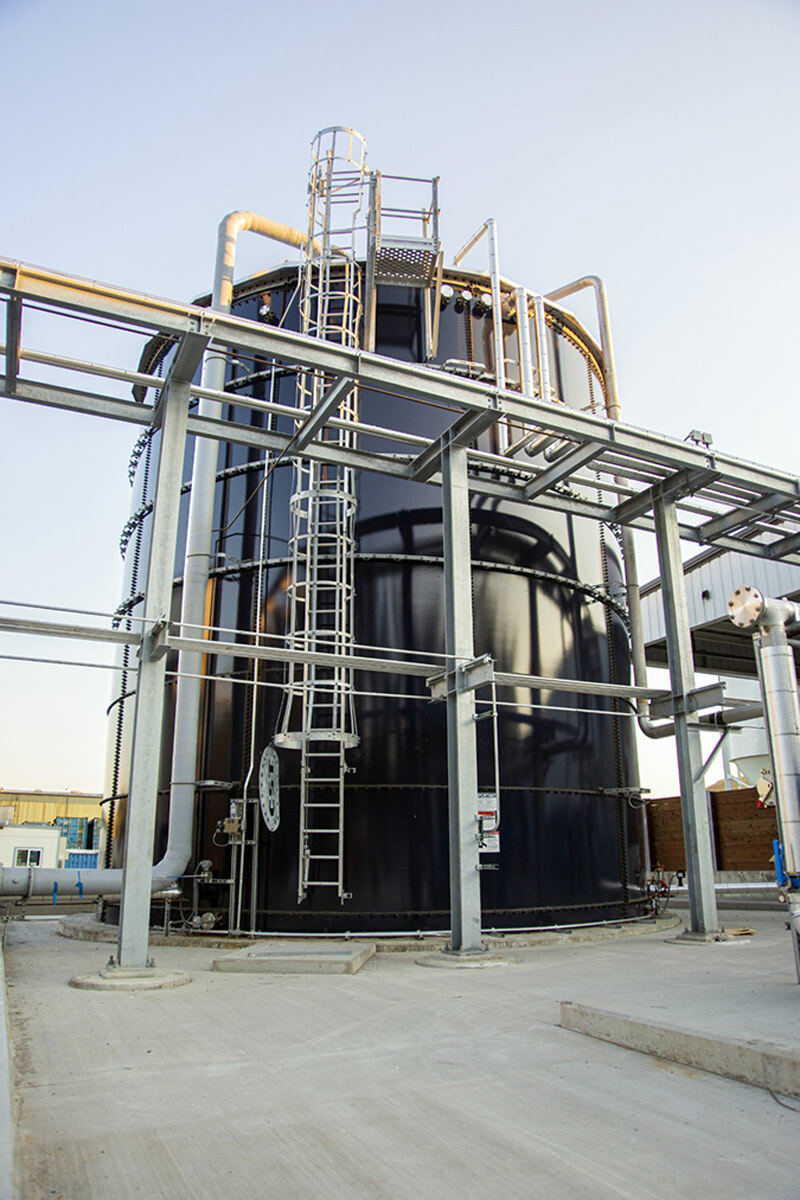
System delivers advanced wastewater treatment for food manufacturer
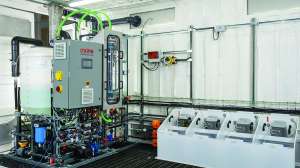
Problem: A major food company needed a high-performance wastewater treatment system to support increased production and comply with stricter discharge permit limits.
Solution: A customized treatment system from bioprocessH2O incorporated an equalization tank, screening, a dissolved air flotation system and a moving bed biofilm reactor to provide biological treatment under variable loading. Remote monitoring and control alerts the staff if the system is not operating as expected.
Result: The system consistently achieved compliant effluent quality. BOD was reduced from 9,000 mg/L to below 150 mg/L and TSS to below 5 mg/L. The system delivered permit compliance and operational flexibility. 401-683-5400; www.bioprocessh2o.com
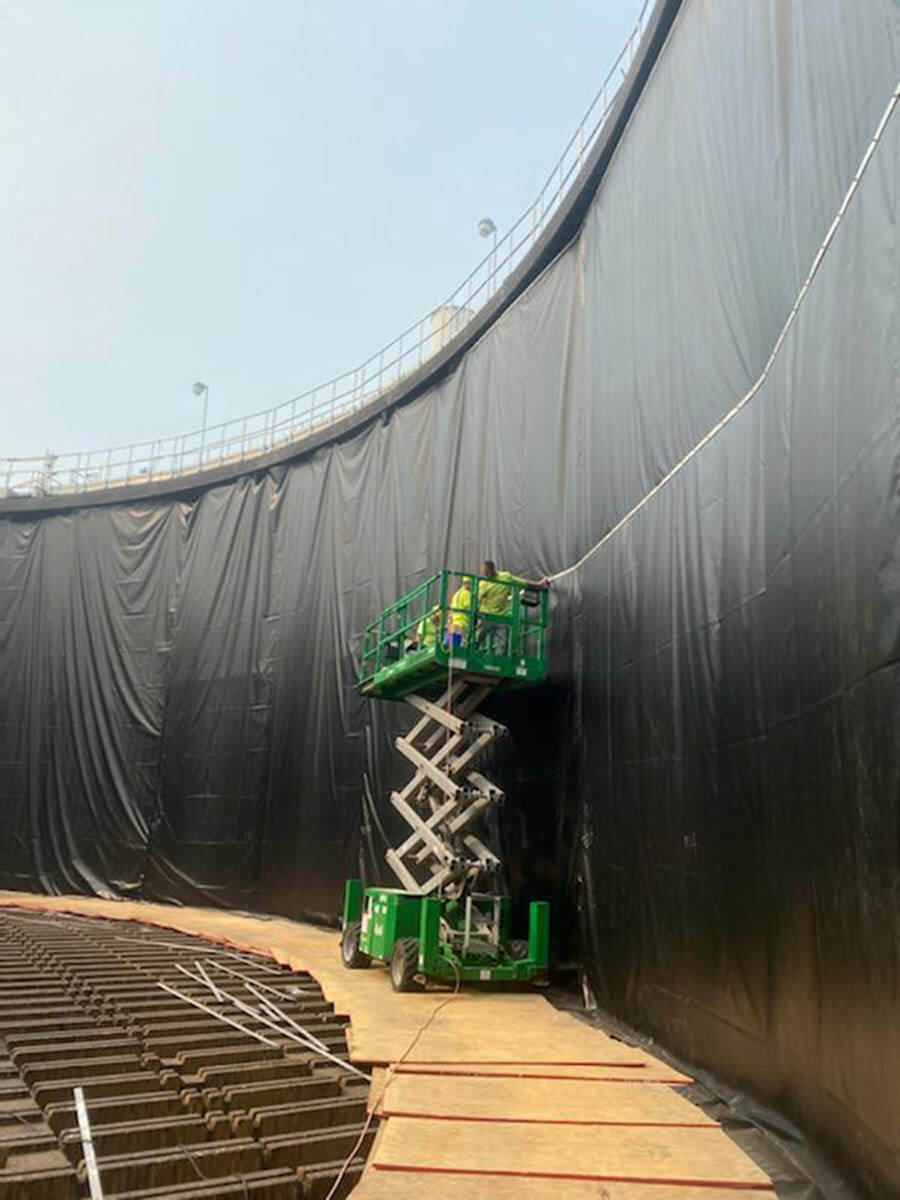
Liners replaced as part of wastewater filtration facility renovation
Problem: The Bissell Point Wastewater Filtration Facility in St. Louis underwent an upgrade of six trickling filters, each 134 feet in diameter with media 32 feet deep. About 2.7 million cubic feet of PVC trickling filter media and surface grating were replaced, as were the HDPE wall liners.
Solution: The liners were replaced with ER 1000 EIA/KEE liners from E Squared Technical Textiles. The distributor arms and drives were replaced with new units. Repairs were made to the fiberglass-reinforced plastic ductwork, and its supports were replaced. The concrete structures underwent necessary repairs and recoating.
Result: The liners performed as advertised, and the trickling filters returned to full service. 908-558-0899; www.e2techtextiles.com

Temporary mobile dewatering unit keeps plant running during renovation
Problem: The Barberton (Ohio) Wastewater Treatment had enhanced its biosolids management system with an Esmil MDQ-404CL multidisk screw press, improving dewatering and reducing operating costs. However, during a renovation of the dewatering building, the new press could not be used, and no backup solution was available.
Solution: Esmil deployed its Module D containerized dewatering unit. The plug-and-play system includes a high-performance MDQ-503CS multidisk screw press, polymer feeder, macerator, control system and screw conveyor, all in a climate-controlled 40-foot container. With just three connection points — solids, power and water — the system was installed quickly. Esmil technicians configured the system and trained the operators.
Result: The unit operated at 60 to 70 gpm, processing sludge at 3.5% solids and delivering a 26% solids cake. Its reliability, energy efficiency, low maintenance and zero downtime made it an effective temporary solution. 646-286-5512; www.esmil.us

Advanced wastewater treatment plant brings recovery center into compliance
Problem: The Sana Lake Recovery Center, an addiction treatment center in Dittmer, Missouri, had a single-cell treatment lagoon that was not approved or permitted through the state and was in violation of the Missouri Clean Water Law. The system was also undersized, creating pollution concerns.
Solution: Taylor Engineering designed a 20,000 gpd ECOPOD advanced wastewater treatment system with Geoflow drip irrigation from Infiltrator Water Technologies. The system includes a grease interceptor for the kitchen wastewater, followed by a 10,000-gallon primary tank, a 15,000-gallon flow equalization tank, an ECOPOD E200 unit in a 20,000-gallon tank, and a dosing tank leading to six dripline zones across several acres.
Result: The system was installed in two phases and completed by the operational deadline. It is properly sized and permitted. The larger drip area allows for future system expansion if necessary. 800-221-4436; www.infiltratorwater.com
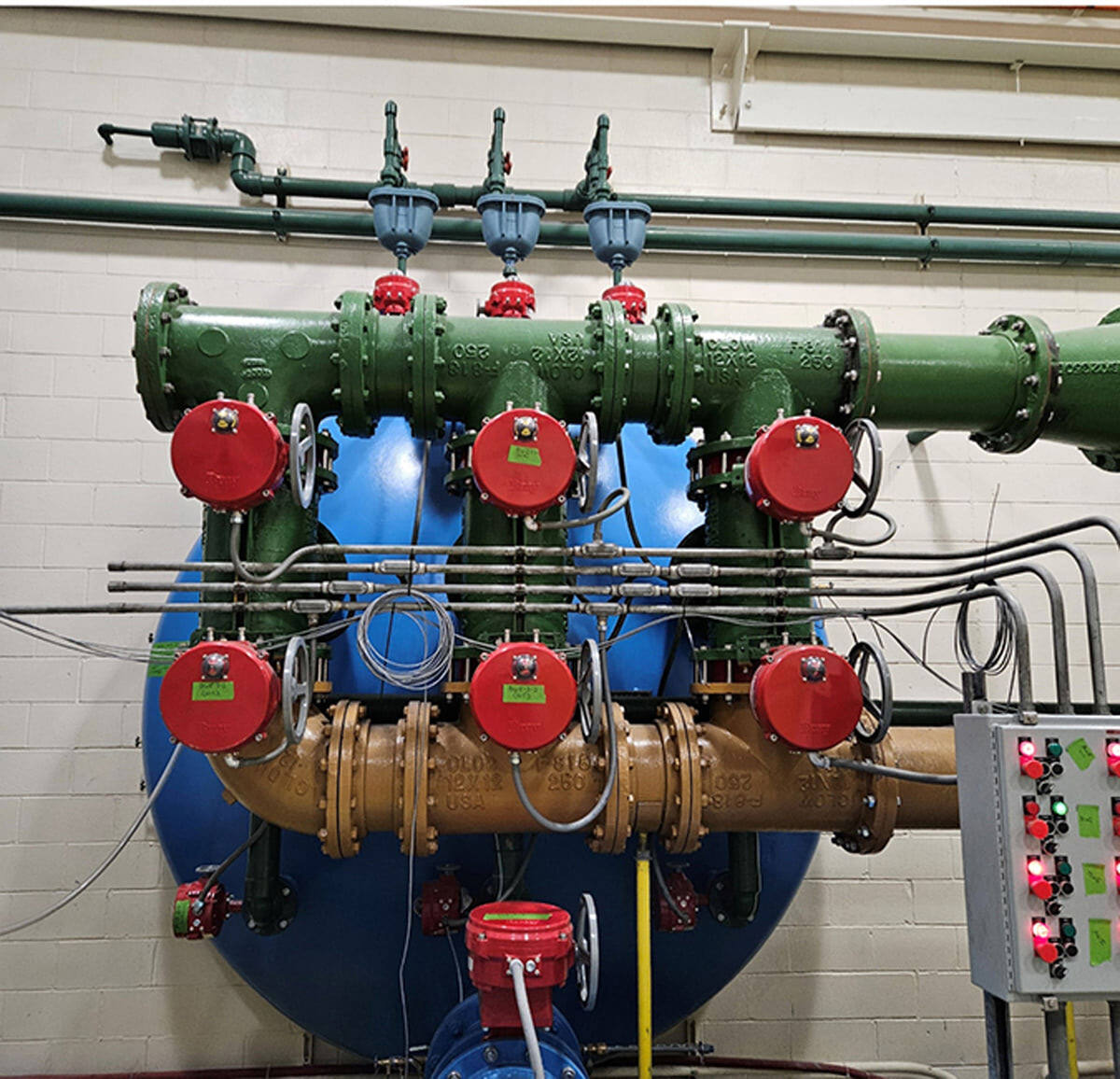
Municipality refurbishes filter system
Problem: After nearly 30 years of service, the city of LaSalle, Illinois, was assessing how to ensure a long-duration additional life for the filters at its water treatment plant.
Solution: Instead of replacing the filters, the city refurbished them. The plant had two Tonka Water horizontal pressure filters for iron and manganese removal, designed to treat up to 1,115 gpm from wells. The filters included the Kurita Simul-Wash system, which uses air and water backwash. To achieve an additional 30 years of service, the city replaced all of the filter internals including media, gravel, underdrains, air scour grids and backwash troughs. The manways were also replaced with larger 24-inch diameter dome-style versions with hinges to accommodate the work and allow easier future access. The empty vessels were sandblasted and painted.
Result: Benefits included longer filter runs and less frequent backwashes, with assurance of a system able to meet the city’s needs well into the future. 866-663-7633; www.kuritaamerica.com
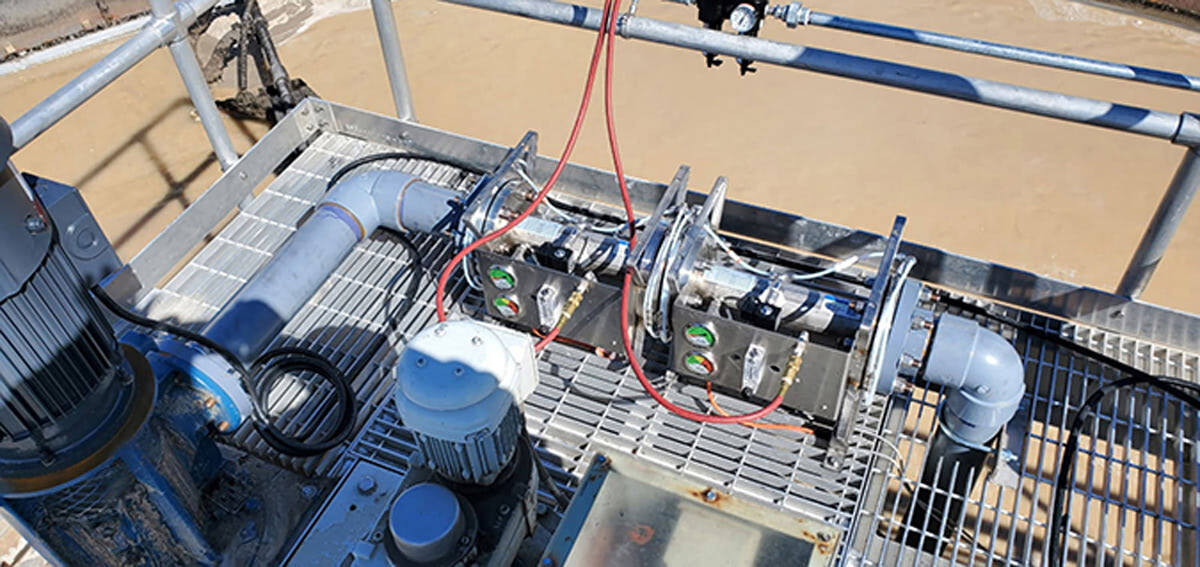
Nanobubble technology transforms operations at water district
Problem: The Henry N. Wochholz Regional Water Recycling Facility in Yucaipa, California, faced seasonal process upsets of biological nutrient removal. The upsets occurred at least twice annually, causing biomass die-off, loss of nitrification, poor settleability, high turbidity and membrane fouling. This compromised effluent quality and required intensive operator intervention.
Solution: The facility implemented Moleaer nanobubble pretreatment upstream of primary treatment. The nanobubbles, smaller than 200 nanometers, have electrochemical properties that attract and destabilize hydrophobic compounds while disrupting emulsions. They also catalytically enhance enzymatic reactions, accelerating the hydrolysis of slowly biodegradable COD into readily biodegradable COD, improving substrate availability and microbial utilization.
Result: Over seven months the facility reported zero upsets for the first time in years. Primary treatment showed 16% higher TSS removal and 3% higher sludge volatile solids. Primary effluent COD and ammonia decreased by 16% and 13%, despite 7% higher influent ammonia. Secondary treatment improved with sludge volume index increasing 20%, return activated sludge TSS 14%, and mixed liquor suspended solids 29%. Secondary effluent ammonia dropped 67% and COD decreased 25%. Plantwide, net ammonia removal capacity increased 19% while blower energy per pound of ammonia removed dropped 24%. 424-558-3567; www.moleaer.com

Advanced phosphorus removal for growing population
Problem: The Sun Prairie (Wisconsin) Water Pollution Control Facility had an existing activated sludge system with end-of-life sand filters downstream. The plant discharges to Koshkonong Creek and faced a new total phosphorus limit of 0.075 mg/L that co-precipitation alone could not meet.
Solution: The city chose a Hydrotech Discfilter system from Veolia, along with coagulation and flocculation. The system fit within the existing footprint, and the filters fit the plant’s hydraulic profile while consistently meeting the phosphorus limit. Three traveling bridge sand filter basins were repurposed with chemical conditioning tanks. Two Hydrotech Discfilter steel tanks downstream treat the average flow of 6 mgd and a peak flow up to 9.27 mgd. Each unit contains 40 discs and has an automated chemical cleaning system.
Result: A 30-day performance test demonstrated the system’s ability to meet design goals in effluent quality and throughput. The simple design enables the staff to easily maintain and operate the system. 919-677-8310; www.veoliawatertech.com

Retrofitted system leads to stronger performance
Problem: The Fond du Lac (Wisconsin) Regional Wastewater Treatment Facility serves a city of 75,000, including 18 neighboring communities. The original activated sludge system was not designed for deep biological phosphorus removal.
Solution: The city installed the CASPERON advanced simultaneous nitrification-denitrification system (Xylem) enabling ammonia and phosphorus removal in the same tank. By creating oxygen-rich and oxygen-poor zones, the system enables bacteria to carry out multiple treatment steps, doing what is typically done in separate tanks. The upgrade began with one basin before expanding to the others. Real-time sensor data fed automated controls that adjusted oxygen levels to match demand. Operators moved from reactive adjustments to proactive optimization, focusing on sensor maintenance and calibration.
Result: Energy use dropped by nearly 29%, and chemical use also declined sharply. The retrofit paid for itself within two years. 855-995-4261; www.xylem.com

Ensuring compliance with automated phosphorus monitoring
Problem: The Oconomowoc (Wisconsin) Wastewater Treatment Facility serves a community of 40,000 and discharges into the phosphorus-impaired Oconomowoc River. The facility needed to meet a phosphorus limit of 0.95 mg/L.
Solution: The facility installed an Alyza IQ PO4 orthophosphate analyzer from YSI, a Xylem brand, to optimize ferric chloride dosing. The analyzer provides feedback to a stepwise control system that adjusts dosing based on effluent orthophosphate levels. As phosphorus concentrations fluctuate, pump speeds respond, maintaining a target residual of 0.52 mg/L while minimizing overfeeding. Operators clean the filter biweekly and swap reagents twice annually. The system has a flow-through design and delivers real-time orthophosphate data with laboratory-grade precision. It integrates with SCADA and PID control loops, enabling swift, data-driven dosing adjustments. Low reagent use and advanced self-cleaning reduce downtime and operating costs.
Result: The system has enabled the facility to consistently meet permit with only one brief exceedance over five years. A five-year comparison of Alyza orthophosphate readings to laboratory data confirmed the analyzer’s accuracy over time. 937-688-4255; www.ysi.com