You’ve just taken charge of a 7-year-old clean-water plant with a complex biological nutrient removal process. Three of your five operators leave within a short time. What now?
That was the challenge faced last year by Greg Venette, utilities superintendent in Louisville, Colorado. He immediately got to work recruiting people with the right combinations of skills and mindset. And today the plant hums along, even better than before, thanks to fresh ideas from the new and more established team members.
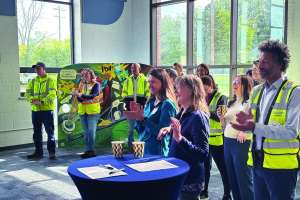
“They quickly learned how to run a complicated plant and have really gelled as a group,” says Venette, in his eighth year with the city. “Our story is an illustration of what a utility can do when faced with staffing turnover and the need to train people with no previous wastewater treatment experience.
“They don’t hesitate to jump in, see what the plant does and go from there, grabbing help when they need it and taking things to the next level. I’m really proud of everybody and the reboot of our facility. There has been a big cultural shift here, and it’s really cool to see.”
Venette began his career with a summer job cutting grass at a Colorado sanitation district with a 0.75 mgd lagoon system. He later went to work for the operations division of CH2M Hill (now Jacobs), consulting and overseeing plant startups. After several years as operations supervisor over drinking water and wastewater, he moved to Louisville in 2016.
In April 2024, soon after Venette was promoted to utilities superintendent, three team members departed to join engineering firms or larger treatment plants. Replacements came on board as trainees through the normal recruiting process.
“We are very picky about people, and I emphasize fit over qualifications,” Venette says. “I made sure everybody coming in had a growth mindset, was positive and dependable and was interested in making data-driven decisions. They have coalesced into a team that is really high-achieving.”
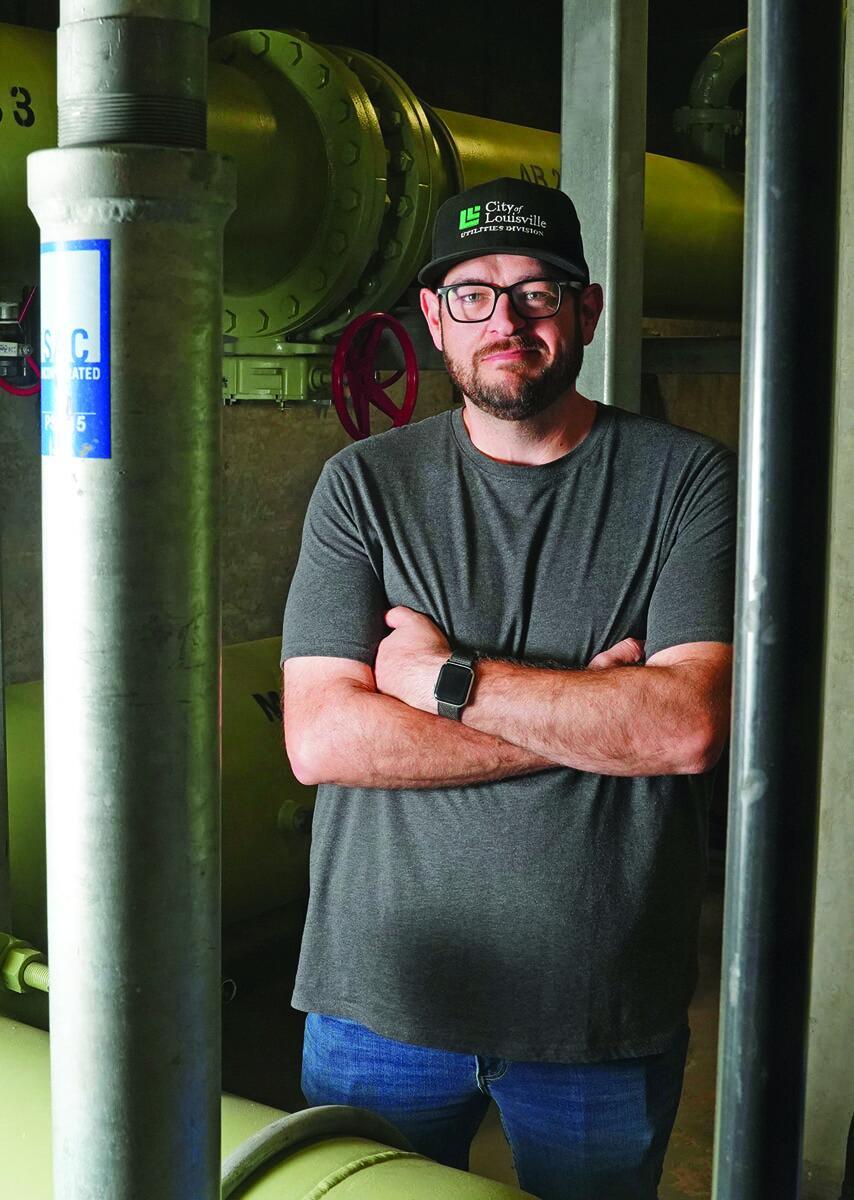
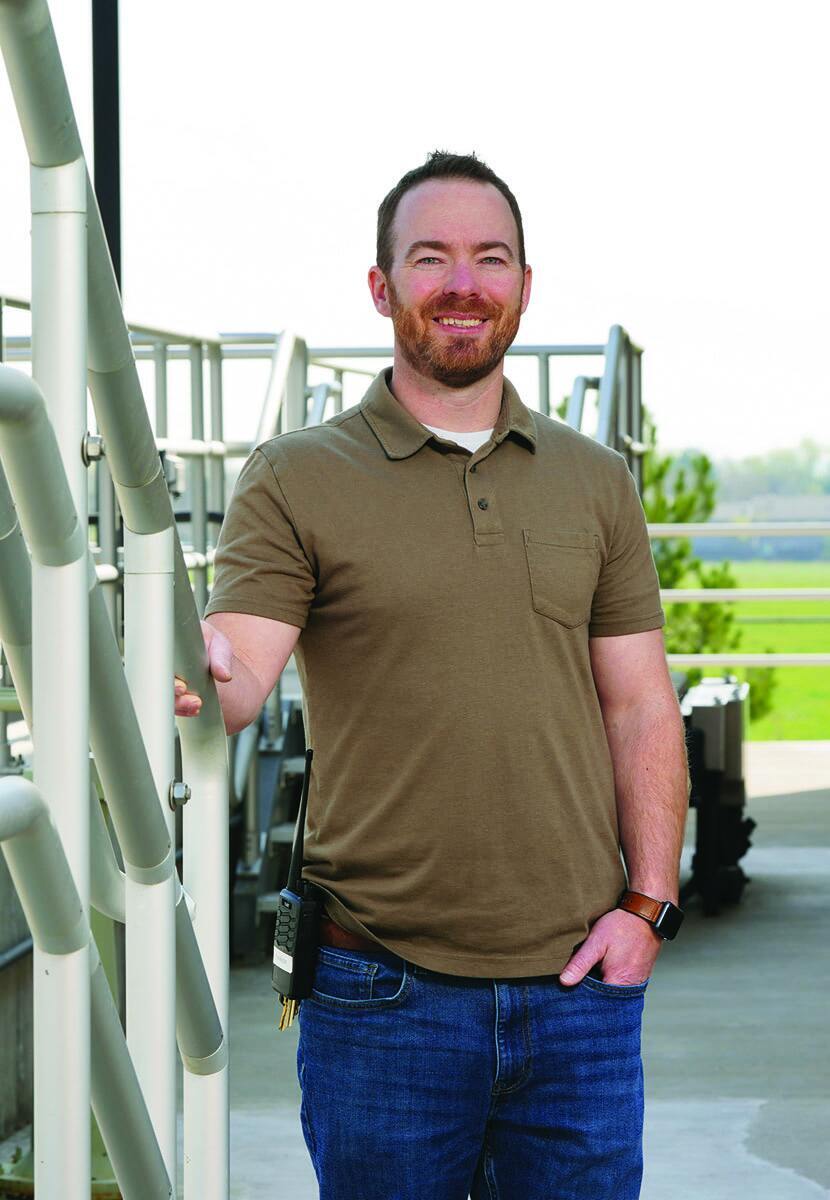
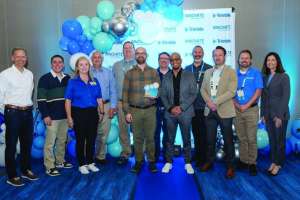
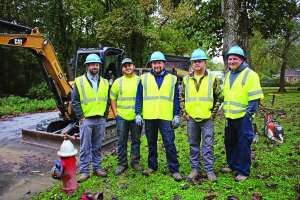
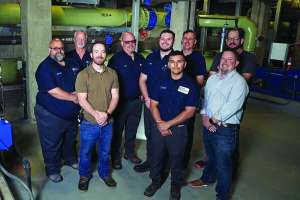
Today the plant team includes Tanner Thorson, plant supervisor; operators Bill Valencia and Herb Harvey; and trainees Jeremiah Wall, Nick Owens and Erick Sanchez.
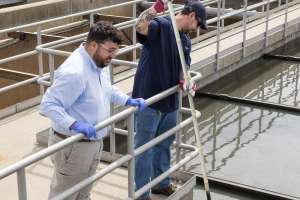
Valencia and Harvey kept things on an even keel while new people were recruited. In addition, Jeff Owens, a water plant operator, moved over to fill in as a supervisor. “We have a prescribed training plan,” says Venette. “We have a training checklist and we split up the plant duties by area.” Operators rotate through three key areas and eventually are fully cross-trained. At any given time, one team member handles solids processing, another works in the lab, another does rounds and takes care of maintenance.
“By having those different areas, we can pair them up to shadow a more experienced operator, go through the training checklist, teach the day-to-day tasks and then after a month rotate them to the next station,” Venette says.” Eventually they get a really well-rounded operational perspective.”
The three trainees came with varied experience. Wall had been a self-employed construction contractor for about 20 years. Owens years earlier was a seasonal grounds maintenance worker at the city’s water plant before moving on to other jobs. Sanchez previously worked in parcel delivery and had some electrical background.
Thorson was a key addition, coming on board in August 2024. He had worked at the old Louisville plant for three years, but just before the new plant was completed, he left for Boulder to gain experience at a larger facility. After eight years there, he came back to Louisville for his first supervisory role.
“He has really taken to figuring out how to run this plant,” Venette says. “He displays high emotional intelligence. He has a lot of patience and understanding, but at the same time, he’s a leader who sets an example for the kind of team members we want our people to be.”
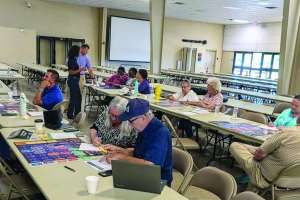
To help give the trainees a foundation, Venette brought in professional trainer Sidney Innerebner of Indigo Water Group to lead a full-day session on the basics of activated sludge treatment. Since then, says Vennette, “Tanner has taken the time to help them understand what that all means: what data we’re seeing, what problems we’re having and what the right ways are to correct them, while also helping them get the answers for themselves.”
The city’s original treatment plant had an oxidation ditch process. “All the equipment was getting toward end of life,” Venette says. “They were struggling to meet ammonia removal numbers and weren’t set up for phosphorus removal. The plant was also starting to run up against hydraulic and organic capacity limits.”
Given all that, the city chose to build for the future with a BNR process in a brand new plant east of the existing site, while repurposing some of the old facilities. Venette came on board as the new plant was nearing completion.
The current Louisville Wastewater Treatment Plant (2.5 mgd design, 1.8 mgd average) uses the Modified University of Cape Town process. Influent passes through a fine screen (HUBER Technology) and a vortex grit removal system (MISCOwater). Six lift station pumps (Flygt - a Xylem brand) deliver the wastewater to the influent channel.
Three 1 million-gallon concrete basins are divided into a series of five zones: sludge, anaerobic, anoxic, swing and aerobic. The sludge zone receives return activated sludge. In the anaerobic zone, microorganisms consume and hold phosphorus; denitrification then occurs in the anoxic zone.
The swing zone is aerated in the winter and left anoxic in the summer. It gives operators flexibility to extend the anoxic or aerobic zone. In the aerobic zone, ammonia oxidizing bacteria convert ammonium to nitrite and nitrate, which are recycled back to the anoxic zone for denitrification.
The basins are aerated by high-speed turbo blowers (Sulzer Pumps Solutions) by way of fine-bubble diffusers. The blowers are controlled on a feedback loop to optimize aeration efficiency and save energy.
After three secondary clarifiers and UV disinfection (Veolia), the effluent is discharged to Coal Creek or, in warmer months, treated by a cloth media disc filter (WesTech Engineering), chlorinated, and sent to a 3 million-gallon holding pond. From there it is pumped to the Louisville Sports Complex, Miner’s Field, Coal Creek Golf Course and Community Park for irrigation.
Biosolids are sent through a rotary drum thickener (Parkson Corporation) followed by two aerobic digesters. Digested material is dewatered in a centrifuge (Centrisys/CNP). The cake is hauled by contractor Denali Water Solutions to a processing facility where it is mixed with biosolids from other plants and applied to farmland.
Getting up to speed on the process was a challenge for the new team members. “It seems simple, but there are a lot of operational techniques to learn,” Venette says. “Because it’s a new plant, there’s a lot of instrumentation out in the basins.” That includes Hach ORP, DO and TSS probes and ammonia probes from scan.
“It’s a lot of equipment to maintain, and a great deal of learning how to balance what we’re doing. There are many pieces to the puzzle and many tweaks that can be made. The plant runs really well, but there are so many components that for new operators, there are a lot of pieces of process control to learn and understand.”
The newer team members have taken ownership of their roles. For example, Wall and Owens took an interest in microscopy as a process control tool. “They did research on what other plants were using for microscopic analysis,” says Venette. “They determined that the microscope we had was outdated, so they got quotes and spec’d out a new one, which we bought for them.
“It’s a pretty high-tech one that has a 10-inch display and can take pictures and video and send them to computers. They’ve learned very quickly how to do microscopy and how it impacts the process. It gives us a better idea what is going on with our biomass: the filaments, our sludge age, and just the overall health of the plant.”
Meanwhile, Owens and Sanchez set about revamping the plant’s safety program, adding safety training to regular team meetings and improving the staging of safety equipment. And Wall and Valencia reorganized the maintenance equipment.
“We had a tool truck that we drove around the plant, but we didn’t always have tools where we needed them,” Venette says. “So Jeremiah and Bill worked on placing standard tool sets in each building so that our operators can grab them quickly.”
Thorson has worked with operators to optimize the performance of a Vapex ozone system that breaks up grease and scum on the influent channel. The plant has also acquired a new telehandler (LCB Manufacturing) to replace a pallet jack for moving totes safely around the facility.
As the plant operates efficiently, the team is gearing up for additional projects. “We’re in the midst of construction to install a new centrifuge and also getting ready for a $25 million expansion,” Venette says. “There’s a new development coming in that will require us to put in a fourth basin, a fourth clarifier and extra solids digestion and thickening equipment.
“We’ve included the operators in all the discussions and the plant drawing reviews so they get exposure to it and help us catch anything from an operations perspective that will enable a better outcome.” To prepare for the expansion, the team has updated the SCADA system to enhance reliability and cybersecurity. “We also placed an always-up display in the operator room so our people can see minute by minute what is going on with the plant.”
A computerized maintenance management system (Lucity) keeps preventive maintenance on track, and a Hach Water information Management System is used for data entry and process information.
Along the way, the plant has received various accolades. It won a 2017 H2O Project Award from the Colorado Contractors Association for excellence in construction management for water-related projects. The plant was also recognized for assisting with the state’s Wastewater COVID Surveillance Program: Louisville was among the first in the state to initiate such sampling.
This plant and its team appear to be on track for more recognition in the future.