The Oxbow Water Reclamation Facility serving the Eastern Idaho Regional Sewer District was named 2025 Plant of the Year by the Idaho Rural Water Association.
Now it’s poised to do even better as it expands to continue providing high-quality wastewater treatment to a rapidly growing population in the five communities it serves.
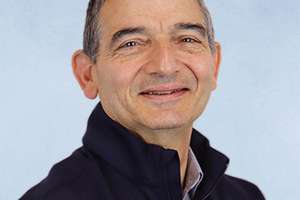
“This recognition reflects our dedication to maintaining one of the most efficient wastewater facilities in southeast Idaho,” says Scott Barry, manager of the district, based in Shelley. “We’re a showcase plant. We have had zero permit violations and provide exceptional community service.”
Barry notes that other treatment plant staffs often visit to learn about the district’s process: “We’re a training ground for everybody else. It’s a nice plant, very clean. We hold everybody to very high standards — staff as well as contractors and subcontractors.”
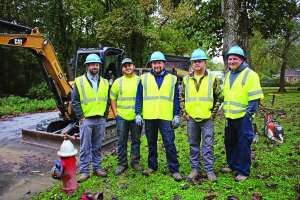
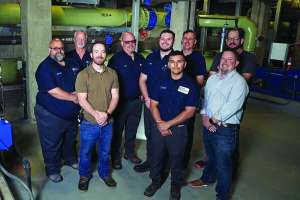
Barry leads a team of Shaun Robinson, plant manager; Audric Reid and Jamie Torres, operations and maintenance; Paul Pettyjohn, truck driver; and Nicole Mangum, office manager. They’re responsible for the treatment facility (1.9 mgd design, 1.7 mgd average) as well as main trunkline sewers and lift stations that reach out to the member communities.
The collections system consists of some 25 miles of gravity sewer lines, 1.3 miles of pressure sewer and four lift stations, all supported by a comprehensive GIS for effective maintenance, planning and hydraulic modeling. The communities maintain their own sewer laterals.
At the treatment facility, influent passes through a 3/4-inch step screen (Hydro-Dyne Engineering) followed by grit removal (Smith & Loveless) and a fine screen (also Hydro-Dyne). The flow is then pumped to a series of aerobic and anaerobic basins. Alum is added after the headworks for phosphorus control.
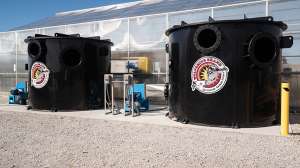
Biological treatment occurs in a series of aerobic and anaerobic basins, each with 22,000-gallons capacity and containing 20 membrane racks (DuPont Water Solutions). The mean cell residence time is 15-20 days with a redirect time from the membranes of five to seven minutes. Kaeser Compressors supplied the aeration blowers for the basins.
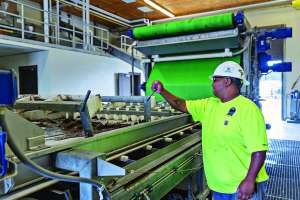
Disinfection is provided by a two-channel UV system (Trojan Technologies) for polishing and chemical-free disinfection. Class A effluent is discharged to the Snake River. Solids are dewatered from 0.5% solids to 24% on a belt press (BDP Industries). Five truckloads per week of dewatered biosolids cake are trucked to landfill.
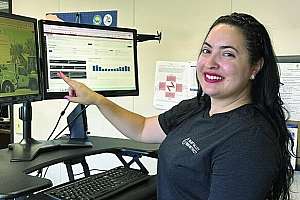
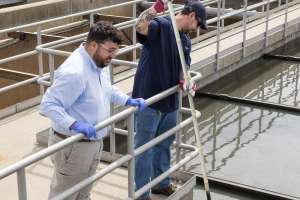
The staff uses a SCADA system (Automation Werx) for real-time plant monitoring and control; individual staffers have remote access to the system. Barry describes the Oxbow operational team as jacks of all trades: “All of us are trained and certified. Everybody works on all the elements: electrical, mechanical, maintenance, operations, even truck driving.
“Our operators are empowered to make key decisions that improve system reliability and reduce infiltration, which in turn minimizes equipment wear and boosts plant capacity. We don’t have a super big budget. We do well at saving money, fine-tuning to keep costs down, making operational adjustments to save energy.
“Our operators are not only responsible for efficient daily operations. They also mentor new staff, train others, and lead in continuous improvement. They exemplify innovation, resilience and teamwork. They’re proud to be a vital part of this community, and we remain committed to delivering excellence every day.”
The Plant of the Year designation backs up Barry’s remarks. In announcing the award, Shelley Roberts, Idaho Rural Water CEO, credited the “exemplary efficiency, attitude and commitment of the wastewater team.”
She added, “The positivity speaks volumes for the way the plant is run and maintained. When a problem does arise, the entire staff jumps in to help, even if it takes all night to get things running back to normal. Efficiency is a top priority so the system can serve the growing community at the most economical price.
“The plant takes environmental concerns seriously, and that’s a top priority since they discharge to a local river. They are careful to protect the community they serve and live in. The proactive strategies exhibited by this system serve as an excellent example and set a high bar.”
Rather than rest on their laurels, the district team is moving ahead with a $50 million plan that will essentially double plant capacity. It’s a three-year project; about half of the work is being completed this year, and the rest by the end of 2026.
Already in the first phase and moving into the second phase, a new blower building has been added, along with a new biological treatment basin. The capacity of the MBR and the UV system will be doubled. A new pad for the city’s Vactor Manufacturing jetting/vacuum truck has also been completed.
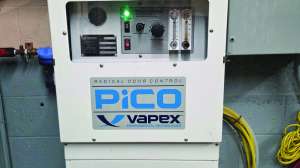
In the second phase, the influent lift station will be expanded. Headworks capacity will be doubled and a new grit removal system added, as well as fine screens and a new membrane building. The plant will also have an activated carbon odor control scrubber, and the entire electrical system is being brought up to code.
The project engineer is J-U-B of Pocatello, Idaho; the general contractor is GSE Construction based in Livermore, California. “Our board of directors, and my plant staff couldn’t be happier with these two companies and the work and efficiency of this plant upgrade,” Barry says.
The expansion is a response to population growth in this area. “People are moving here from other states,” says Barry. Bonneville and Bingham counties, parts of which are served by the plant, have grown to be among the 10 most populous counties in the state. The towns of Shelley and Ammon are also experiencing rapid growth.
Along with the plant expansion, the district has plans to recycle plant effluent. Its Class A product water will be used for irrigation on two 80-acre hayfields the community owns near the treatment plant, and for a nearby county park. That is expected to begin in spring 2027. Ultimately, the plan is to use effluent to recharge the local aquifer: as in much of the country, clean water is becoming a scarce resource in Idaho.
With the plant excellence award in hand and a major expansion project well on the way to completion, the Eastern Idaho district team continues to look ahead. “We understand the challenges of maintaining aging infrastructure, handling equipment failures, and adapting to increasing demand and rising costs,” says Barry.
“Wastewater facilities can no longer just treat what comes down the pipe. They must anticipate what’s coming next. Our proactive planning and commitment to innovation ensure that we are ready for whatever the future holds.”