The Quonset Point Wastewater Treatment Facility differs greatly from most clean-water plants: a large majority of its influent comes from commercial and industrial dischargers.
The plant in North Kingston, Rhode Island, mainly serves the 3,198-acre Quonset Business Park on Narragansett Bay. The park is the home to 250 companies employing almost 15,000 people, generating $5.9 billion in economic output annually. Among most noteworthy is Electric Boat Quonset Point, which has built submarines for the Navy for the past 50 years.
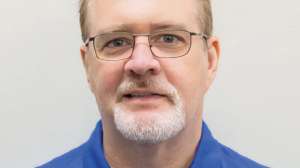
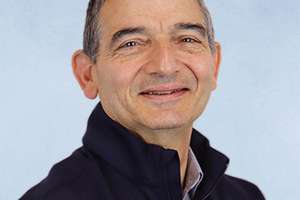
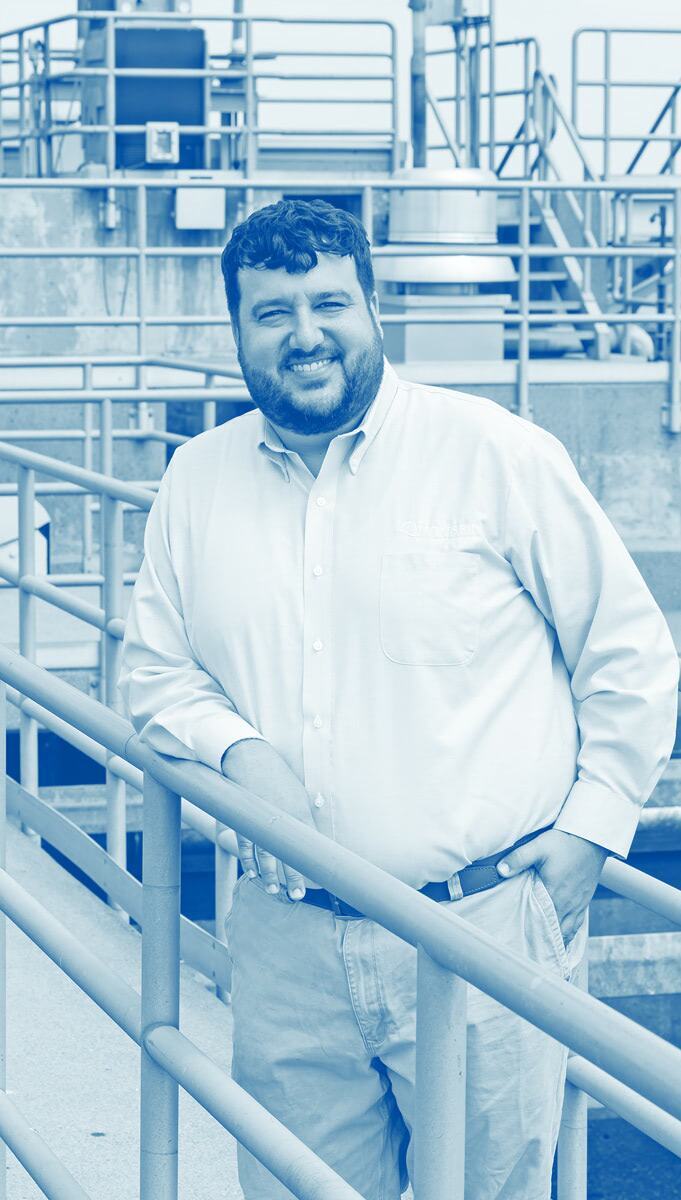
David Bruno is the superintendent and pretreatment coordinator for the plant, operated by the Quonset Development Corporation. He was recently promoted from his role as operator and industrial pretreatment inspector. He was recognized as a 2024 Operator of the Year by the New England Water Environment Association for his work in protecting Narragansett Bay and Rhode Island’s waterways.
An unexpected career
“We have all types of businesses here,” says Bruno. “Beyond Electric Boat, we have Toray Plastics, which makes films and plastic bags. We also have Taylor Farms, a producer of fresh foods and snacks that you’ve likely seen in your supermarket. There are all kinds of different businesses in the park.”
As superintendent, Bruno is responsible for treating the wastewater from all of those businesses, plus part of the town of North Kingston, population 28,000. “Eighty percent of the effluent we treat comes from the business park,” Bruno says. “That makes us unique among Rhode Island facilities, the rest of which mainly deal with residential users.”
Bruno, holder of a Grade 3 Wastewater Operator License and Grade 2 NEWEA Collection System License, has been in this business only since 2021. Before that, he was a bartender.
Bruno was born in North Providence as an only child. His mother works as a recruiter for Amica Insurance, and his father, a retired correctional officer who is now a constable.
His home was about 20 minutes from the business park. At North Providence High School he played football, basketball and golf. After graduation he earned a degree in physical education and health education from Rhode Island College in 2015.
Challenging transition
While in college he tended bar at Bally’s Twin River Casino: It was tough finding a job in his field, so he stayed there. Then COVID happened in 2020. “At that point, the casinos shut down and I was without a job,” Bruno says. “Thankfully, in 2021 my plant’s former superintendent, Eddie Davies, who is my mentor, said, ‘Hey, I’ve got a pretty good opportunity here. I think you’ll like it.’ And it started from there.”
Bruno’s first week at the treatment plant was eye-opening. “Coming from being a bartender, I was accustomed to using my hands and diving into water, but I really didn’t want to dive into this stuff,” he recalls.
“Still, my preconceptions of the plant were a lot worse than the reality. And I had decided to do whatever the job required, and to do it right.”
Bruno wasted no time getting his certifications. “I worked as a plant operator for about a year, and then a position opened here as the industrial pretreatment inspector,” he says. “That allowed me to step back from operations and study more pretreatment.
“We went inside the businesses to see their processes and how they sent the water to us. That was a big learning experience.” Bruno stayed in that position for two years, until he was promoted to his current role in October 2024.

Treating the flow
The Quonset Point Wastewater Treatment Facility is an activated sludge plant with 1.78 mgd design and 0.9 mgd average flows. “We have one gravity line that gets fed into our influent well, plus a force mainline from our main pump station that handles about 60% of our flow,” says Bruno.
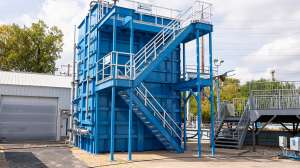
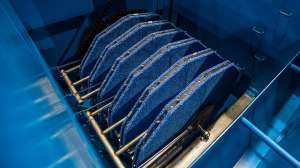
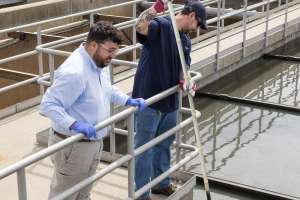
Wastewater from the influent well is pumped up to the headworks, which includes an aerated grit chamber, and then proceeds to a primary clarifier for a two-hour residence time. Primary effluent flows over a weir and into rotating biological contactors, followed by secondary clarification, and finally chlorine disinfection before discharge to the bay.
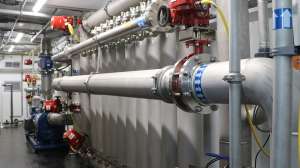
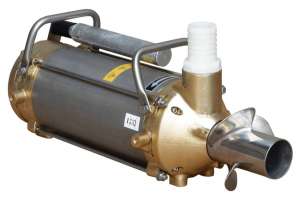
The facility uses Siemens Hydroranger flowmeters, Flygt influent pumps (a Xylem brand), Roots Blowers (Ingersoll Rand), Muffin Monster grinders (JWC Environmental) and Penn Valley pumps for solids handling and delivery of biosolids to trucks.
The plant laboratory is equipped with an OHAUS 2105 analytical balance, Teledyne ISCO 5800 samplers, a SHEL LAB incubator (Sheldon Manufacturing), Thermo Fisher Orion Lab Star pH 111 meter and three Hach devices: HQ440d multimeter for BOD measurement, DR300 chlorine meter and Pocket Pro Multi 2 tester.
To deal with the industrial inputs, the facility team maintains an active and diverse industrial pretreatment program. “There are six permitted Significant Industrial Users, each with unique wastewater characteristics that directly affect plant operations,” Bruno observes. “Our contributors include food processing facilities, manufacturing facilities and dental offices, which are regulated specifically for mercury.”
Each business brings its own set of challenges, from high-strength waste to potential toxicity. “Our operations staff must remain flexible and vigilant,” says Bruno. “They routinely sample incoming loads, adjust sludge wasting schedules and sometimes increase lab testing or operator coverage to respond to variability in industrial influent.
“These real-time process control decisions are critical to keeping the plant in compliance and running efficiently.”
Bug health
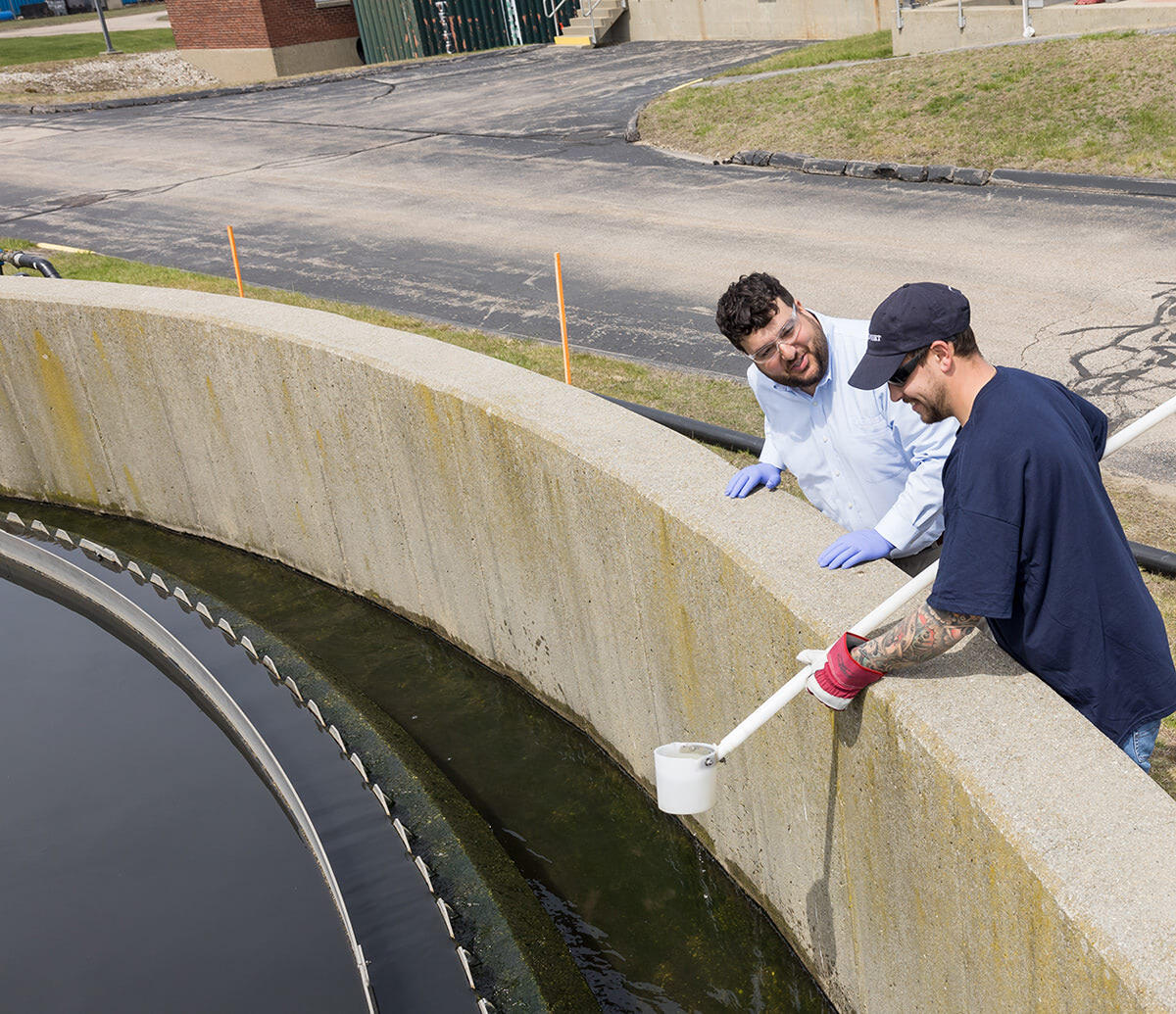
Given the variation in industrial flows and the potential for toxic slug loads, Bruno pays special attention to keeping the “bugs” healthy in the RBCs. “The wastewater has only one pass through the RBCs before it goes out into the bay,” he says. “If we’re hit with any kind of chemicals that kill our bugs, it could take up to two weeks to rebuild their population to useful levels.”
For that reason, the lab closely monitors influent quality: “When you’re working with an activated sludge plant, you need to know more about laboratory-based procedures. You have to know the concentration of your bugs and how old and young they are. This is also why we look at the color of the RBC. We check the smell, and we see how much sludge has sloughed off of the RBCs. All of this lets us know how healthy the bugs are.”

A team effort
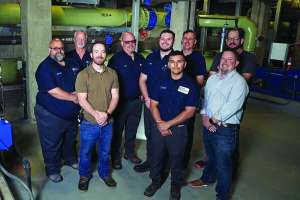
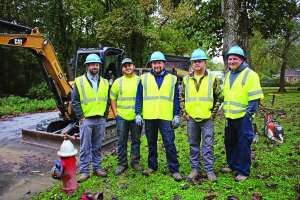
Bruno does his work with an experienced and dedicated team that includes:
- Tim Andrews, assistant superintendent with Grade 3 Wastewater Operator and Grade 2 Collection System licenses
- Brian Goodwin, senior operator, Grade 2 wastewater Grade 2 collections
- Joe Chapdelanie, mechanic/operator, Grade 3 wastewater and Grade 2 collections
- Eric Benson, lab technician/operator, Grade 2 wastewater, Grade 2 collections and Grade 1 NEWEA Laboratory Analyst license
- Hannah McDonough, maintenance technician/operator, Grade 2 wastewater
- Rich Golish, plant operator, Grade 2 wastewater and Grade 1 collections
Bruno may not have intended to work in wastewater, but he’s happy the career found him: “I like giving back to the community. I feel like I’m doing something for a purpose. Before, even while I was in college, I coached the town football team. So I try to always be doing something for the town.
“Besides, I like the people I’ve met and all the connections I’ve made throughout the four years I’ve been here. It’s kind of like a big family in wastewater.”
Editor’s Note: Since this article was written, David Bruno has moved on from the Quonset Development Corporation. Tim Andrews is the current superintendent of the Quonset Point Wastewater Treatment Facility.