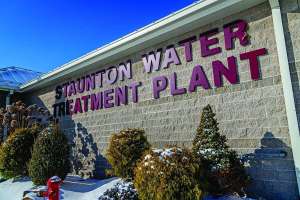

The Illinois city of Staunton is known for being on the iconic Route 66. Now it’s also recognized for having an award-winning water plant.
This small surface water treatment facility earned the 2024 Plant of the Year award from the Illinois Rural Water Association. “We were excited to receive IRWA recognition,” says Ed Rothgangel, plant manager. “We appreciate that the association took the time to look at us.”
When they looked, they were impressed, according to IRWA official Jeff Tumiati: “This is an older plant, but when we arrived for the inspection the place looked like new. It’s a credit to the care and dedication of the staff.”
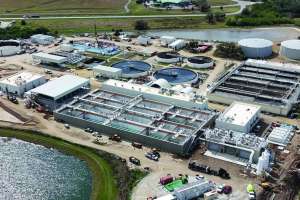
Staunton lies about 45 miles northeast of St. Louis. Its water plant is unusual in using dissolved air flotation. “We are a surface water plant that uses two DAFs to create and remove floc,” says Rothgangel. “We believe we are the only water plant of its kind in the state.
“Our plant was built in 2013 to replace an outdated and inefficient plant that was becoming too costly to maintain and operate. DAF is a fast process, with shorter run times. It helps us keep our sampling and testing online.”
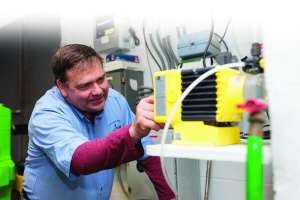
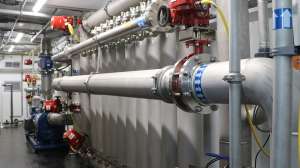
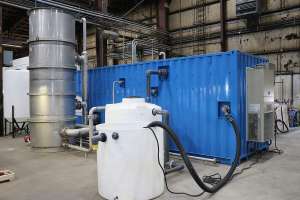
Raw water comes from the 84-acre Staunton Reservoir, a protected body of water north of town in the George Washington and Jefferson State Forest and fed by East Creek. Aurora single-stage split-case pumps (Pentair) move the water about three miles to the treatment plant, where it is injected with poly aluminum chloride by peristaltic pumps (Blue-White Industries) ahead of the DAF process to improve coagulation-flocculation.
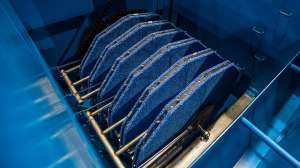
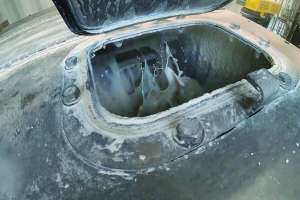
The DAF units (Leopold - a Xylem brand) are 8 feet deep, 12 feet, 10 inches long, and 8 feet wide. Floc comes to the surface, where it is skimmed off. DAF effluent passes through anthracite-sand filters (Leopold), which normally are backwashed weekly depending on headloss and other factors.
“Backwashing one filter takes about 30,000 gallons,” Rothgangel reports. The backwash lagoons discharge into a creek just north of the treatment plant. “We sludge out the lagoons as needed, about once every four to five years. The sludge is land-applied according to our EPA permit.”
The finished water is disinfected with monochloramine and directed to a 110,000-gallon clearwell, and then to a 500,000-gallon in-ground storage tank. That tank feeds a 500,000-gallon elevated storage tank.
Flow varies from 320,000 gpd in winter to 400,000 gpd in summer. Finished water is distributed to the town’s business and 5,000 residents through a 23-mile distribution system. The city sells 20,000 to 30,000 gallons of finished water per week to nearby White City.
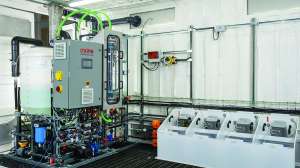
The plant controls consist of a SCADA system maintained by Micro-Comm. Laboratory equipment includes a Hach DR3900 spectrophotometer for measuring contaminants, and a Hach TL2300 tungsten lamp turbidimeter.
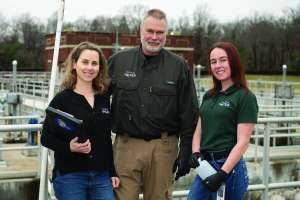
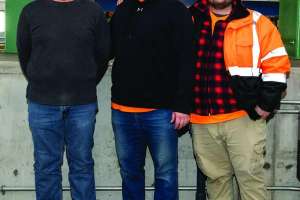
The Staunton water plant staff is small but effective. Rothgangel has his Class A certification and is supported by Zac Besserman, a Class C operator working toward Class A, and Jon Parish, who recently completed his operator-in-training sequence.
Laurie May, a veteran Class A operator, retired in 2024 after serving as temporary manager last winter while Rothgangel was on medical leave. Rothgangel joined the water treatment staff right out of school, went to St. Louis in 1998 and came back to Staunton about 16 years ago. He’s looking at retirement several years down the road.
The crew operates the plant on site from 6 a.m. to 3:30 p.m., Monday through Friday. On Saturday and Sunday, the facility is staffed until 2:30 p.m. Plant team members also read customers’ water meters.
The IRWA inspection report on the plant was complimentary, and the plant staff members feel they are successful because they operate as a team. In an interview before she retired, May emphasized that cooperation between operators is the critical factor. “Cooperation is important, as we are limited to only employing three operators,” she says. “It extends past plant operation and into housekeeping, recordkeeping and organization throughout the plant.
“It’s important to share information, brainstorm solutions and ask for input from all sets of eyes. Use your resources wisely. The goal is to work toward continuous improvement, not postponed perfection. That requires communication and teamwork with everyone involved. Working closely with the public works team on the distribution lines has enabled us to increase customer satisfaction and keep our system updated. “
With the award plaque on the wall in the office, Staunton staff members look ahead at new challenges they may face. “The biggest challenge we anticipate is adapting to the requirements that come with newly monitored contaminants, such as PFAS and lithium,” says Besserman.
“We haven’t had to deal with those yet, but we must monitor for them anyway. That would mean new lab testing and the costs that come with that. Everything’s in motion.”
Given the performance of this small operation and its commitment to teamwork and communication, odds are it will be successful no matter what comes along. “They’re all winners,” Tumiati said as he summarized the IWRA award review process. “But at Staunton, the dedication and care of the operations staff won the day.”