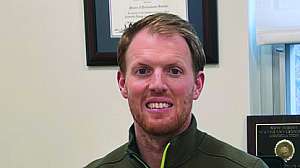
Steve Cote faced two significant floods in his first two years as a water resources department superintendent.
Maybe it was innate creativity, or maybe a 35-year background in dairy farming, that gave him the know-how to make adjustments after the first flood, and so limit the impacts of the next two.
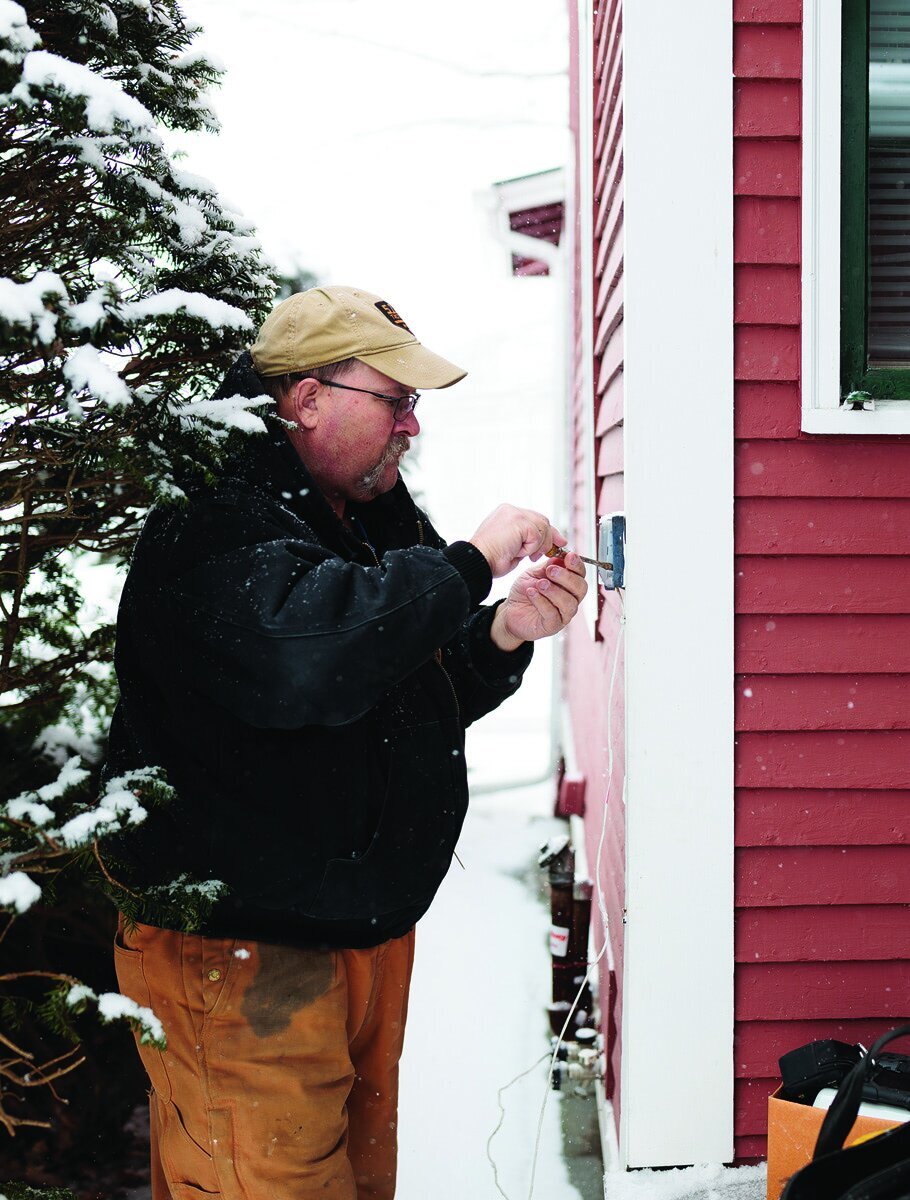
Flood mitigation is just one of his accomplishments in managing the drinking water and wastewater systems in the Vermont village of Richmond. Others include adding a cellular-based SCADA system for the water treatment plant and transitioning to an automated water meter reading system. A major wastewater treatment plant upgrade is now in the design phase.
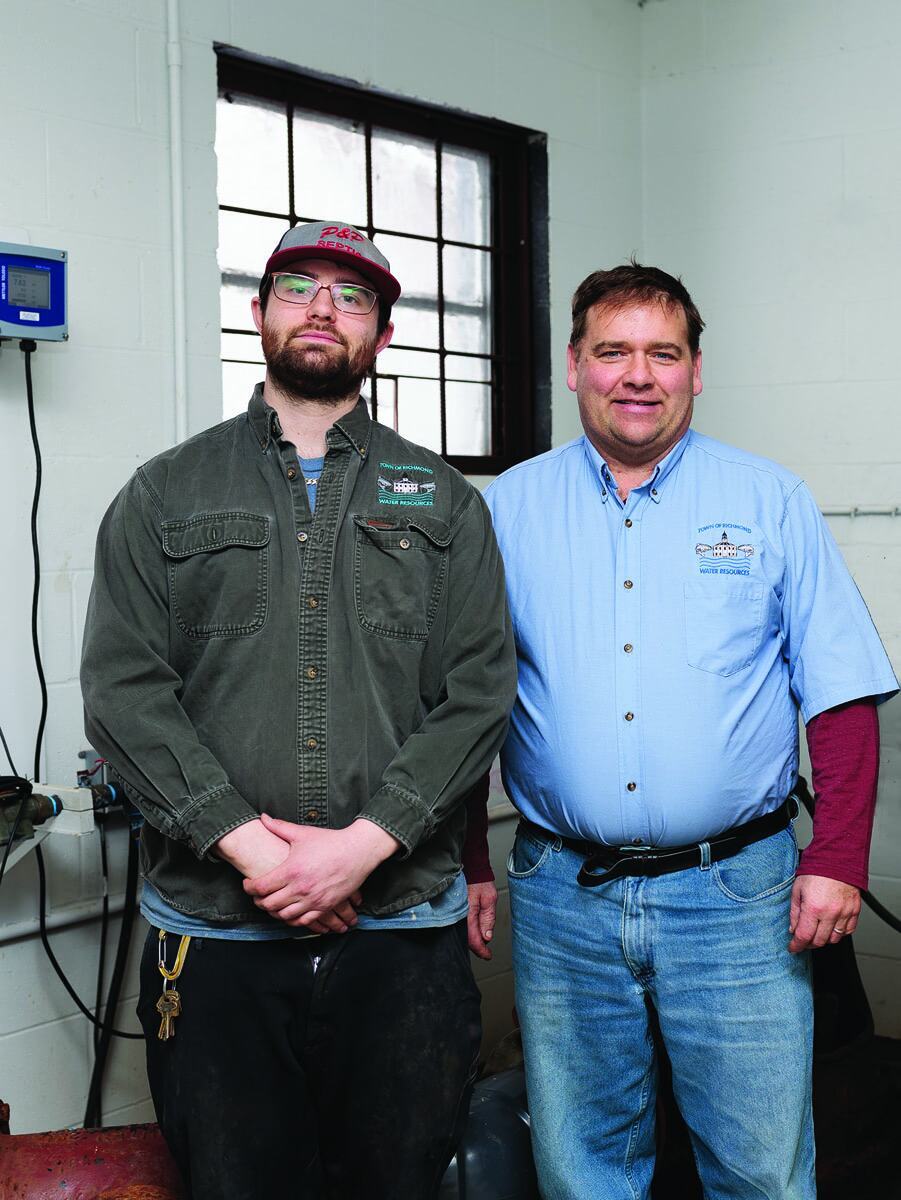
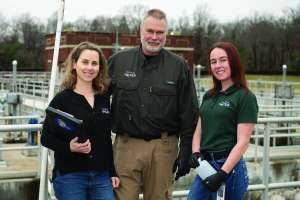
Cote, operator Brad Snow, and two newer hires, Mike Coyle and Robert Connolly, continue to improve the village’s facilities and processes, in the bargain earning a basket of 2024 awards from the Green Mountain Water Environment Association:
“When I found this industry, I fell in love with it,” Cote says. “At the end of the day when I go home, I’m confident that the drinking water we put into the system is clean and safe, and the effluent we discharge into the Winooski River is clean and good. We thrive on doing that.”
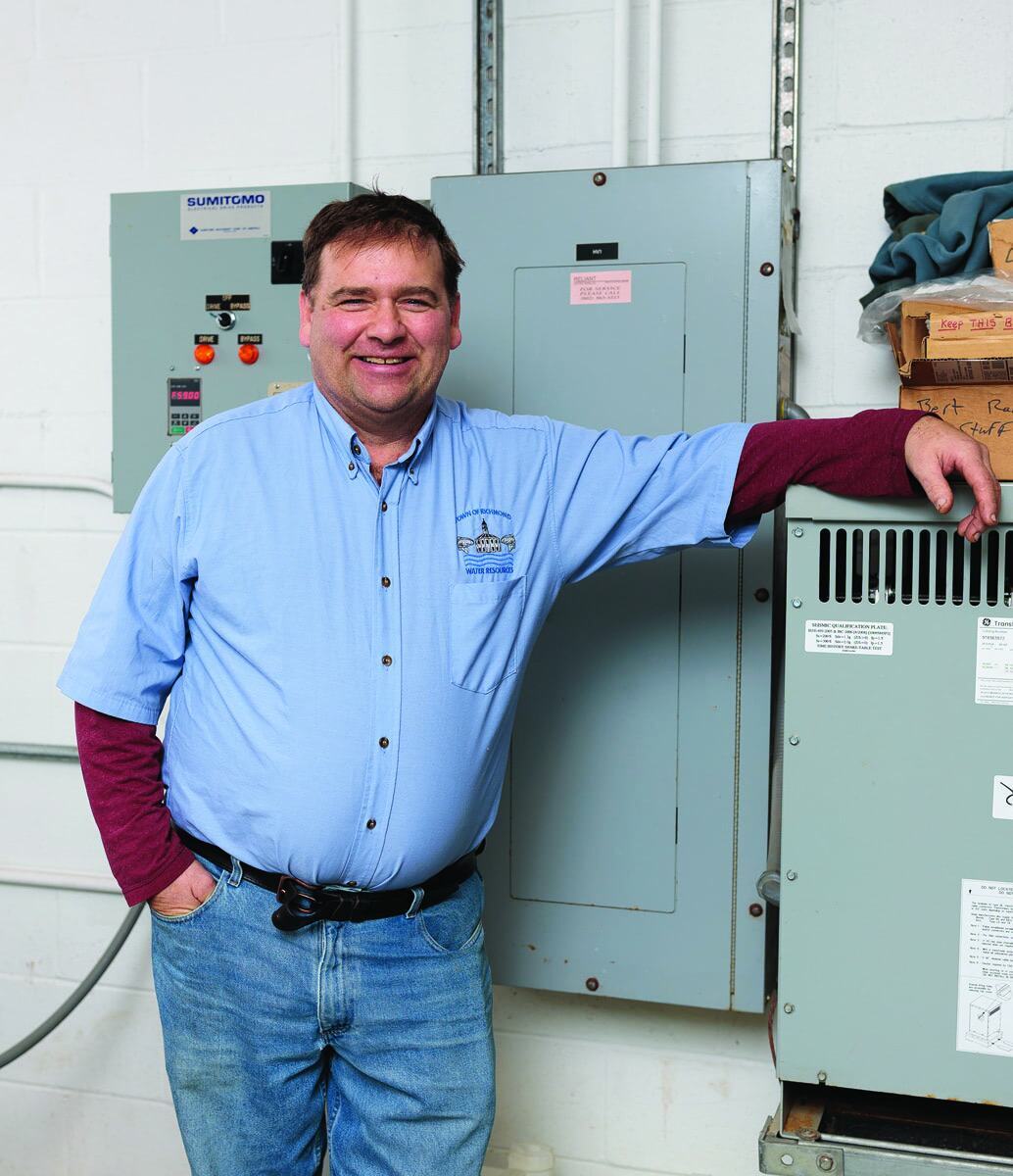
Cote grew up as a farm kid. As early as 8 years old he rode his bicycle to farms around his hometown of Hinesburg to help farmers with chores. “I started working on a dairy farm rolling hay bales off a wagon for a nickel a bale,” he recalls. “It wasn’t uncommon to do 1,000 bales in a day, and for an 8-year-old to come away with a $50 bill, that was a lot of money.”
After high school, he earned a degree in animal science from the University of Vermont and then went to work on a large dairy farm on Lake Champlain. He eventually owned a dairy farm for a few years and after that became the herdsman at his alma mater. When the university disbanded its dairy research operation, he hired on at a large Vermont dairy farm that was installing a robotic milking system.
Fifteen years later, seeing no opportunity for growth in the dairy industry, he looked for a new challenge. He found it in the water and wastewater sector and chose Richmond for the opportunity to work under and learn from Kendall Chamberlin, then water resources superintendent. “He was well respected and had a lot of experience,” Cote says. “I figured if I was going to learn from somebody, he was the best to learn from.”
As it turned out, Chamberlin resigned soon after Cote came on board in late 2022. Cote and Snow then worked under Allen Carpenter, interim superintendent, and were faced with operating water and wastewater systems that previously had required a team of four.
The township of Richmond has a population of 4,100; Cote and his team serve the much smaller village of Richmond, which has about 350 water and sewer connections.
The first of three floods that hit Richmond came on July 10, 2023. The wastewater treatment plant, which has significant excess capacity, came through without incident. “During the flood, we put over 1.2 million gallons through the plant and were able to treat all of it,” Cote says, although a small lift station on the opposite side of the Winooski River was inundated.
Meanwhile, the water plant was submerged. “We had to go on a boil water notice until we could clean the silt and debris out of the water house and the tanks,” says Cote. That took five days. Afterward, Cote and Snow worked with the state Department of Health to devise flood mitigation practices that came into play for floods on Dec. 18, 2023, and July 10, 2024.
The village’s 750,000-gallon reservoir holds just over 10 days of typical water production at 70,000 gpd. “When our treatment plant floods, we shut all the electricity and pumps off,” Cote says. “We have a valve that isolates the water house from the system, and we operate out of the reservoir for as long as we need to.
“The longest we’ve gone without having to produce any water was eight days in July of this year. As soon as a flood comes through, we clean everything out, shock treat the groundwater well and the clearwell, run the tests the state requires and we’re back in business. Because the plant is isolated, there’s no way we can contaminate anything, so we don’t have to go on a boil water notice. That’s a relief for our customers.”
On the wastewater side, the new procedure during a flood is to shut down the problematic pump station. “Basically, we put a pig in the pipe to isolate that system so the wastewater doesn’t go down into the pump station or get discharged into the river. The system on the other side of the river is not very large, so we can back up into it a little bit.”
Then a septic hauler is contracted to pump the backed up flow at intervals, about 4,000 gallons every six hours. The hauler then drives around the flooded area, crosses a bridge over the river, and discharges the load into a manhole. From there it flows by gravity to the treatment plant.
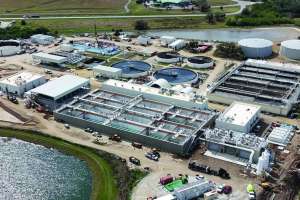
When not dealing with floods, Cote and his team are challenged to deal with an aging system. The wastewater treatment plant was built in 1973 and upgraded in 2005 with biological nutrient removal to comply with new effluent phosphorus limits. Influent flow averages about 60,000 gpd; design capacity is 0.6 mgd because until the early 1990s the village had two large milk processing facilities.
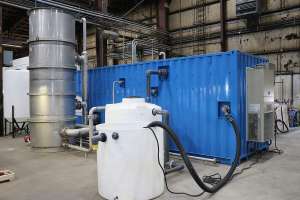
To make up for the shortfall of influent and to generate revenue, the plant takes in about 40,000 gallons of septage per day; in October 2024 alone, it received 710,000 gallons. The septage is mixed with waste activated sludge in a pair of 25,000-gallon aerated holding basins. From there the mixture is fed to an aerobic digester, after which it is dewatered to 33% solids on a rotary press (Fournier). The cake is sent to a composting facility.
The treatment plant upgrade, to begin in 2027, is being designed by Kirsten Depietro-Worden, a member of the Hoyle, Tanner engineering firm who was also on the design team for the previous upgrade. “She is very familiar with the plant and has been a real asset for me to gain knowledge about how to make it work and work right,” Cote says.
The drinking water plant draws from a 35-foot-deep gravel packed well. The water first enters a tank where it undergoes fine-bubble aeration (Lowry) to raise the pH from 6.5 to 7.5 for corrosion prevention. The water then enters a clearwell and on the way is dosed with fluoride and disinfected with chlorine.
From the day Cote assumed charge of Richmond’s water system he and Snow “took it on with a vengeance,” Cote says. “We completely changed the way we do our fluoridation and how we chlorinate. We did that by consulting with Vermont Rural Water and communicating with other facilities to see how they did it and incorporating their practices into our water facility.”
As of last December, the Richmond team was deploying a cellular-based Mission system, enabling them to monitor and control operations from their smartphones. “We investigated, and everybody we talked to thought this was the way we should go,” Cote says. “We asked tons of questions of lots of operators, and everyone who had used the Mission system absolutely loved it.”
Meanwhile, the team was also installing a new automated meter reading system (Zenner USA) for homes and businesses: “We had a hodgepodge of meters of different brands, and some had been in place since 1968. We can read those meters from our desktop computer and no longer have to travel around to read meters manually.
“They upload data every day, so if a customer would like us to check their house while they’re going on vacation, we can set up an alarm for that account. If it shows water use above the parameters we set, we’ll get an alarm and then can go and shut off the curb stop for the home.”
Cote admits that operating older facilities can be taxing: “When I go home at the end of the day, after dealing with all the problems and headaches, I may be mentally exhausted. I live in the neighboring town about seven minutes away. I have a SCADA system monitoring for the wastewater plant at home, and I’m on call 24/7.”
The July 10 date of the floods in 2023 and 2024 is also his wedding anniversary. “The last two years, I’ve spent about 48 hours straight in the wastewater facility operating it during flood stage,” he says.
“I thank God that my wife Daniele is understanding and knows that I’m a little bit of a workaholic. I can’t say enough about the support I get from her. She understands that I thrive on putting out a good product and doing right by the environment. She calls the plant my mistress.”
Cote also draws support from his two latest hires. “For the most part, in this state, hiring is really hard,” he says. “In the industry I see communities struggling to bring people in, but I did not find it that way.”
His first new hire, Michael Coyle, came on board as an operator in training in November 2023: “I enrolled him in the Vermont Rural Water apprenticeship program. He has been awesome.” The second newcomer, Robert Connelly, signed on in September 2024, also as an OIT. “He was retired from the Navy after 27 years. He had worked maintenance. He can weld, pipe fit and more. He has been a big asset.
“Brad and I and our team want to do right for the community. That’s the end goal. It makes me feel good.”