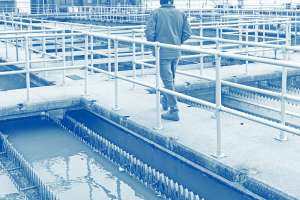


Imagine a clean-water plant where previously vacant land is now occupied by solar panels. Where biogas is captured in a combined heat and power system. Where different power sources are dispatched at variable times of day to take best advantage of fuel and electricity prices.
Scenarios like that are increasingly practical as power control systems become more sophisticated, as government and utility incentives make renewable energy more affordable, and as engine-generators advance in efficiency and emissions performance.
On top of that, drinking water and wastewater utilities do not need to build the considerable expertise needed to operate complex power systems. In a concept called energy as a service, third-party operators can remotely monitor and manage the entire operation, optimizing efficiency and cost while shrinking the carbon footprint in line with sustainability goals.
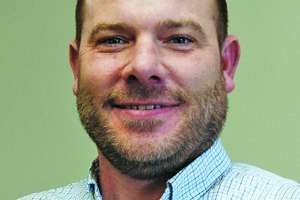
Michael Phelps, an energy technical professional with Caterpillar Electric Power, works with consulting engineers and contractors to support design for power projects that often integrate multiple energy sources. He talked about power generation trends and challenges in the water and wastewater treatment sector in an interview with Treatment Plant Operator.
TPO: In the big picture, what market developments have created more options for clean and efficient power for businesses and communities?
Phelps: One big change is the creation of tax incentives under the federal Inflation Reduction Act. There are significant incentives for reducing emissions, and not just for renewables. Natural gas, biogas and combined heat and power can qualify, and so can carbon capture. In addition, some generating technologies have advanced. For example, emissions from diesel engines now can meet the U.S. EPA’s strictest Tier 4 requirements. Solar power, battery energy storage, microgrids — it all can be brought together to achieve optimum cost and efficiency.
TPO: Are there utility-based incentives also?
Phelps: Grid stability has become important as power demand has gone up. Utilities offer incentives for customers to help stabilize the grid by bringing generation assets on line or taking loads offline when requested.
TPO: What are some possibilities of special interest to wastewater treatment utilities?
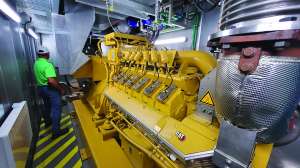
Phelps: One of the biggest is reuse of biogas. A lot of plants flare it off, but that’s not good for the environment. They can reuse it. They can clean up that biofuel and burn it in generator sets. If they don’t have enough biogas to run the genset, they can blend it with natural gas, run a CHP system and use that excess heat in place of a boiler they would normally be running. That reduces the carbon they would create from the boiler and also the energy cost to run that boiler.
TPO: What barriers stand in the way of more biogas development?
Phelps: Facilities need to have incentives to clean that biogas and utilize it. Right now the incentives are better to clean the gas and deliver it to the natural gas pipeline, as opposed to burning it in engines. We still see biogas gensets in operation, but not as much as at one time because of the way the incentives have changed.
TPO: What has changed to make solar power and energy storage more feasible?
Phelps: A big part of that is government incentives, without which wind and solar typically would not pencil out. But with the federal, state and local incentives available, renewable energy makes sense. You have to do the math. It depends on what state or what part of the country you’re in, but the incentives are making it work. Another thing that has made a big difference is the increase in power density in solar panels and batteries. We get more power out of the same size installation, and the costs have come down.
TPO: Is demand for solar being driven in part by sustainability initiatives?
Phelps: Yes. To a large extent that means reducing the carbon footprint. The bigger the customer, the more carbon they produce, and the more they want to do it. There’s a desire to be better stewards of the environment. There’s often a lot of space around water and wastewater plant sites, and solar panels end up being installed there.
TPO: Is it feasible to pursue a zero carbon footprint?
Phelps: Zero carbon footprint is a challenging goal. It’s very hard to achieve solely through renewable energy, because in an emergency, if you need to run at midnight or it’s not a windy day, the only thing you can do is run a generator. A natural gas generator has a lower carbon footprint than a diesel. One way to achieve zero carbon with an emergency generator is by using green hydrogen, which we enable, but today there isn’t an established, widespread hydrogen infrastructure yet.
TPO: What is the current state of the art in energy storage for solar?
Phelps: Lithium-ion is the dominant battery technology today, and their cost has come down so much over the last decade that the economics are working at scale. Lithium-ion batteries are the best option for midsize commercial systems like those at wastewater treatment plants. Bidirectional inverter technology has advanced as well. All those pieces have come together to make solar energy packages economically feasible.
TPO: What is the function of bidirectional inverters?
Phelps: A smart bidirectional inverter is critical to a solar power system. It has to be extremely fast to charge and discharge the batteries. There are three types of systems with inverters. In grid stabilization, rapid-discharging batteries support fluctuations in the grid. In grid following, the batteries charge when there is excess energy, and then discharge when the sun goes down or the wind stops. In grid forming, the battery system with the inverter actually produces the utility grid, and the wind and solar sync with and follow the inverter. That is a microgrid application.
TPO: How would you define a microgrid for someone who has not heard the term before?
Phelps: The simplest definition is that you have multiple power sources that can operate together within a confined boundary and with a defined load. A generator can be part of that, but it doesn’t have to be. It can include wind and solar, as well as hydro and any sort of utility power, to supply power to the load in the most economical fashion. Today’s microgrid controls can tie everything together.
TPO: How would you assess the viability of microgrids for treatment facilities?
Phelps: That starts with a feasibility study, which includes an understanding of the incentives. That is not something the average energy user is able to do, but many good consulting firms do that sort of thing every day. So it’s a simple matter of calling a firm that knows the local area and asking, “Would this make sense for us?” Usually they can tell within five minutes whether the prospect is worth talking about. It does make sense in areas where the incentives are favorable. That’s where energy as a service comes in.
TPO: What is involved in the energy as a service concept?
Phelps: Owners often need power and have opportunities, but they don’t want to be in charge of knowing when to turn different power sources or different loads on and off. So a third party can come in and manage their assets remotely. There are different types of asset management. That could mean studying utility rates and doing day-ahead pricing, turning off some nonessential loads when it makes financial sense, starting gensets, or dispatching batteries. Knowing how to do that takes some pretty deep skills that facility owners typically don’t have.
TPO: What other issues around power supply are top of mind today?
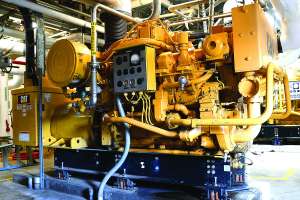
Phelps: Resiliency is a big issue. Water and wastewater treatment plants need backup power. Having the ability to provide their own power in an emergency, and having a lower-carbon backup solution, is part of meeting customers’ goals. Emergency power is typically a diesel application, but it can be done with natural gas units as well. Technology now enables natural gas engines to operate in emergencies in a manner similar to diesels, with fast starts and the ability to take transient loads.
TPO: How well do today’s natural-gas gensets meet emissions regulations?
Phelps: Most of our large natural gas engines very easily meet both emergency and non-emergency EPA emissions requirements. So they can be used for standby power and to take advantage of utility incentives, such as for peak shaving. For operating longer hours, natural gas is a lot more attractive than diesel, just because of the cost of the fuel.