Northern Water keeps looking for ways to stretch resources so that it can serve more people with the same amount of water.
Its efforts have won the Colorado water wholesaler numerous awards for water efficiency from the U.S. EPA, including a 2023 Water Sense Sustained Excellence Award.
Northern Water operates a network of storage reservoirs, canals and tunnels by which it delivers raw water to 33 municipalities and water districts that serve more than 1 million people in northeastern Colorado.
The entity also provides water to irrigate more than 600,000 acres of farmland. Although new supplies of stored water are constantly being developed, water efficiency is a big part of the utility’s strategy for keeping up with the region’s growing population.
Stressing wise use
“With the ongoing change in water availability in the West — it seems we’ve been in a drought since the year 2000 — there’s a great deal of emphasis on the importance of water and using it as wisely as possible,” says Frank Kinder, manager of the Water Efficiency and Sustainability Department.
“Since we are a supplemental water provider to the cities that have some local water supplies, it was deemed paramount that we establish services to help these water users get the maximum benefit from this water.”
One of its newer efforts is the development of landscape templates featuring water-efficient and fire-resistant plants. The templates were created to help people rebuild their properties after the 2021 Marshall Fire destroyed more than 1,000 homes and businesses in the Boulder area, but they are not restricted to fire victims.
“They were patterned off of some of the parcels that were burned, but they’re applicable to anybody in our territory who would like to use them,” Kinder says. “They can be modified to any parcel.” There are templates for small lots, big lots, corner lots and cul-de-sacs.

Best practices
Northern Water informs people about water scarcity and the complexity of the region’s water resources. It looks to inspire them to use water wisely through good irrigation practices and landscaping with plants suited to Colorado’s climate. And it invests in projects that promote water savings.
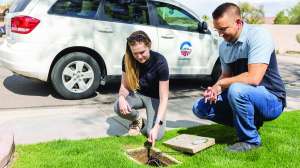
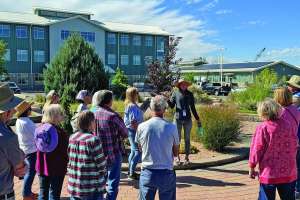
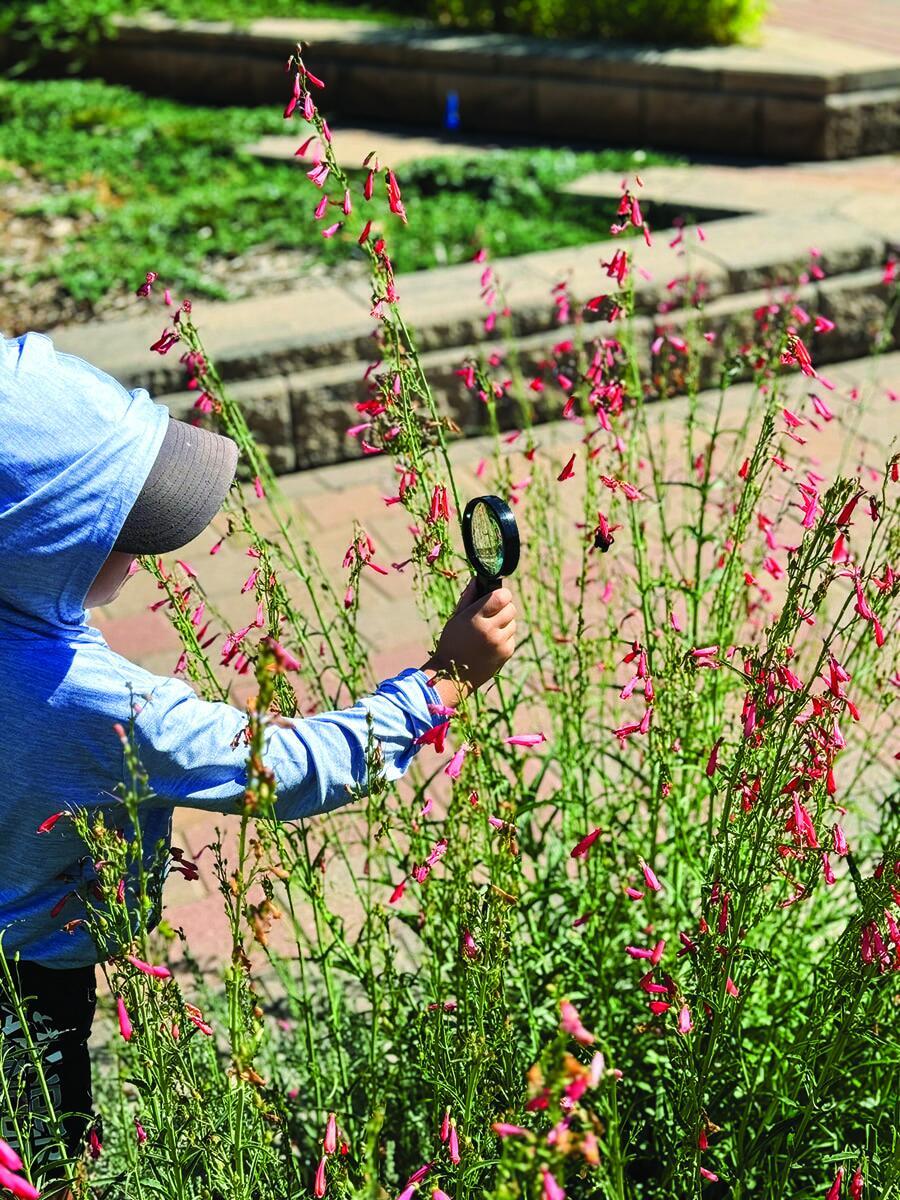
The utility spreads its messages through social media, classes, demonstration gardens, tours and an annual conservation fair at its Conservation Campus in Berthoud. Large water users such as homeowners’ associations, hotels, shopping malls and churches can receive consultations, site inspections and even irrigation audits.
“We talk about ways they can manage their water differently,” Kinder says. “Their motivations for asking for help might be the cost of water, or it might be that their landscape has declined over the years, or it might be they are looking for more diversity in their landscape. Some might have heard about the pollinator problems, for example, or they might want to have more flowering plants instead of just grass.
“The historical approach to landscaping here was much similar to the rest of the country, dominated by turf wall-to-wall, and then a couple of bushes and shrubs. But recently there has been a turn toward more sustainable approaches that reflect the regional vegetation, what we would call a native landscape. We help people appreciate and understand that.”
Sharing costs
Irrigation audits done by local contractors frequently find problems such as overwatering or inefficient watering. For commercial users who have had consultations and audits and have decided to change to a landscape with native plants and new irrigation technology, Northern Water offers a competitive grant program to help them reduce the cost.
“If they want to invest in changing their landscape, we’ll meet them halfway up to $25,000,” Kinder says. “They can include things like changes from high-water-use Kentucky bluegrass to a native grass that uses half as much water. Or it might be a transition from turf to a planting bed where they can have some pollinator support.
“It includes the option to improve their irrigation efficiency from a 25-year-old system that’s no longer really working to something that’s technically cutting-edge and can supply water based on the soil and moisture conditions.”
In 2024, Northern Water gave $278,000 in grants to 18 projects totaling 517,000 square feet. The changed landscapes provide immediate and continued water savings. Even simply changing turf from Kentucky bluegrass to another type of grass can cut the water demand and have other efficiencies.
“There are new Bermuda grass hybrids that look very similar to turfgrass, but they use about 50% less water and take less fertilization, mowing and weeding.” Kinder says. “We have to pick the right products for the right place. It might not be good for a sports field, but it’s perfectly suitable to have low-water grass in a place that’s primarily for people to look at and doesn’t get a lot of traffic.”
Scaling up
Northern Water also supplies municipalities and other water providers it serves with information about efficiently irrigating green spaces, integrating water efficiency into their land use planning and codes, and leak detection.
“We are heavily leaning into leak detection to help municipalities reduce water waste in distribution,” Kinder says. “We see a great deal of progress there. It used to be somewhat clunky, or less technical, but the tools to manage nonrevenue water have really improved.”
Northern Water helps communities develop water efficiency management plans, which are usually multifaceted, multiyear projects. They often include leak detection, subsidies for water-efficient appliances, and native landscapes or irrigation audits for big water users.
“Often, they incorporate our services into their plans,” Kinder says. “A city might not have to establish irrigation audits if we are funding one that many cities can participate in. The whole reason our department exists is to provide regional services across many cities for consistency and scalability.”