Bar screen installation saves wastewater plant substantial costs
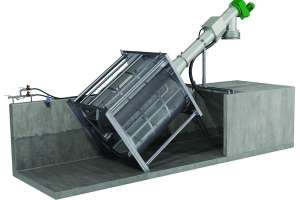
Problem: The Ukiah (California) Wastewater Treatment Plant, serving 16,000, faced recurring pump failures from debris such as rocks and gravel entering the system. With no headworks screening, five main pumps often clogged and failed, leading to rebuilds costing some $100,000 per year per pump.
Solution: Plant supervisor Alan Hodge led the installation of an Aqualitec Screentec bar screen. This vertically mounted screen removes nuisance materials before they reach downstream equipment. It retrofits easily to existing structures and requires no submerged mechanical parts.
Result: The device put an end to pump rebuilds, eliminating some $500,000 in annual costs. The recovered funds were redirected to staff training, equipment maintenance and broader facility improvements. “The bar screen changed everything,” says Hodge. “We went from constant rebuilds to running efficiently, with more budget flexibility than ever.” 310-703-2174; www.aqualitec.com
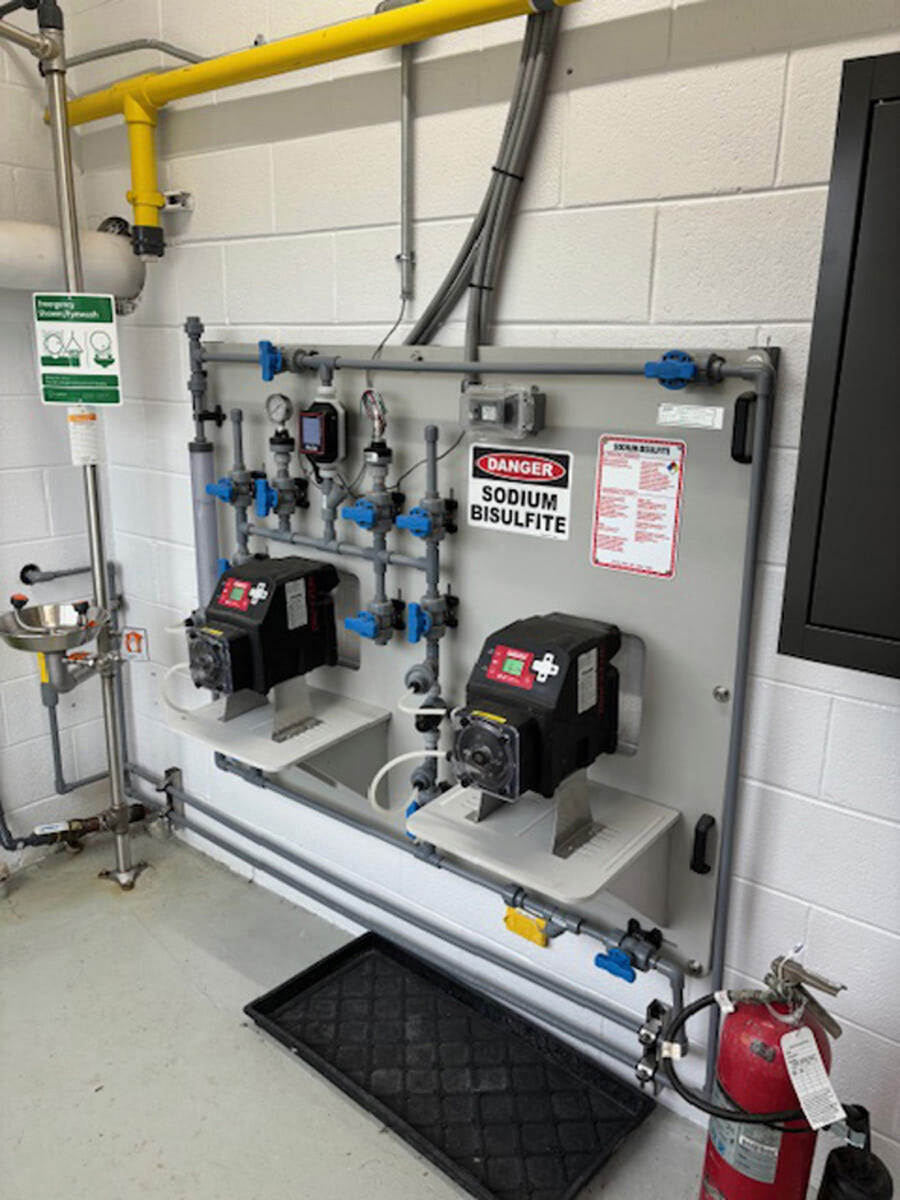
Water reclamation facility makes switch to wall-mount skid systems
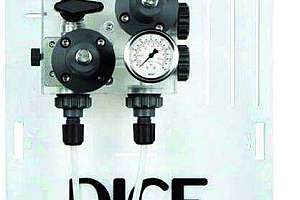
Problem: The Carol Stream (Illinois) Water Reclamation Facility treats mainly residential and some industrial wastewater. The equipment room was cramped and the piping was cumbersome, making life difficult for operators.
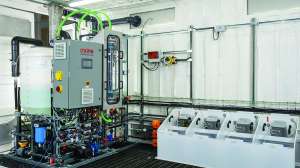
Solution: The facility team incorporated prefabricated wall mount skid systems (Blue-White Industries), delivered fully assembled and equipped with all necessary components.
Result: The system, equipped with FLEXFLO M2 metering pumps, performed so well pumping sodium hypochlorite that the team converted sodium bisulfite pumping in the same manner. Both installations provided a highly functioning system that is clean, well-organized and easy to maintain. 714-893-8529; www.blue-white.com

Municipal plant improves efficiency with centrifuge system
Problem: The Trier wastewater treatment plant in the oldest city in Germany needed a solution for sludge thickening before anaerobic digestion. The plant staff did not want to use a polymer and required a machine that could operate around the clock with a high level of automation.
Solution: A Flottweg decanter centrifuge operates efficiently 365 days a year, 24 hours a day. The thickened material enables a longer retention time in the digesters. That means better stabilization and significantly greater biogas yield.
Result: The throughput is 250-425 cubic feet per hour without polymer. The process is completely automated based on the feed rate. The machine automatically flushes for 10-20 minutes at fixed times every day. Energy consumption has been reduced from about 4 million to 3 million kWh while raising power generation to 3.4 million kWh. 859-448-2300; www.flottweg.com
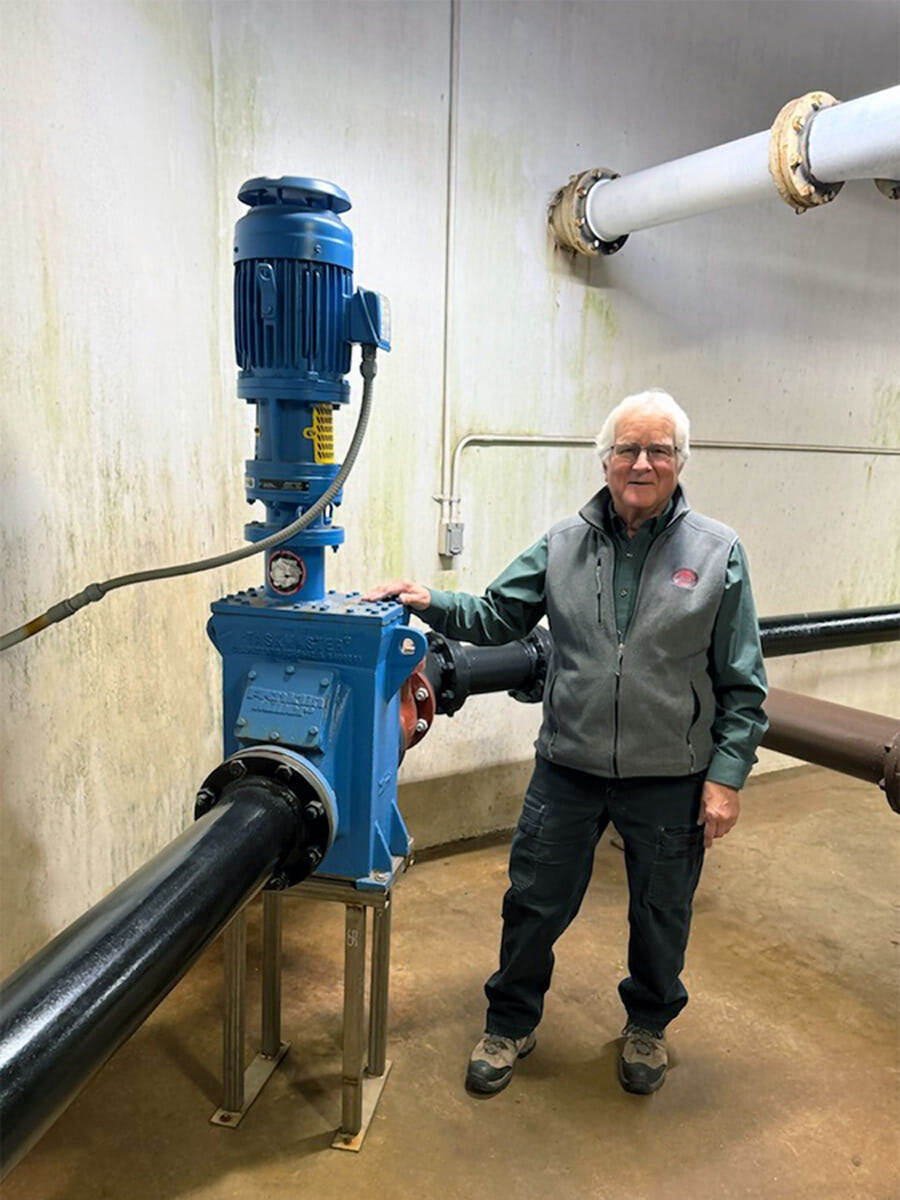
Water facility keeps things flowing with grinders
Problem: The Brewer (Maine) Water Pollution Control Facility treats 1.5-2 mgd with an activated sludge process to remove conventional and nonconventional contaminants. “We were having problems pumping our activated sludge to our wasting unit, and we were having a lot of difficulty with the ball checks,” says Lou Colburn, chief operator. “Materials would get caught up and we had to, on average, five or six times every day, dismantle the pump because of plastic, tampon applicators and other items.
Solution: Colburn chose a Franklin Miller TASKMASTER TM8512 Inline Grinder: “They seemed to fit what we were looking for in terms of reliability, dependability, everything.”
Result: The device worked as planned, and the city later installed a third grinder. The installation was seamless: “You take the whole thing out and just drop the new one back in and you are good to go! It’s pretty incredible.” 800-932-0599; www.franklinmiller.com
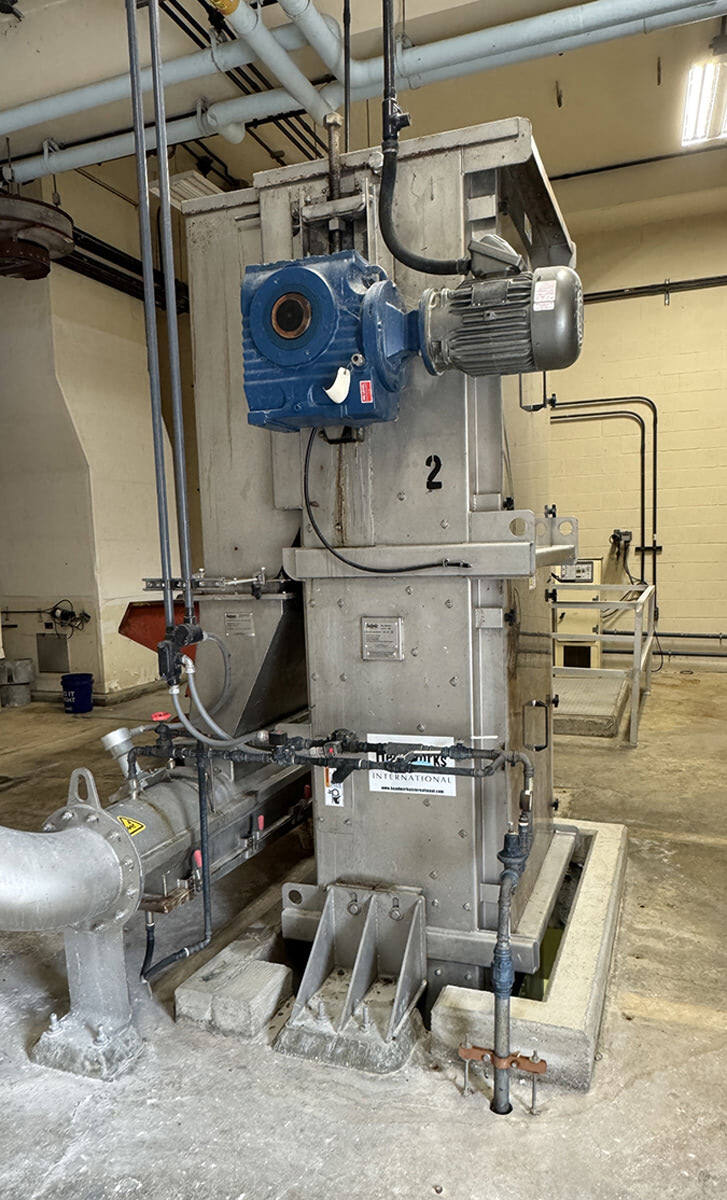
Screen meets vertical challenges at wastewater treatment plant
Problem: The Seneca Wastewater Treatment Plant, operated by the Washington Suburban Sanitary Commission, needed a 90-degree screen configuration due to tight channel constraints in the plant.
Solution: The MS1 Bar Screen from Headworks International is designed for facilities with limited installation footprints. It supports mounting angles from 75- to true vertical 90-degree orientation. Its structural and mechanical integrity allows it to function reliably at steep or vertical angles.
Result: The installation documented the screen’s robust design and the manufacturer’s ability to deliver tailored solutions for geometrically and mechanically challenging environments. 713-647-6667; www.headworksintl.com

Dehumidification system adds efficiency to biogas production
Problem: The Eastern Treatment Plant at Australia Melbourne Water treats almost half of the city’s sewage and is the largest activated sludge plant in the Southern Hemisphere. The utility undertook an upgrade of the biogas handling system to make it more efficient, resilient and future proof. A system to remove moisture was essential to minimize corrosion, protect the power station generators and limit downtime.
Solution: The BDS system (HRS Heat Exchangers) removes water from biogas. It condenses more than 90% of the water. The addition of heat regeneration technology means the cold biogas can be used to pre-cool the incoming warmer biogas, reducing the load on the final cooling heat exchanger and saving energy.
Result: The system has a capacity of 410,380 pounds per hour, while the energy recovery section reduces chiller load by 30%, improving the overall energy footprint. The upgrade has improved biogas quality and supply reliability, providing confidence in generating more than 36,000 MWh of thermal energy for process heating, thus reducing the reliance on natural gas and curtailing emissions. 770-726-3540; www.hrs-heatexchangers.com

Sewerage district transforms acid digestion process with heater
Problem: The Madison (Wisconsin) Metropolitan Sewerage District in Wisconsin faced disruptions and high maintenance for direct steam injectors in its acid-phase digester system. The 12-year-old injectors could no longer handle the increasing volume and variability of foreign material in the process stream. Frequent plugging and fouling caused by solids larger than two inches meant two three emergency work orders per week.
Solution: The district chose the Hydro-Thermal NOH system (Energenecs), designed to allow particles up to four inches to pass through. The straight flow-through design minimizes clogging, and its compact footprint allows it to be installed in the existing skids with minimal modification. The heaters use direct steam injection to heat the solids at nearly 100% thermal efficiency.
Result: The district experienced immediate improvement. Maintenance related to plugging was eliminated. “The unit has run reliably with no failures,” says Erik Rehr, maintenance and reliability manager. Smooth operation meant lower operating cost, fewer interruptions and more time for preventive maintenance. 800-952-0121; www.hydro-thermal.com

Venturi injectors employed in diffuser-free aeration system
Problem: The Bert Crane Wastewater Treatment Plant in Atwater, California, needed an effective, low-maintenance aeration solution for its two aerobic digesters. Traditional blowers and diffusers posed challenges including high energy usage, clogging and costly maintenance that required entering the tanks. The facility, operated by Veolia, sought a solution that could meet stringent California discharge regulations while simplifying operations and improving biosolids quality.
Solution: Mazzei Injector Company provided a blowerless, diffuser-free aeration system using venturi injectors. Each digester was equipped with six 12-inch injectors connected to chopper pumps that recirculate basin water through the injectors. As water flows through the venturi, a vacuum draws in atmospheric air, creating a fine air-water mixture. This mixture is reintroduced to the digester via mixing nozzles, delivering oxygen efficiently to boost microbial activity and reduce volatile solids. The design handles high solids without clogging and requires no in-tank aeration components.
Result: The system delivered reliable oxygenation with minimal maintenance. Noise was significantly reduced, and efficient mixing helped prevent solids buildup, reducing cleaning time. The digested material is dewatered using screw presses to produce Class B biosolids, with the ability to store for 90 days to achieve Class A status. 661-363-6500; www.mazzei.net
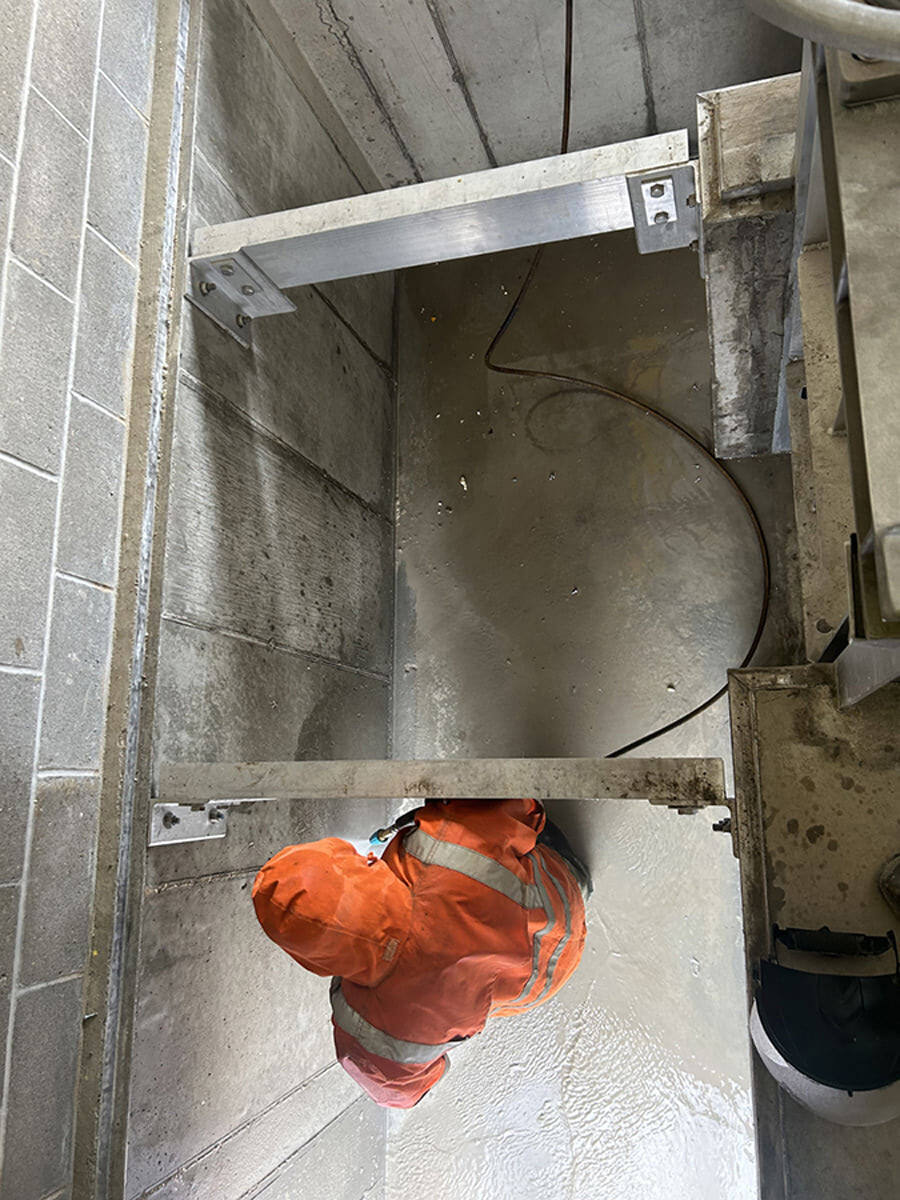
Protecting new headworks structure from corrosion
Problem: A new headworks building at a wastewater treatment plant in Pacific, Missouri, needed protection from harsh chemical exposure and corrosion. Without proper lining, the facility risked early deterioration, costly repairs, and operational disruptions in one of the most corrosive areas of a treatment system.
Solution: Midwest Infrastructure Coatings, an OBIC-certified installer, applied OBIC’s Armor multilayer system for long-term corrosion resistance. The system included a polyurea adhesion layer, structural polyurethane foam and a final moisture-barrier topcoat.
Result: The project was completed before the headworks became operational, allowing the city to avoid premature wear, extend the building’s life, and reduce maintenance. With the system in place, the headworks is set for years of service and structural integrity, even in extreme conditions. 866-636-4854; www.obicproducts.com

Tank mixing keeps water pure in high temperatures
Problem: League City, Texas, fights brutally hot weather for much of the year. One effect is thermal stratification in water storage tanks, which can lead to nitrification of drinking water and the loss of purification chemicals. The city needed a mixing solution.
Solution: The city installed a large-bubble mixing system from Pulsed Hydraulics in a 1.5-million-gallon elevated storage tank. The system uses compressed air to create beach-ball-sized bubble masses at the tank bottom. Those bubbles race to the top, dragging cold water with them. This keeps chemicals in the solution and prevents stratification. The system requires no moving parts inside the tanks. All in-tank components are stainless steel.
Result: After a successful test of the NSF-approved system, the city installed the mixing system in several of its water storage tanks. 800-641-1726; www.phiwater.com

Plant expansion incorporates innovative packaged headworks system
Problem: The City of Celina (population 43,000), is among the fastest-growing cities in Texas. The Legacy Hill Wastewater Treatment Plant needed expansion to accommodate higher flows. A new headworks proved critical to protect a downstream sequencing batch reactor and handle 4 mgd design capacity with average flows just under 1 mgd.
Solution: The city chose the PISTA WORKS headworks system from Smith & Loveless, which did not require a building or significant construction. The all-in-one headworks combines fine screening and advanced grit removal on a factory-built skid that ships direct to the project site ready to install. It gives users screening, grit chamber and dewatering options and comes with safety components such as platforms, handrails, ladders and e-stops. Manual screen bypass allows operations and maintenance without shutdowns. Integrated touchscreen controls streamline operations. The system has a footprint of only 44 feet 6 inches by 10 feet 8 inches.
Result: The approach streamlined design. The packaged headworks removed screenings greater than 6 mm and effectively removed and dewatered 95% of grit solids down to 105 microns. 800-898-9122; www.smithandloveless.com