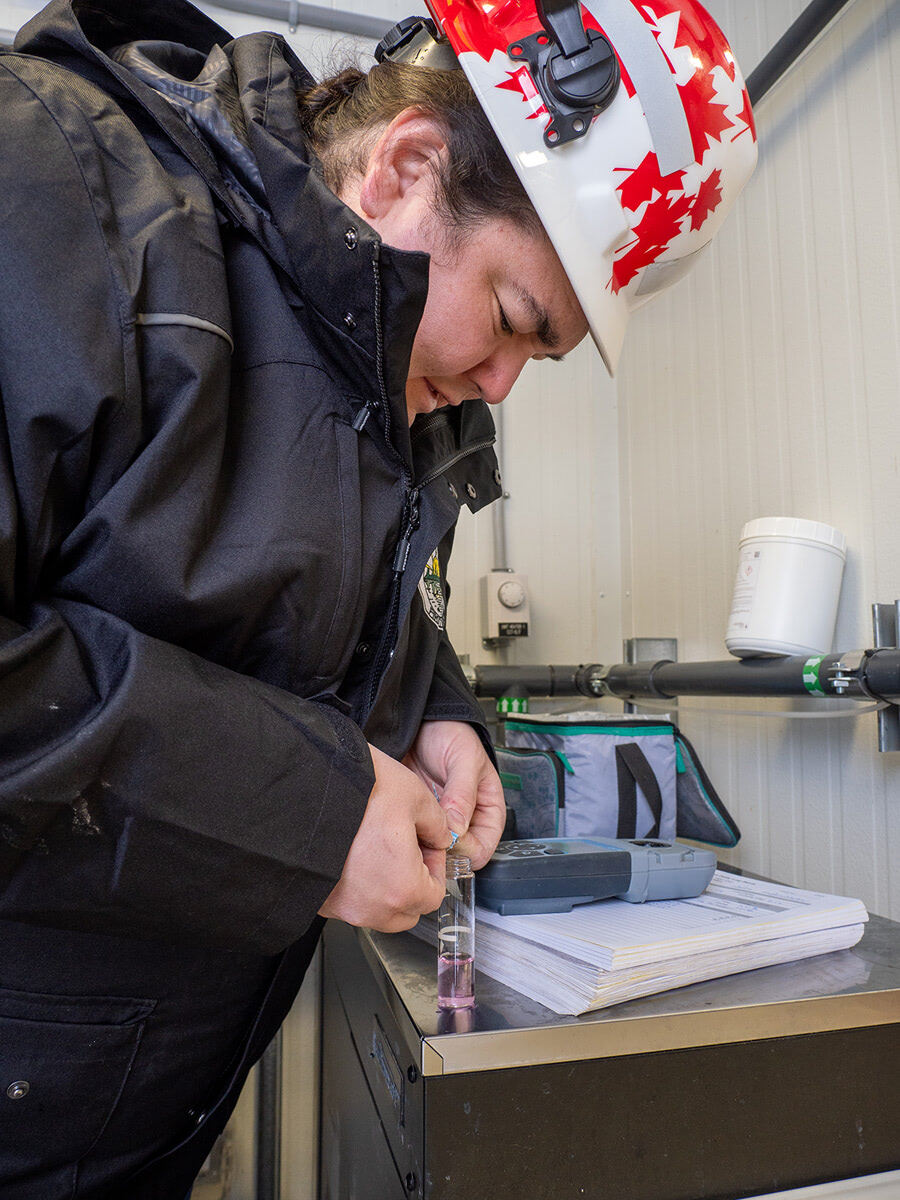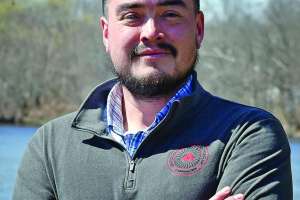
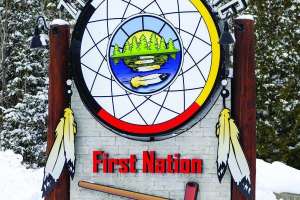

Jonathan Riberdy’s passion is providing safe drinking water for Zhiibaahaasing First Nation in Ontario.
The community has been under a boil advisory since 1991. “The day I can turn on my tap and drink out of it will be the happiest day of my life,” Riberdy says. “I’ll probably cry.”
The boil advisory exists because unlike most communities, Zhiibaahaasing First Nation, on Manitoulin Island in Lake Huron, does not have sophisticated water treatment and underground distribution. Water is delivered by truck to residents’ cisterns, creating the risk of contamination.
As water plant manager and overall responsible operator, Riberdy has been working for nine years to correct that problem. Based on his advocacy for the importance of water operators, especially in First Nation communities, Water Canada named him as its 2024 Operator of the Year.
Three years earlier, Indigenous Services Canada, a Canadian government ministry, presented him with the 2021 National First Nations Water Leadership Award. ISC minister Patty Hajdu observed, “The expertise and commitment of water operators like Mr. Riberdy are vital in achieving our shared goal — ensuring that all First Nations communities have access to clean drinking water and maintain strong water and wastewater infrastructure.”
Riberdy was born in North Bay, Ontario. “My family is originally from Temagami First Nation, which people call Bear Island,” he says. “My biological father was an enforcement officer with the Ontario Ministry of Transportation.
“I grew up in Sault Ste. Marie with my mother, sister, two stepsisters and my stepfather, who is Chinese and owned a Chinese restaurant in North Bay. Besides going to school, I worked in the restaurant kitchen with the Chinese side of my family. I stayed with my father on weekends.”
Riberdy graduated from high school in Sault Ste. Marie in 2002, worked for a while, and then took his personal support worker training from triOS College. After graduating, he did PSW work for the Canadian Red Cross in Sault Ste. Marie, until 2009 when he moved to Zhiibaahaasing First Nation with his wife Bobbisue Kells-Riberdy, who had just been elected counselor on chief and council.
“I was raised to work, so I found a PSW job with Mnaamodzawin Health Service in a neighboring First Nation,” says Riberdy. “We now have our home in Zhiibaahaasing. It is in the middle of nowhere, some people say, but it’s the most beautiful place that I know of, and I call it home.”
Shortly after Riberdy and family moved to Zhiibaahaasing, the Ontario Clean Water Agency was running the water department. “I was approached by the community and they asked, ‘Would you like to work in water? Is that something that you’d want to do?’ And I said, ‘Well, if it’s helping my home community and it’s something important, no problem. I’ll switch jobs and I’ll get into water.’”
Not one to waste time, Riberdy got his initial training from the retiring OCWA water operator. He then earned Ontario certifications as an Operator-in-Training and a Level 2 Water Operator. He also completed the provincial Entry Level Drinking Water Course. “I worked as hard as I could and got through these courses as quickly as possible,” he says. “And that was it: I was the water operator for Zhiibaahaasing First Nation.”
The government-funded drinking water distribution system in his community is far from average. The groundwater contains unacceptably high levels of natural radon. The community’s drinking water comes from Lake Huron.
Until 2013, the water was pumped directly from the lake into a 4,755-gallon cistern beneath a cinder-block building. “They just chlorinated the lake water in the tank, put it in the water truck and filled the cisterns,” says Riberdy. “There was no filtration. It was just dumped in the truck and then dumped into the cisterns.”
In 2013, the Canadian and provincial governments built a package plant to treat the water, but that still fell short of the mark. “It was a slow sand filtration system with two clearwell holding tanks,” Riberdy says. “The treated water had chlorine added and then went to the water truck again. There was still no proper contact time in that plant. It was still missing elements that would allow us to repeal the boil water advisory.”
Unfortunately for Zhiibaahaasing and other First Nations communities, the law doesn’t protect them from poor water quality as it does for most cities, towns and villages.
“Because we’re federally regulated rather than provincially, we don’t have any effective drinking water safety regulations,” said Riberdy. “That’s why Indigenous Services Canada has gotten away with not having us off boil advisories for decades. Their standards are very minimal. They’re nothing like a province. Ontario has the strictest provincial rules for water safety.”
The ISC website states, “As of Oct. 20, 2024, there were 42 short-term drinking water advisories in place in First Nations communities south of 60 [degrees latitude], excluding those in the British Columbia region.”
The story doesn’t stop there. In July 2019, high water in Lake Huron threatened to inundate Zhiibaahaasing’s water treatment plant. The day was saved only when Riberdy hired E. Corbiere & Sons Contracting to build a berm around the plant: “We worked until 3 a.m. the first night to keep the plant secure, and many 16-hour days after that. It worked.”
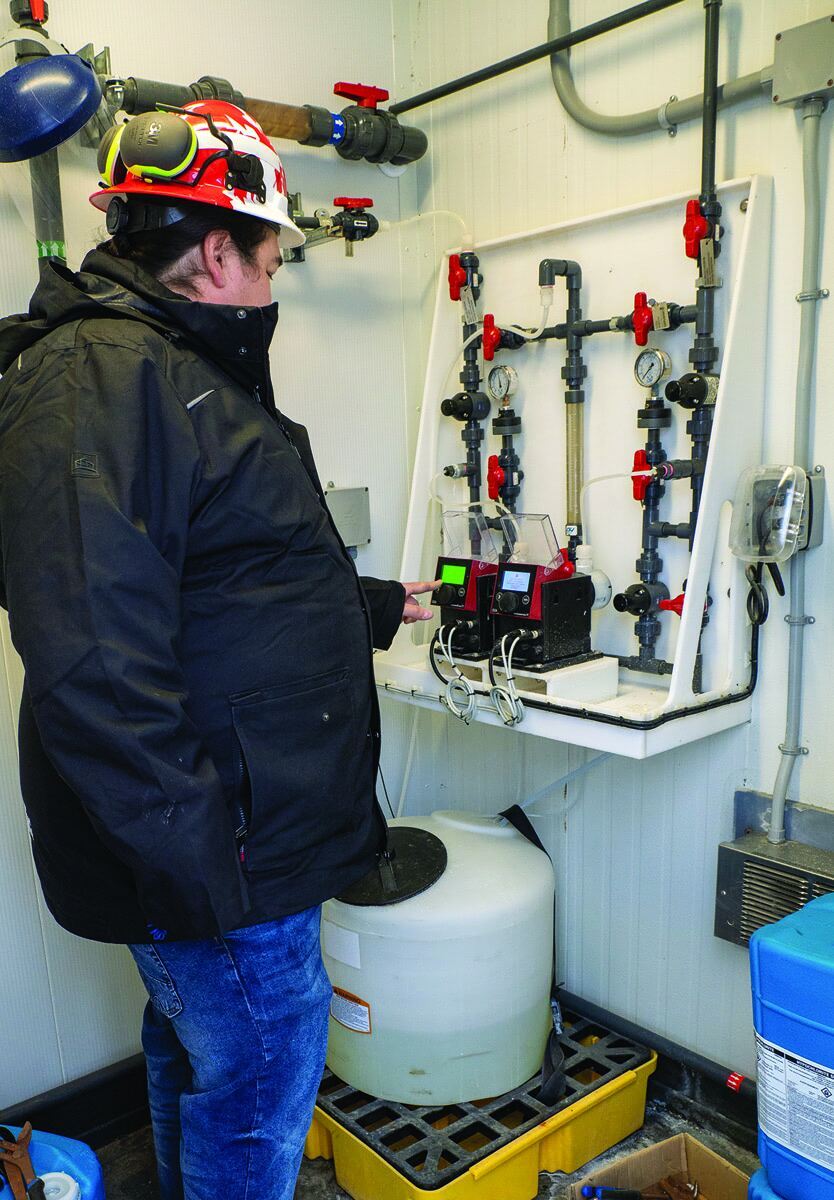
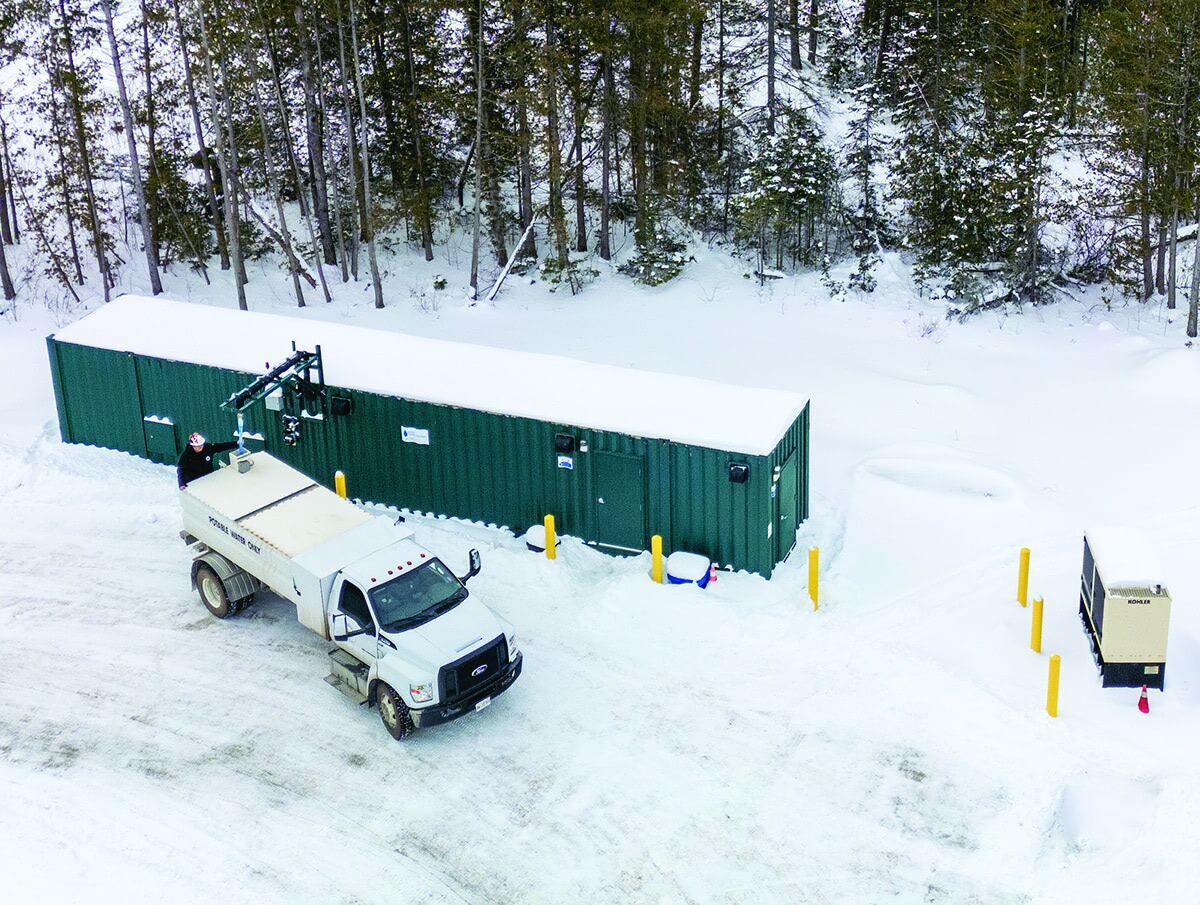
Unfortunately, a rapid snowmelt the next year seeped into the water plant floor, and then a strong windstorm damaged the plant beyond use. It was decommissioned in May 2020, in the middle of COVID, and replaced with a seacan treatment plant within a standard shipping container made by Bi Pure Water, a company in Surrey, British Columbia. At least that solution came with filters and UV disinfection in addition to chlorination, plus a filling station for trucks.
The seacan is a water treatment plant in a 53-foot-long container that has three sizes of roughing filters, UV and chlorine disinfection, granular activated carbon treatment and a separate chlorine room.
Although Riberdy managed to restore water service fast with the seacan unit, the community still lacks a permanent, safe solution to its drinking water problem. The good news is that the ISC is reviewing plans for the community to construct a proper water system that includes a piped distribution network to eliminate the contamination risks of the truck/cistern method.
“We’re looking at slow sand filtration plant with ozone, UV and chlorination,” Riberdy says. “We’ll have distribution through the entire First Nation, plus fire suppression and a standpipe on top of our sliding hill to keep the pressure in the system so that if there is a power failure, we would still have the pressure to keep us from going back on a boiled water advisory.”
The bad news: “Our population isn’t high enough to access the amount of government funds required to build the plant we need,” Riberdy says. “Three companies just gave us their bids for the project, and they’ve doubled the price of what we thought it was going to be. So now the project is back with ISC. It’s in their hands to find the money to fix the system and build us what we need.”
Despite these challenges, Riberdy intends to keep pushing ahead to provide consistently safe drinking water to Zhiibaahaasing First Nation; the kind of safe water that nonindigenous Canadians take for granted every single day.
“I keep trying due to my love for my community and my family,” he says. “That’s what keeps me moving. I do it for them. I do it for the younger generations. I do it to show that if you stand up for what’s right, eventually good will come. Yes, it’s one day at a time, but we’re going to get there. And when we do finally get clean drinking water in our homes, I’m not going to lie about it: It will be a very emotional day for me.”