Wastewater plant uses noncontact flow sensors to reduce operational costs
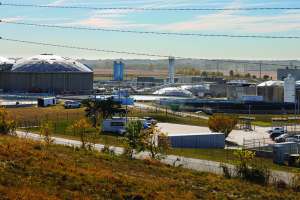
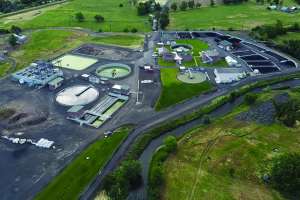
Problem: The 33 mgd San Bernardino (California) Water Reclamation Plant serves regional cities using mostly solar panels to power flowmeters and send flow data to the SCADA system. After a malfunction in the solar panel system for the city of Loma Linda, operators needed to run power to the plant cost-effectively.
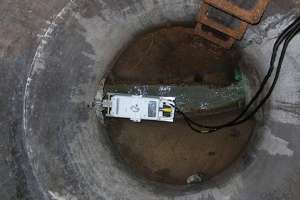
Solution: Operators consulted with flow engineers to explore remedies. Loma Linda then committed to Hach’s Flow Solutions by McCrometer. The offering included installation of FLO-DAR area velocity flow sensors for open-channel applications, data collection by McCrometer and onboarding of online monitoring software to remotely capture flow data with a 95% uptime guarantee.
Result: The flow sensor equipment, along with McCrometer’s data service, significantly improved Loma Linda operational efficiency. By eliminating manhole entry for flowmeter maintenance, the program drastically reduced San Bernardino’s operating costs while enhancing service team safety. 880-220-2279; www.mccrometer.com
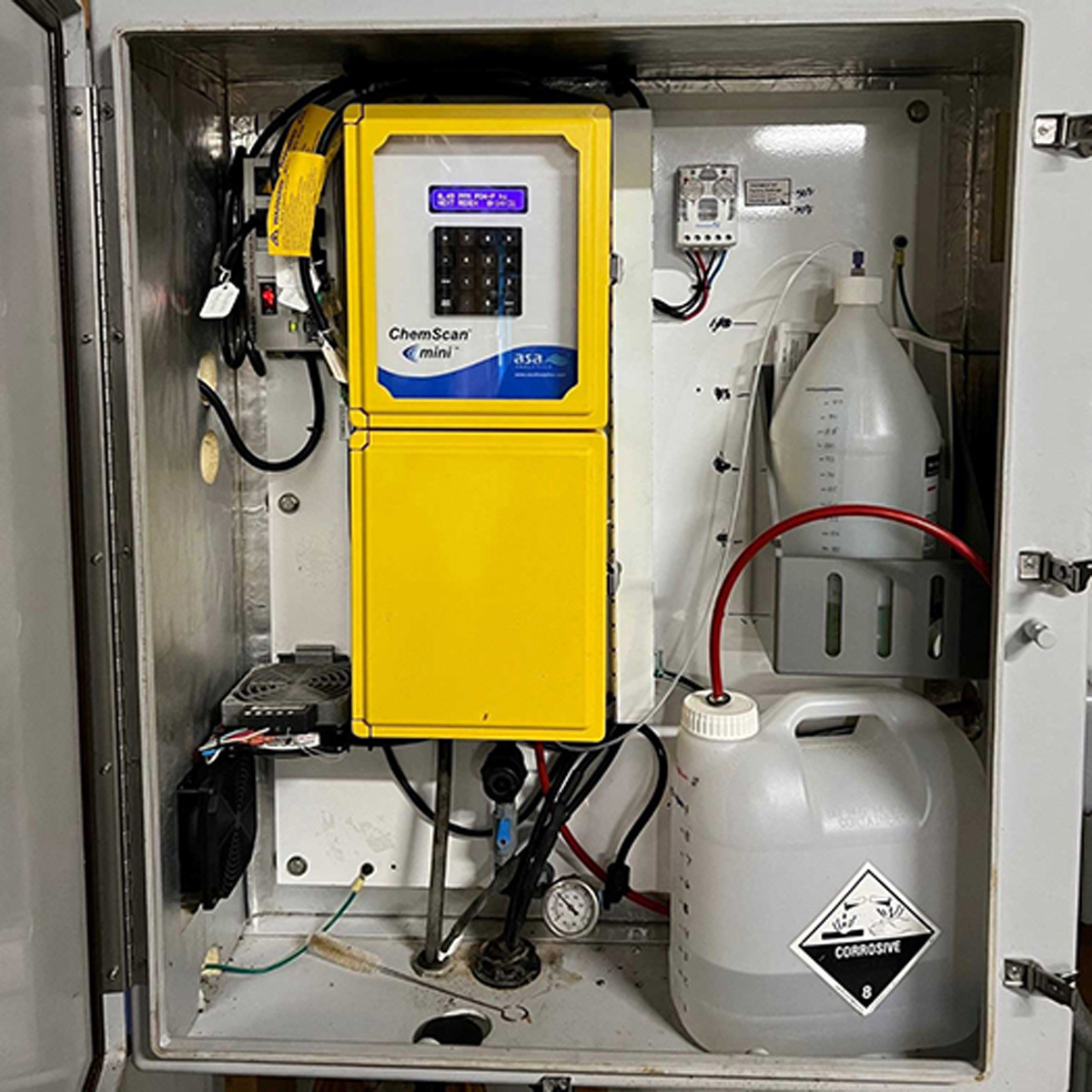
Phosphate monitoring at effluent keeps costs down and levels in check
Problem: When the wastewater treatment plant in Madison, Indiana, received a new phosphorus limit of 1.0 ppm, the staff assessed the processes and found that biological removal alone would not suffice.
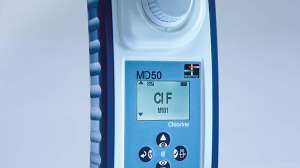
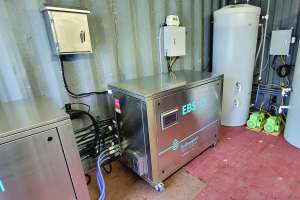
Solution: The team decided to add a chemical-feed. Since frequent rains increased flow but diluted the influent phosphorus entering the plant, plant leaders ruled out flow-based feeds and instead chose a ChemScan mini oP Analyzer from In-Situ for its large, blockage-resistant sample tubing, internal self-cleaning and low cost of ownership. It measures effluent phosphorus in 15-minute increments and dictates the chemical-feed accordingly.
Result: The analyzer enables staff to confirm compliance in real time. With its low-maintenance operation, the small staff can deploy labor efficiently. The process uses polyaluminum chloride to precipitate phosphorus, which ends up in the biosolids. Precise chemical control helps minimizing sludge production. 800-446-7488; www.in-situ.com

Monitor and cloud service helps optimize system performance
Problem: Thames Water expanded the Mogden Sewage Treatment Works, requiring seven new thickened sludge pumps. The specification included BTVE 130-12 hopper pumps. Due to the size and quantity of pumps, the utility wanted monitoring to optimize system performance and predict maintenance requirements.
Solution: In addition to the pumps, a SEEPEX Pump Monitor and SEEPEX Connected Services were provided. Sensors were fitted on the sludge pumps and in strategic locations in the process. All sensor data is sent to the monitor and transferred to the cloud. With this setup, the pump is converted to an intelligent field device with continuous monitoring, immediately reporting deviations from setpoints by way of alarm notifications. Operators can directly access all the information in the field or remotely. Mobile notification by email or SMS can be used for preventive maintenance and process optimization. An advanced analytics system uses historical data to enable predictive maintenance and to identify abnormal or suboptimal conditions.
Result: Through the cloud service, the utility found that the drum thickeners were operating at less than half the maximum solids loading. Application expertise supplied by SEEPEX engineers identified the thickener feed pumps as the bottleneck motor frequency was adjusted to increase throughput. The plant increased sludge treatment capacity by 30% without additional capital investment. 937-864-7150; www.seepex.com