CCTV sewer inspection traditionally has been a slow and tedious process. And yet documenting and analyzing defects on video is essential to establishing needs and setting priorities for repair.
Now the SewerAI condition assessment and inspection data management company offers software packages that help municipalities and contractors collect inspection data more efficiently and save significant time in managing large volumes of inspection data.
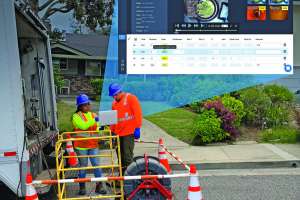
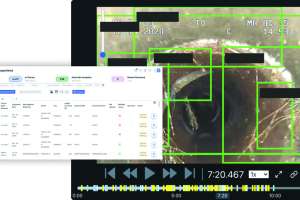
The company’s offerings include an artificial intelligence platform that can analyze pipeline video and code defects offline, after the video has been captured, so that operators in the field can simply drive cameras through the lines instead of stopping at every defect to enter information.
In addition, a cloud-based management platform greatly simplifies data analysis and enables rapid information sharing. The company says the technologies can be used with essentially any video camera, transporter and inspection truck or van. Matt Rosenthal, SewerAI co-founder and CEO, talked about the offerings in an interview with Treatment Plant Operator.
TPO: What is the background of SewerAI?
Rosenthal: The company was founded in February 2019. I met my co-founder, Billy Gilmartin, about six months before that. We formed the business with a mission to help cities and contractors perform sewer infrastructure inspections faster, more cost-effectively and with higher accuracy. We have focused on CCTV condition assessment.
TPO: What specific offerings make these improvements possible?
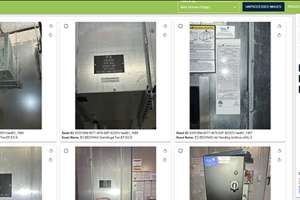
Rosenthal: We built our AutoCode AI software to help inspectors in the field go faster, and we have seen speedups of two to three times among customers who use it. About a year later we introduced the Pioneer cloud-based data management tool platform, which makes it very easy for users to transfer inspection data from the truck to the office, and then to share it with others, such as engineers, for review.
TPO: How did you perceive the need for these technologies in the marketplace?
Rosenthal: Billy and I had worked in the sewer space for many years. I built a software business focusing on large-diameter LIDAR and sonar inspection. Billy had a sewer inspection service firm working for cities all over the country. When we got together, we saw major opportunities to improve the technology inspectors were using.
TPO: What inefficiencies did you observe in sewer inspection procedures?
Rosenthal: Traditionally, an inspector driving a camera through the sewer and encountering a defect has to stop, swivel over to whatever software they are using, and type in the observations. For example, there are roots at 45 feet, at nine o’clock, and they are blocking 10% of the pipe. And then they resume driving. We found that over 66% of the time, the camera crawlers are not driving forward. It’s a slow, meticulous and not always accurate process of labeling defects.
TPO: How does AI speed up the inspection process?
Rosenthal: With AI, operators don’t have to do the labeling while they are live with the camera in the pipe. AI takes the labeling activity and moves it out of that workflow so that the operators don’t have to stop at every defect. They can just drive the camera without stopping, so instead of collecting, say, 1,000 feet of data per day, they can collect 2,000 or 3,000 feet per day. When you take the labeling activity out of the workflow, you dramatically lower the cost to collect the data.
TPO: How fast can operators drive the camera crawler?
Rosenthal: The NASSCO PACP Version 7 sets a standard that the fastest operators can drive is 30 feet per minute. In NASSCO Version 8, if coding in the office using AI coding, that speed has been increased to 60 feet per minute.
TPO: Do any accessories or equipment need to be added to cameras or inspection vehicles?
Rosenthal: No. We put in significant effort to avoid changing the hardware and the workflow. We handle data from any camera, and we’ve actually enabled operators to use more and more camera styles.
TPO: So, the video that is captured by the operator is analyzed later, offline?
Rosenthal: Yes. Our AI watches the videos and finds and labels all the defects. We have a team of NASSCO technicians who double-check the AI. Then we send the full results to the customer. It’s almost as if they had done the labeling live in the truck. They get the same results from AI that they had been creating manually.
TPO: What is the reason for having technicians check the AI coding?
Rosenthal: Many of our customers feel more comfortable when we have a human double-checking the results. The time our technicians spend is attuned to validating what the AI has done. The time for validation is much shorter than for manually entering data.
TPO: What are the basic functions of the cloud-based data management platform?
Rosenthal: Pioneer software is what cities and contractors use to perform inspections in the field, manage the data in the office, do analyses to determine which pipes receive priority for repair, and share the data and videos with anyone who needs to see them. We also have an API so that users can do automated analysis of inspection data.
TPO: What are the advantages of the cloud-based platform?
Rosenthal: Data sharing is almost instantaneous. To share data 15 years ago, users had to physically mail a thumb drive from one office to another. Maybe 10 years ago, they would upload the data to a file sharing service. The receiver would download it and then load it into whatever software they were using. Now with Pioneer, users just type the recipient’s email address into the platform. The recipient gets an invitation email and can see that video. The cloud also provides unlimited storage, so users can upload as many videos as they have. Multiple customers have over 20 terabytes of data in our platform.
TPO: After completing pipe videos, how do operators interact with the SewerAI tools?
Rosenthal: They first sync up to the cloud by selecting the inspection and clicking the Cloud button. Then if they want AI to run the analysis, they click the big Run AutoCode button. That runs the AI and adds the video to the queue for a NASSCO technician to review.
TPO: Can these software tools be used for inspecting infrastructure other than pipes?
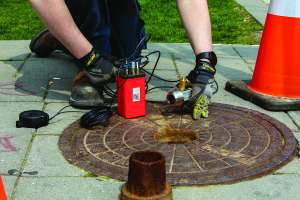
Rosenthal: Many customers use GoPro cameras to inspect manholes and pump stations. We created a workflow that makes it easier, faster and less expensive to GoPros and other camera systems. One feature within Pioneer allows users to upload a video from a GoPro camera; we then create a full 3D model of the structure in about 15 minutes. They can use that model to perform measurements.