Nashville Metro Water Services had trouble getting qualified people to apply for operator and wastewater positions.
So the utility created an apprenticeship program to train applicants in the mechanical, electrical and electronics trades.
“It was a group effort between our assistant director, maintenance managers, managers and trade supervisors,” says Pete Ferrari, industrial maintenance manager. “We’re looking for people to become electronic technicians, electricians and mechanics. We want them to make this a career so that they are here for 25 to 30 years. We want to pass along our knowledge and set them up to replace us once we start retiring.”
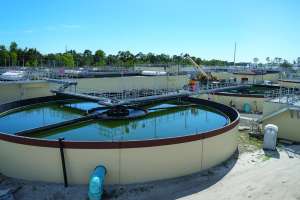
Metro Water Services receives and reclaims wastewater from about 212,000 accounts across five counties including Nashville. Its three water reclamation facilities treat an average of 186 mgd and up to 500 mgd during heavy rains. Team members maintain more than 3,000 miles of sewer lines.
After making the case to management and staff, Ferarri wrote the pilot apprentice program and continues to pull it together with the help of team members in the relevant trades who train and pass their knowledge along to the candidates.
In the first year, the offering attracted 50 applicants, of whom eight were hired in the first round of the training. As of last March, the utility was preparing for a second round of hires from the second application pool of 50.
Applicants must be at least 18 years old. Some are weeded out during initial interviews. Remaining candidates have another interview and take part in hands-on exercises. Those hired receive a master training book that includes the skills they need to learn for the two-year program. After they complete the training program, apprentices usually gravitate toward the trade they and supervisors feel is best suited for them.
The apprenticeships are listed on the websitenashville.gov. The utility also takes the message to high school and college job fairs. “Apprentices go to the job fairs with us and talk to the high school and college students about their experiences,” Ferrari says. “The students really enjoy meeting the apprentices and hearing what they have to say.”
Students are also shown hands-on demonstrations. For the past 20 years, Metro Water Services has had an education and outreach program for teachers, middle and high school students, colleges and universities, and the general public. It’s run by Sonia Allman, manager of strategic communications, and includes classroom visits and plant tours.
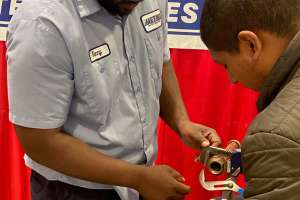
Apprentices go through a six-month probationary evaluation that includes one day per week of classroom study. They are flooded with information on the trades and the facility roles. They shadow a tenured team member in a mechanical, electrical or electronics area and on Fridays go into the field with supervisors who ask them to show what they learned during that week.
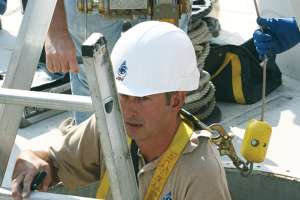
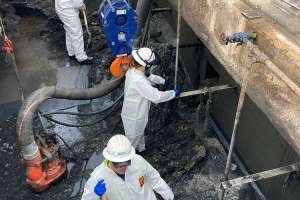
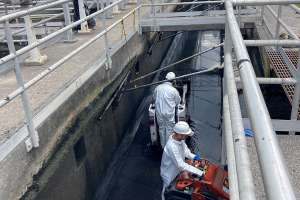
They also go through safety and AWWA training. If they get a passing grade, they go into the field to learn which trade they prefer. There are different instructors for each trade. The apprentices do work in the treatment plants and lift stations, conduct maintenance inspections, and perform general cleanup tasks.
Apprentices are paid the same as full-time workers in similar roles. Once they have been with the utility for a year, they are eligible to be reimbursed for college studies, and when they graduate, they can apply for other positions in the utility.
By growing its in-house staff through apprenticeships the utility has realized savings by reducing reliance on outside contractors. Metro Water Services receives great feedback from both the apprentices and trainers alike.
“Both enjoy the program experience,” says Ferrari. “Trainers enjoy teaching the apprentices and passing along their knowledge. The apprentices enjoy learning from a mentor. It has created a real camaraderie and family feeling among workers.”