Traditional approaches to PFAS treatment like reverse osmosis and adsorption media like granular activated carbon do not eliminate the risk of contamination.
That’s because they transfer the “forever chemicals” from the water being treated to a concentrated waste stream that still must be managed. That leaves the possibility of PFAS being re-released. At the same time, disposal and replacement of adsorption media carries significant operating costs.
Now the Ovivo water treatment company has acquired E2metrix, a specialist in innovative and clean electro-technologies, to create a solution that treats and destroys PFAS and other emerging contaminants found in water and wastewater.
During pilot testing at Alabama’s West Morgan-East Lawrence Water and Sewer Authority, the technology achieved 99% reduction of PFOS and PFOA and more than 85% reduction of total detectable PFAS in the water treated, according to Ovivo. The process does not simply remove PFAS; it mineralizes them into their harmless elemental parts.
The electrochemical oxidation solution is being tested in applications including drinking water, municipal and industrial wastewater, and landfill leachate. In the process, an electric current is continuously passed through the water in process reactors.
Specialized electrodes enable direct and indirect oxidation of the PFAS, permanently destroying the chemicals by breaking their carbon-fluorine bonds. Katie Henderson, product group manager for PFAS Solutions with Ovivo, and Ihsen Ben Salah, general manager of E2metrix, talked about the technology in an interview with Treatment Plant Operator.
TPO: What was the motive for developing and introducing this technology?
Ben Salah: For the past eight years, we have been pioneers in addressing emerging contaminants, and for the past five years we have been on the forefront of addressing PFAS compounds. In light of the increasing urgency to provide a definitive solution for these persistent forever chemicals, it became a priority to address them with an on-site destruction solution, as opposed to conventional technologies such as activated carbon.
TPO: How did your two companies devise this method of treatment?
Henderson: Electrochemical treatment has been around for decades. Its application for PFAS destruction is relatively new. E2metrix has been working for several years on optimizing their reactor. What is different for PFAS is the type of electrode used. We select an electrode that is able to break down the carbon-fluorine bonds that characterize PFAS. Our approach is not to shift the problem around by removing PFAS and putting it in a landfill, but to actually destroy it. We believe that minimizing the amount of what will soon be designated as hazardous waste on site will reduce overall cost and also reduce liability for those handling these waste streams — especially for municipalities.
TPO: In basic terms, how does the treatment process function?
Ben Salah: Electrochemical destruction mineralizes PFAS by direct oxidation. It uses electricity to cleave the carbon-fluorine bonds and break the molecules down into their elemental parts of carbon and fluorine. We use an electrode, and specifically an anode, with an extended useful life. Different electrode combinations are used depending on the compounds to be addressed. The approach uses an advanced and economical electro-oxidation process that we can also apply to other persistent organic compounds in municipal water and wastewater.
TPO: What are the mechanics by which PFAS molecules are targeted and broken down?
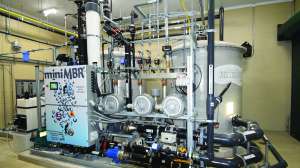
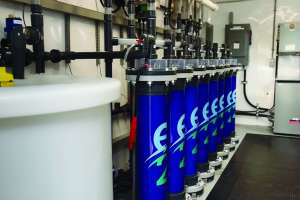
Henderson: The main feature that initiates the destruction process is direct electron transfer at the surfaces of the electrodes. We bring in the water to be treated into a reactor and create a thoroughly mixed environment to increase contact between the water with the electrodes, and so optimize electricity usage. We typically have multiple reactors in series or in parallel to achieve the desired treatment goal and flow.
TPO: Is it necessary to analyze the waste stream before deploying the technology?
Henderson: Yes. Any technology for treating PFAS needs to go through a pilot demonstration. We only measure 36 PFAS compounds, and there are thousands of such compounds out there. Our team is focused on offering municipalities a technology that is a good fit, so that we’re treating not just the compounds we can measure, but all the PFAS compounds that are in the waste stream.
TPO: Is electrochemical oxidation a standalone technology, or is it part of a larger process?
Henderson: Given that carbon-fluorine bonds are among the strongest in organic chemistry, breaking them down is energy-intensive. So concentrating the PFAS into a smaller treatment volume is necessary to reduce electricity consumption and cost. We deploy an integrated treatment approach. At our demonstration sites we have been using reverse osmosis to concentrate PFAS; we then treat the RO concentrate stream. We’re also looking at foam fractionation and regenerable ion exchange for concentration. These are all technologies that can fit readily into the industrial and municipal markets.
TPO: What capacities can this destruction technology achieve?
Ben Salah: It is a modular system, so we conduct batch and pilot testing to determine the optimal treatment time with the required flow, as well as the choice of electrodes. We then decide how many reactors are needed in series or in parallel to treat the flow. If the flow is not continuous, our technology can be operated in a batch configuration.
TPO: Is there a lower or upper limit on the process capacity?
Henderson: There are no limits. Even if a user’s flow is very small, we would simply operate the system in a batch configuration with the smallest unit we have.
TPO: How is the technology delivered to end users?
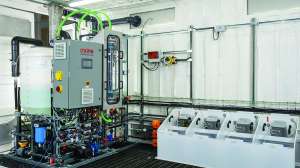
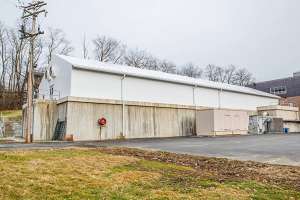
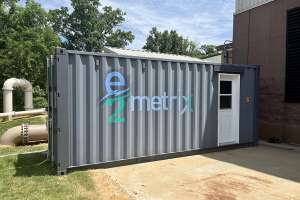
Henderson: Our offering is very flexible. We can work with the client to build it on site, or we can bring it in a container, put it in a building, and teach them how to run it. We see this as an on-and-off, easy-to-operate system. Once we have dialed how many reactors they need, they can just turn it on and let it run. It operates at low or no pressure and at ambient temperature, so it is a very safe system. We use nonsacrificial electrodes that should last the life of the equipment, which means the amount of maintenance is very low.
TPO: Does the water leaving the reactor require any special handling or treatment?
Henderson: We treat the effluent coming from a municipal or industrial treatment plant, and we usually recommend a polishing step, such as granular activated carbon or ion exchange, to make sure we remove any PFAS that may remain. The media life will be very long because our process has destroyed the majority of the PFAS mass.
TPO: How was this treatment method proven for commercialization?
Ben Salah: The electrode destruction technology has been commercialized since 2015 for different applications including ammonia nitrogen elimination and destruction in mining, municipal wastewater treatment, and cooling tower water disinfection. We have delivered more than 200 reactors to sites in Canada.