For years digester methane has been a valuable renewable fuel that can be burned to supply heat and electricity for wastewater treatment plants.
But researchers today claim it also has a dark side: They describe methane (biogas) that escapes from treatment plants as a meaningful contributor to the greenhouse gas emissions blamed for promoting climate change.
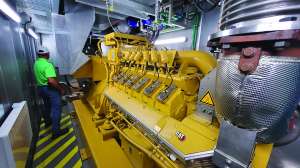
At many treatment plants, biogas fuels boilers and engine-generators. At others it is scrubbed clean of contaminants and fed into utility pipelines as renewable natural gas. At still others, it is flared. But at many facilities, researchers say, some amount of biogas escapes into the atmosphere (fugitive emissions).
This matters because, according to the U.S. EPA, methane is a greenhouse gas 28 times more potent than carbon dioxide. Clean-water plants are far from being the biggest source of methane emissions – the three largest are wetlands (a natural source); agriculture; and the oil, gas and coal industries. Landfills are also substantial contributors.
At the same time, a compelling case can be made for continuing to develop biogas-to-energy projects at wastewater treatment plants as a remedy for these fugitive emissions.
MEASURING EMISSIONS
Treatment plants’ methane emissions have come under the spotlight in recent scientific studies. One found that the wastewater sector emits nearly twice as much methane to the air as previously indicated in estimates made according to established EPA guidelines.[1]
Another study measured losses of methane from 23 biogas plants (some municipal, some agricultural) and found that losses averaged 4.6% of total gas production The rate of loss was generally lower for large plants than for smaller ones[2] . These studies suggest that for utilities interested in sustainability and reducing their carbon footprint, fugitive methane emissions should be on the radar screen.
To no great surprise, the researchers found that in general, plants with anaerobic digesters had the most leakage – more than three times as much as those without digesters. Although only an estimated 10% of U.S. clean-water plants have anaerobic digesters, they tend to be large plants that treat more than half of the nation’s wastewater.
Researchers also noted that methane releases from sewers may be significant; that is a much more diffuse and challenging issue to resolve, given that U.S. communities collectively have more than a million miles of sewer piping.
THE BRIGHT SIDE
On the other hand, it’s not all doom and gloom for biogas. For one thing, researchers noted that reducing emissions of fugitive methane means both a reduction in greenhouse gases and more of the methane recovered for productive use as a renewable fuel. Meanwhile, they state, methane has a relatively short life span in the atmosphere, and so if fugitive emissions are curtailed, their impact on climate change will diminish fairly soon.
And, of course, when biogas is put to productive uses, it is a carbon-neutral and arguably even carbon-negative fuel. A backgrounder on methane emissions provided by Anaergia[3] observes, “While biomethane does emit carbon dioxide when combusted, the CO2 is a far less potent greenhouse gas than the methane that would have emitted from the landfilled organic waste…”
In addition, that CO2 comes from plant matter that already fixed the gas from the atmosphere: “The formerly living material from which biomethane is made took carbon dioxide from the air while growing. Therefore, the combustion of biomethane does not increase the amount of CO2 present in the atmosphere but makes it circulate in short carbon cycles. Thus, anytime biomethane replaces fossil fuel, CO2 emissions are prevented.”
Putting more methane to work for heating and power makes both economic and environmental sense. So perhaps the bottom line is that it would be wise to invest in reducing fugitive emissions such that biogas remains a high-value fuel.
References:
[1] Underestimation of Sector-Wide Methane Emissions from United States Wastewater Treatment, Environmental Science and Technology, March 2023.
[2] Total methane emission rates and losses from 23 biogas plants, Waste Management, September 2019.
[3] Backgrounder: Methane Emissions from Waste, June 30, 2022, anaergia.com/backgrounder-methane-emissions-from-waste/.