If stereotypes were reliable, one could safely assume that Canada is a land of abundant freshwater and that the First Nations people in remote communities there have unlimited access to it.
But that isn’t always the case: Aging water treatment plants and infrastructure, leaking and otherwise damaged water pipelines, supply chain issues and availability of local operators have made long-term drinking water advisories a fact of life for many First Nations communities.
As of last August, 28 of these advisories were in force in 26 such communities. The only good news, according to Indigenous Services Canada, is that 143 other advisories have been lifted since November 2015 as a result of remediation.
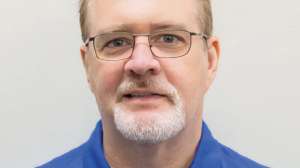
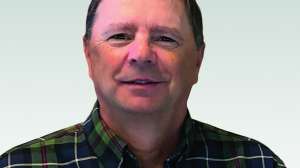
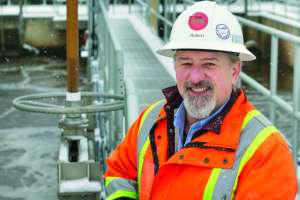
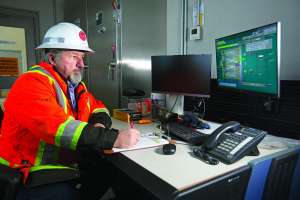
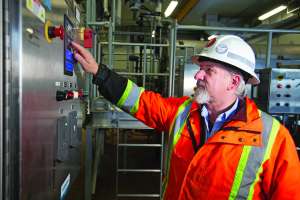
Robert Budway is one of many people who, in partnership with the communities, are helping put an end to the advisories. He is a distribution, operations, collection system and maintenance team lead with the Ontario Clean Water Agency. OCWA is an agency of the province of Ontario that provides water and wastewater operation, maintenance, management and support services for more than 800 client-owned facilities across the province.
In recognition of Budway’s support for First Nations drinking water systems, Water Canada magazine named him its 2023 Water Operator of the Year. “Robert Budway represents the operator every community wants on their team,” says the award citation. “During the last two years, in the midst of the worst pandemic Canada has seen, Robert offered his support to the remote First Nation community of Neskantaga for 186 days in 2020 to 2022.”
Budway observes, “My career in this profession started way back in 1980 as a student in a water plant just outside of Port Stanley. Since then, I’ve got 41 years of hands-on experience.” He holds a Class 4 Water Treatment Operator license, a Water Distribution System and Supply Class 1 certificate, and Class 3 Wastewater Treatment and Wastewater Collection licenses.
The story of Budway’s award can be traced back to October 2020, when the Neskantaga First Nation, about 280 miles north of Thunder Bay, shut down its water plant after an oily substance was discovered in the reservoir. The next day an evacuation began and OCWA was contacted by the contractors to provide emergency support services.
Budway was part of an OCWA Emergency Response Team invited into the community during the COVID-19 pandemic to help fix the problem. “I ended up going back and forth for tours of duty in the isolated community for about 186 days up until February of 2022,” he says.
“Our job was to work with the community to get the treated water required to enable relocated community members to come home from Thunder Bay. Then the team members took turns on-site to address any issues that came up and to keep the clean water flowing.”
Another example of OCWA assistance in a First Nation community is a water emergency that occurred in December 2017. Budway and another OERT staff member traveled to Slate Falls First Nation to review a newly constructed water plant.
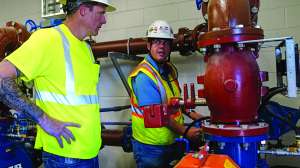
“We traveled over an isolated winter road back and forth from Sioux Lookout, to Slate Falls, 108 miles each way,” says Budway. “While there we conducted a plant tour with the First Nation community operators and completed an assessment of the new plant’s treatment process equipment, chemical feed system, lab equipment, low-lift building equipment and health and safety equipment.
“The new plant uses two nanofiltration treatment trains and is backed up by a diesel-powered emergency generator. It was a really good experience working with the community.”
Budway was born in 1962 in the southwest Ontario town of St. Thomas. He and his mother and brother then moved west to Amherstburg, across the St. Clair River from Detroit. “I graduated from General Amherst High School in June 1980 and then went back to St. Thomas, where I was living with and helping my grandparents,” he says.
“During the course of going back there after I turned 16, I got a summer job at the Elgin Area Water System and found it interesting. I got a part-time contract position after I graduated, and I kept working under contract at that facility.”
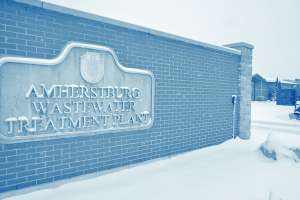
After marrying his first wife in 1985, Budway moved back to Amherstburg where he got a contract job at that community’s water treatment plant, which was run by the province. That became a full-time operator position in 1989. Budway then worked on his certifications while moving between water and wastewater.
In May 2000, Canada’s worst-ever outbreak of E. coli-contaminated drinking water occurred in the small Ontario town of Walkerton. When it was over, seven people had died and about 2,300 had become ill with diarrhea and flu-like illnesses.
According to a Canadian Broadcasting Corp. news summary of the Walkerton Inquiry report issued by the Ontario government, E. coli and Campylobacter jejuni entered the Walkerton system through a well on or soon after May 12. The report said the outbreak would have been prevented by keeping a continuous chlorine residual and maintaining turbidity monitors at the well.
After the public inquiry, the utilities manager was sentenced to a year in jail and the water foreman was placed on a nine-month conditional house arrest. Four and a half years earlier, heavy rain had caused contamination in the community’s water but, according to the CBC report, the two “apparently did little despite complaints from the town’s residents about vomiting and diarrhea.”
Established in 1993, OCWA was called in to lead the remediation in Walkerton, a tragedy that shook the Canadian water industry to its foundations. Provincial standards and industry oversight were tightened, and OCWA’s OERT teams were created. Budway joined the team that headed to Walkerton.
“A bunch of operators from across the province went to Walkerton to help with the recovery,” he says. “That was my first time being involved in an actual emergency response team, and I’ve been an OERT member ever since. When I am not out with one of our five OERTs, I am doing daily water treatment duties for OCWA’s Essex Hub office in southwestern Ontario.”
The Neskantaga First Nation, Slate Falls, and Walkerton are just three communities that Budway has supported to help bring their water up to safe drinking standards over the years. Another was the water plant on Boblo Island, an abandoned amusement park off the Amherstburg shore.
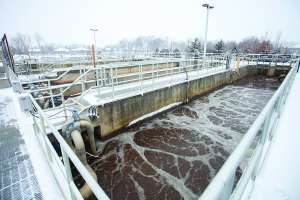
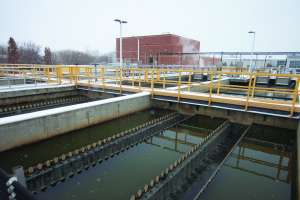
“The original water plant dated back to 1911 and was in need of repair, leading to a boil water advisory,” says Budway. “We went there through an order by the Ministry of the Environment, and the first thing I did as part of the OERT was to look at how the plant was running and ask the operator, ‘How are you doing this? How are you doing that?’ We then changed how the coagulation was handled and brought in polymer filtration. Within a couple of days, we got the plant running a lot better for the community.”
When assessing the problems at these water plants and others, Budway bases his method on doing little things first: “I always start by making small adjustments one at a time to see how it would affect the rest of the processes. I don’t just go in and try to change things right away. I have to see why it’s running the way it is.
“I’ve also learned to use the five senses to see how things look, smell, taste or feel. I listen when I hear something running unusually. When everything’s running normally the way it’s supposed to and performance levels are very high, I like to paint that mental picture so that as soon as I get into a different situation, I can identify why the plant is not operating the way it should.”
All of this work is aimed at achieving Budway’s goal, which is to provide communities with the consistently cleanest drinking water possible. “It’s more for me than just going in and writing down numbers and mixing chemicals,” he says.
“The overall picture for me has always been that I’m providing an essential service to my community, to my family, to the general public and, most particularly, our clients. After all, that’s why they hire us to perform the operational services that we do.”