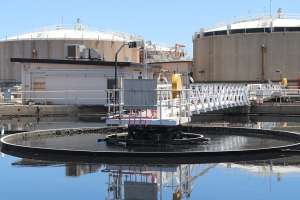
Keeping an eye on what is in the wastewater stream is a top priority for any water management agency.
It is also profoundly difficult. In most cases, by the time pollutants have been detected, it’s too late to identify who and where they came from, let alone prepare for their arrival at the wastewater treatment plant.
The team at the Phoenix (Arizona) Water Services Department is well aware of the problem and has turned to artificial intelligence for help. “One thing we struggle with, and where we hope AI can help us, is how to keep the wastewater sewershed clean,” says Nazario Prieto, assistant water services director with the city of Phoenix.
“For example, we have issued about 200 wastewater pretreatment permits to local industries, which our Environmental Services Division has to monitor to ensure compliance. We need to make sure the wastewater we’re receiving is safe enough for us to treat. We don’t want anything to kill our biology because that’s a big part of the process.”
In the past, Phoenix’s wastewater monitors had to detect noncompliance through on-site physical testing. “The problem is we have a limited testing staff,” Prieto says. “This is why we do some random sampling, to try to catch violators off guard and make sure they’re not doing something that violates the permit.
“But the reality is we can’t be there all the time. So our thought was: Is there something that could help us be there essentially all the time?’”
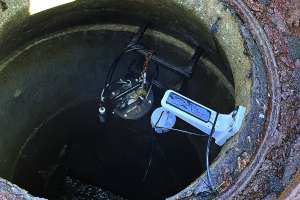
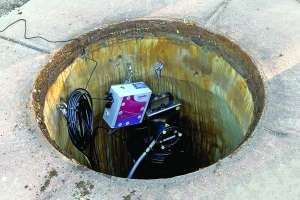
As it turned out, the answer was yes. The city of Phoenix hired a company named Kando (kando.eco), whose AI-driven Quality Pulse platform takes data from sensors submerged in the wastewater stream to detect contamination events as they occur. It takes AI to analyze the massive amount of data the sensors detect and translate it in nearly real time into actionable information for wastewater operators.
The vendor says its Quality Pulse technology seamlessly integrates advanced datasets including historical data, GIS, real-time data and AI analytics. These insights enable utilities to detect wastewater events within the collection system, track the routes, estimate the impact and communicate the findings to the operations team.
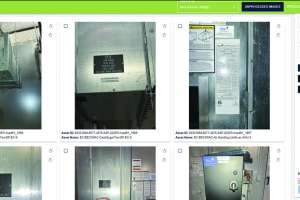
Starting in October 2023, Kando has installed 17 sensors in Phoenix’s more than 5,000 miles of sewer mains. “Those sensors send data to a cloud-based dashboard that basically rates the wastewater,” Prieto says.
“It tells us if there has been a pollution event, using AI and machine learning to help us better understand what is coming down the sewer and possibly predict what might be happening in the near future so that we can better prepare for it at the treatment plant.”
As of last summer, the sensor installation was in a limited-time trial phase, but city officials were already impressed by its results. “AI-enabled monitoring allows our Environmental Services Division to essentially have eyes on the sewer system 24/7, which is something that is impossible to do with people,” says Prieto. “The sensors let us know that something’s going on in the system.
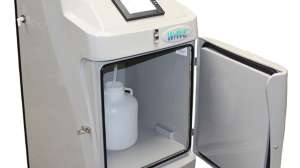
“The system comes with a built-in sampler function that sends an email to our staff saying, ‘Hey, there’s a pollution event happening in this area. Do you want to take a sample?’ If the answer is yes, we just push a button and the sampler drops and grabs a sample of the wastewater. Our staff then pulls the sample and sends it to the lab where we identify what is in the wastewater.”
The AI-enabled wastewater monitoring and sampling system is enabling Phoenix to police the quality of its wastewater. Using historical pollution data, the system can also help city officials identify and closely monitor companies with a history of polluting while also catching non-permit holders discharging pollutants.
“Every year we’ve had incidents of somebody discharging large amounts of hydrocarbons into the wastewater system, and the source was very difficult to pinpoint — it was very difficult to figure out who was doing it,” says Prieto. “We’re hoping this AI-enabled technology will help us find the folks that are doing that and keep all the others honest because they know that we’re watching.”